Pokies in Melbourne: Finding Locations, Hours and Rules
 Available in AU
Search results can blur airport, CBD and wider Melbourne locations, so addresses, map pins and venue rules matter.

Table of Contents
- Getting to Pokies Near Melbourne Airport and Other Nearby Areas
- What “Open Now” Can—and Cannot—Tell You
- How Pokie Returns and Random Spins Actually Work
- Reading Melbourne’s Pokies Venues Through Their Operating Rules
- What Can Be Verified About Pokies at Crown Melbourne
- Online Pokies Searches and the Australian Legal Boundary
- Venue Hours, Late-Night Access and Responsible Gambling
- Pokies Searches Across Melbourne’s East and West
- Melbourne CBD Clubs and Pokies Searches
- North and South Melbourne: Location Searches Without Guesswork
Getting to Pokies Near Melbourne Airport and Other Nearby Areas
A search for pokies near Melbourne Airport is first a question about geography, not a reliable shortlist of venues. The airport, the city centre and places such as Port Melbourne are different location anchors. Results tied to one do not automatically answer a search tied to another. I learned to treat the wording as a starting point, then check what place each result actually refers to.
The distinction matters because “near” is elastic. A map result may be close to the point entered, sit in a neighbouring area, or appear because a venue page mentions the location rather than because the venue is there. A listing’s position on a results page is not evidence of proximity. Nor does a broad label such as Melbourne tell much about the trip involved.
For an airport-related search, the useful first check is the address attached to each result. A venue described as being in Melbourne may be in the central city or elsewhere across the metropolitan area. That does not make the listing false; it means the label is too broad to settle an airport journey. A map pin gives a more precise reference point, but it still needs to be read alongside the address and the route from the actual starting place.
Choosing pokies in Melbourne for 2026 means looking beyond the games themselves and checking what is known about each operator. Use this list as a starting point, and consider which available details matter most to you.
License: Curacao, operated by Dama N.V. 7Bit Casino is listed as licensed in Curacao and operated by Dama N.V.
License: Curacao eGaming (Roby Games Ltd) Roby Casino is listed under Curacao eGaming, with Roby Games Ltd named as its operator.
License: Curacao Gaming Control Board OGL/2023/176/0095 (Hollycorn N.V.) LuckyVibe is associated with Hollycorn N.V. and the Curacao Gaming Control Board licence OGL/2023/176/0095.
License: Curacao Gaming Control Board OGL/2023/176/0095 (Hollycorn N.V.) GoldenCrown is associated with Hollycorn N.V. and the Curacao Gaming Control Board licence OGL/2023/176/0095.
License: Curacao eGaming (Dama N.V.) JeetCity Casino is listed under Curacao eGaming, with Dama N.V. named as its operator.
License: Curacao Golden Pokies is listed as licensed in Curacao; no further operator details are available here.
Payout speed: crypto under 1 hour, PayID 1-3 business days · Min. deposit: A$20 (A$30 to qualify for the bonus) Ricky Casino lists crypto payouts as taking under an hour and PayID payouts as taking 1–3 business days. Its minimum deposit is A$20, or A$30 to qualify for the bonus.
License: Tobique Gaming Commission · Payout speed: crypto ~10-15 minutes, fiat 1-5 days · Min. deposit: A$30 SkyCrown lists crypto payouts at around 10–15 minutes and fiat payouts at 1–5 days, with a A$30 minimum deposit. It is listed under the Tobique Gaming Commission.
Payout speed: crypto ~90 minutes, fiat 1-5 days · Min. deposit: A$30 Kingmaker lists crypto payouts at around 90 minutes and fiat payouts at 1–5 days, with a A$30 minimum deposit.
License: Curacao · Payout speed: crypto 30-60 minutes, fiat 1-5 days · Min. deposit: A$10 Wild Tokyo is listed as licensed in Curacao, with crypto payouts listed at 30–60 minutes and fiat payouts at 1–5 days. Its minimum deposit is A$10.
I would separate “at the airport” from “near the airport”. The first wording suggests a venue within the airport precinct; the second may include places beyond it. A result that appears for both phrases should not be treated as confirmation that the venue is inside the terminal or airport grounds. The wording on a listing can be loose. The address is the harder detail.
The same method applies to searches around Melbourne Central. That name identifies a central-city landmark, but a result that uses it as a reference may be located somewhere else in the CBD or in a nearby district. A location label can be there to help people orient themselves, not to state an exact address. When the distinction affects the journey, the pin and the venue’s own location details matter more than a headline.
Port Melbourne needs its own search rather than being folded into an airport or CBD result. A broad Melbourne listing can obscure which part of the city it covers. Keeping the place name specific helps narrow the map view; checking the address then shows whether the result is actually in the area being considered. I would not infer that a venue is in Port Melbourne merely because the area appears in a description or search snippet.
“Near me” is even less fixed. Its meaning depends on the location setting of the device or service making the search. If that setting is unavailable, imprecise or centred on a different point, the results may not reflect the person’s actual starting place. A search made while planning from home can therefore produce a different picture from one made after arriving elsewhere. The phrase is not a distance measure.

The practical comparison is between the point of interest, the venue address and the route that would be taken. A pin can appear close on a zoomed-out map while the route is awkward; a result that looks further away may be easier to reach from the chosen starting point. I avoid treating visual closeness as a travel-time promise. Maps represent location; they do not settle every detail of the trip.
There is also a difference between a venue listing and evidence that a particular venue has pokies. A general hospitality page, directory entry or map category may not answer that question. A location result can help identify where to make a more specific check, but it should not be stretched into proof of facilities. I would look for a clear statement tied to the venue itself, rather than rely on a broad category or an old snippet.
The cleanest way to frame the search is to use one place at a time: the airport, Melbourne Central, Port Melbourne, or the CBD. Then assess each result by its actual address and map position, not by the order in which it appears or by a wide city label. This keeps a local search local and avoids mistaking a nearby-area reference for a precise location. No guesswork.
- Check the specific street address for each result
- Use a map pin as a reference alongside the address
- Search for specific areas like Port Melbourne separately
- Rely on broad labels like “Melbourne” to settle a journey
- Treat a result’s position on a page as evidence of proximity
- Infer a venue is in an area just from a search snippet
What “Open Now” Can—and Cannot—Tell You
An “open now” label is a snapshot, not a promise that every part of a venue is available. A listing may show that a venue is operating, but it does not necessarily confirm that its gaming area is open at that moment, that entry is available, or that conditions have not changed since the listing was updated. Those are separate details.
I learned to treat the label as a starting point rather than a final answer. A venue’s own website or phone line is a better place to confirm its current hours, especially when the trip depends on arriving at a particular time. Third-party listings can be useful for narrowing down options, but their information may be stale or too broad to distinguish the venue’s general opening hours from access to pokies.
That distinction matters most for people looking for an early start or a late finish. A venue can have opening hours that do not match the hours of every facility inside it. A listing that says “open” may not explain which areas are operating, whether access is restricted at certain times, or whether an unexpected change has affected service. I would confirm the detail directly instead of reading more into the label than it says.
What an opening listing actually confirms
At its most useful, an up-to-date listing answers a narrow question: whether a venue is expected to be open at the time shown. It does not establish that a particular pokie is available, that a gaming area has no temporary restrictions, or that all services are running as usual. Nor does “open now” mean a venue will remain open for the length of a planned visit.
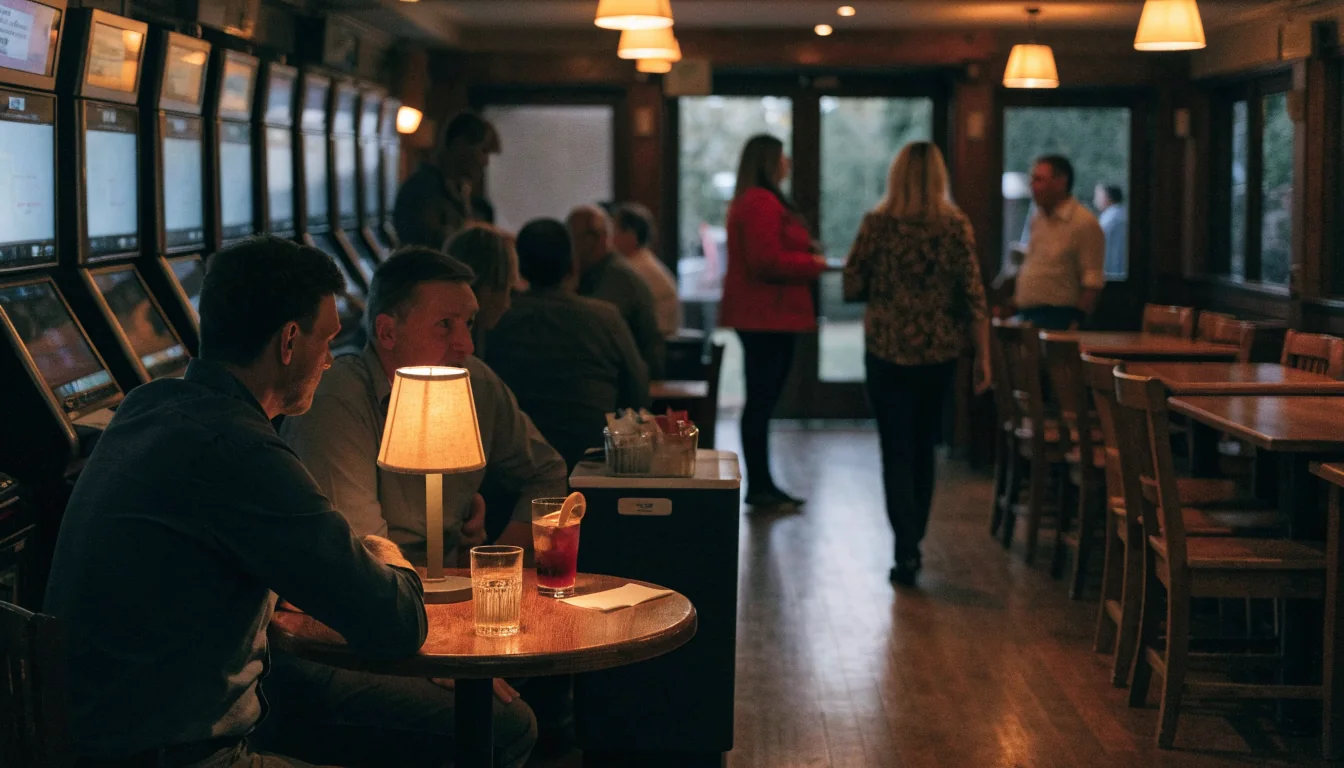

Opening information can also be presented in different ways. Some listings give a schedule; others show a live status, and those are not interchangeable. A schedule describes expected hours. A live status is only as reliable as the data behind it and the timing of its last update. If the two disagree, the venue’s own current information is the sensible point of confirmation.
There is a practical reason for being exact. “The venue is open” and “pokies are available” sound like the same answer in a quick search, but they are not necessarily the same claim. I would want the second detail confirmed when it is the purpose of the visit. A broad status can leave that question unanswered.
Early and late access needs a direct check
Requests for pokies in Melbourne early in the morning or late at night are really requests for a specific access window. A general venue listing may not be detailed enough to settle them. Check the stated hours for the relevant area where those are published, then contact the venue if the information remains unclear. If the venue does not provide a clear answer, the status label cannot fill the gap.
This is not a reason to assume that a venue is closed, or that it is open. It is a reason to separate confirmed information from inference. I have seen how a short label can look definitive on a screen while leaving the important operational detail unstated. Small distinction. Real inconvenience.
An “open now” label indicates a venue is operating, but it does not necessarily confirm that the gaming area specifically is open or available.
The same caution applies when plans are made around a particular day. Opening hours may be presented as a regular schedule, while the information needed concerns the specific visit. A current confirmation is more useful than assuming that a recurring schedule covers every circumstance. If timing is essential, a direct check before setting out is the cleanest way to avoid relying on an old listing.
Hours do not tell you about returns
An opening status says nothing about a venue’s pokie payout percentage. It is information about access, not a measure of what a game returns or how an individual play session will go. Those questions belong to the game’s terms and mechanics, not the venue’s displayed hours.
Keeping those categories separate prevents a common mistake: treating a convenient time or an “open” badge as a signal about the quality of play. It is not. Confirm the access detail for the visit; assess game information separately. A listing can answer when a venue expects to operate. It cannot answer everything that happens inside.
How Pokie Returns and Random Spins Actually Work
A pokie’s title is not evidence that it pays more than another game. The same title can be presented with different return-to-player settings, so a comparison based on the name alone can miss a material difference. A specialist review reports that some providers allow casinos to choose from multiple RTP settings for a given game. In other words, the version available at one casino may not have the same theoretical return as the version elsewhere.
RTP describes a game’s expected return across play as a whole; it is not a forecast for an individual session. It does not promise that a particular player will receive a stated share of their spend, nor does it predict when a win will occur. A figure only helps with comparison if it applies to the exact game version being considered. Without that confirmation, calling a title the “best-paying” choice is more confident than the information allows.
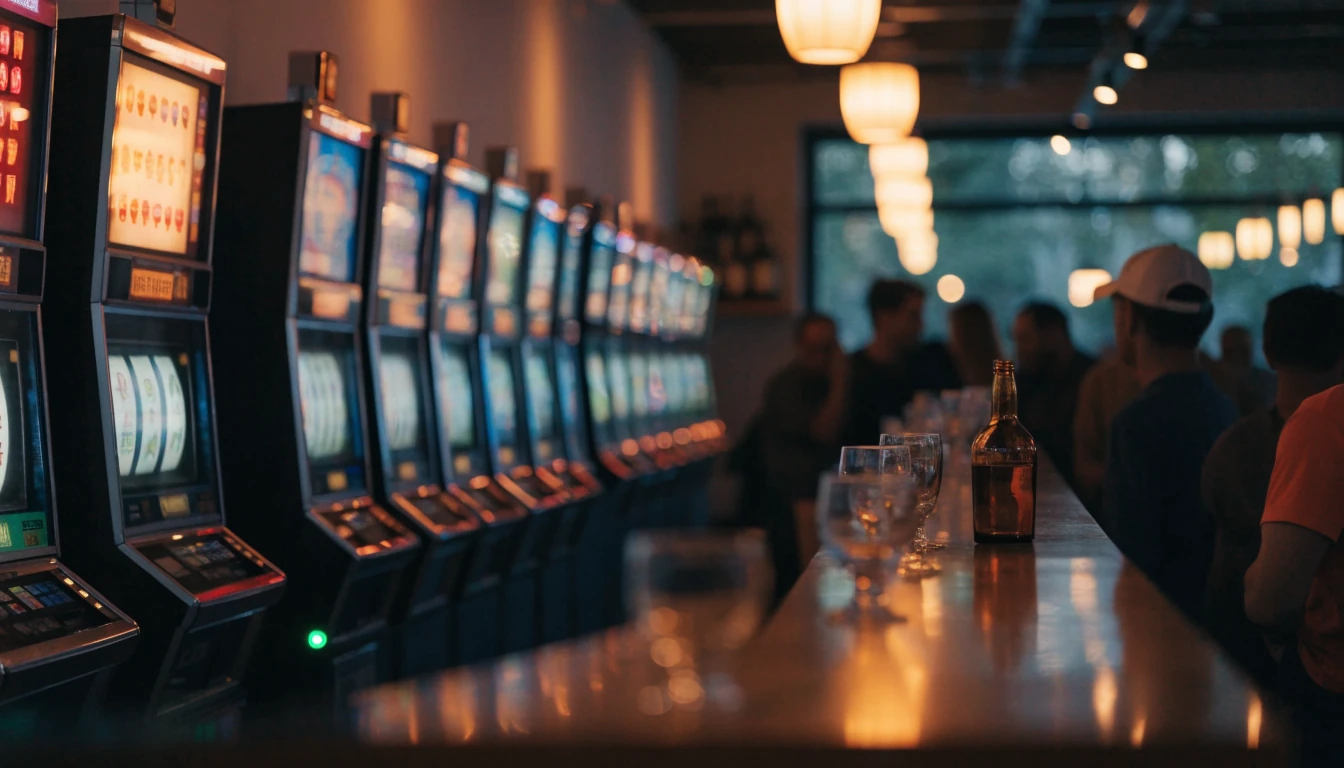
That distinction matters when a familiar game appears in Melbourne casino listings or in a search for pokies in the CBD. The name may match, while the setting does not. I have seen how a prominent label can make a comparison look settled before the underlying terms have been checked. It is not settled.
What an RTP figure can tell you
An RTP setting is a theoretical measure, not a payout schedule. It does not mean that every group of spins will return the same proportion, and it cannot identify which spin will win. A short run can differ sharply from the long-run expectation because the figure describes aggregate game behaviour, not a personal outcome.
That is why a “best” label needs more than a recognisable title. The precise version and its applicable return setting matter; otherwise, the comparison is between names rather than like-for-like game information. Even with the setting confirmed, RTP does not rank the likely outcome of a particular session. It gives context, not certainty.
The word “best” often does quiet work in casino language. It suggests a dependable edge or a consistent result. Neither follows from a game’s name, and neither is established by a theoretical return figure. The label is marketing. The setting is the detail.
Why a losing run does not make a win due
Each pokie spin is a separate random event determined by a Random Number Generator (RNG). The result of one spin does not make a later result more likely to compensate for it. A run of losses is not a signal that a win is now due; a recent win does not make the next spin less likely to pay.
Every pokie spin is a separate random event; a run of losses does not make a win due, nor does a recent win make the next spin less likely to pay.
I used to treat a sequence as if it carried a message. It does not. The RNG determines each result independently, so patterns noticed across a handful of spins do not provide a reliable way to forecast the next one. Past results can feel persuasive because people naturally look for order in repeated events. Feeling persuasive is not the same as being predictive.
This also limits what “best pokies in Melbourne” can mean in practical terms. A title may be familiar, and its stated return setting may be relevant for comparison, but neither can make individual spins predictable. A game cannot be identified as a reliable earner from its name, a recent streak or a broad promotional claim. The mechanics remain unchanged: theoretical return is not a personal promise, and every spin stands alone.
A careful comparison therefore separates two questions: what return setting applies to that particular version, and what an independent random result can do on any single spin. The first may inform a comparison. The second cannot be controlled by choosing a title. No dependable shortcut.
Reading Melbourne’s Pokies Venues Through Their Operating Rules
A venue can look polished, busy and well-run without that appearance telling much about how it handles gambling harm. When I compare Melbourne venues, I put more weight on the operating arrangements behind the room than on labels such as “best” or “premium”. A ranking cannot show how staff respond when someone appears distressed, or whether the venue has a clear process for recording an incident.

One reported change sets a specific staffing expectation. Regionriverina.com.au reported that, from 1 July, venues operating more than 20 gaming machines must have a dedicated responsible gambling officer (RGO) on duty while those machines are running. That is a venue-level obligation, not a measure of whether one room is more enjoyable than another. It gives the RGO a defined role during gaming operations, rather than leaving responsibility as an informal task shared without a clear point of contact.
The same report described a one-month grace period for venues to remove signage and bring in responsible gambling officers. That transition period matters when interpreting what a venue’s arrangements look like at a particular point: a change can be required while implementation is still underway. It is not a reason to assume every Melbourne venue has identical staffing or that a visible sign proves the underlying process is in place.
Signage also needs careful placement. Directions to gaming lounges should not be positioned within eyeshot of ATMs or EFTPOS terminals; directions to ATMs should not be placed where they can be seen from gaming machines. Those details are easy to overlook when attention is fixed on the floor itself. They shape the environment around play, not just its appearance.
The incident register is another useful distinction between a venue’s public image and its operating practice. The reported requirement is for venues to record incidents, including occasions when a patron’s behaviour indicates possible gambling harm. A register makes an occurrence something the venue must document, rather than a moment that disappears when the interaction ends. In practice, the value of a record depends on staff recognising a concerning situation and following the venue’s process. Paperwork alone is not care.
- Venues with over 20 machines must have a dedicated responsible gambling officer on duty
- Directions to gaming lounges must not be visible from ATMs or EFTPOS terminals
- Venues are required to maintain a register to document incidents of possible gambling harm
I have seen how easily the word “best” turns into a shorthand for atmosphere, food, location or familiarity. Those things may matter to a visit, but they do not establish the quality of a venue’s safeguards. Nor does a large room, a busy gaming area or a prominent sign prove that its procedures work well. The more grounded comparison is whether responsibilities are clear, whether an RGO is present where required, and whether concerning incidents are documented.
That is a more useful frame for Melbourne pokies venues than an unsupported league table. It does not identify a winner; it separates claims about a venue from the operating duties that can be checked. A short list of favourites may be convenient. It says little about what happens when play stops looking routine. Mechanisms matter.
What Can Be Verified About Pokies at Crown Melbourne
Crown Melbourne is a specific venue name, but the name alone does not settle practical questions about its pokie offering. A search result, directory entry or visitor comment can point towards a place; it does not confirm which machines are available, where they are located, or whether a particular room or feature is operating. Those details should not be treated as fixed simply because they appear in an older description.
I learned to separate a venue’s reputation from the facts that matter on the day. “Best pokies room” is a judgement, not a measurable description. It may refer to atmosphere, layout, a person’s preferred games or a memorable visit. None of those makes a room objectively better for every visitor, and none establishes what is currently on the floor.
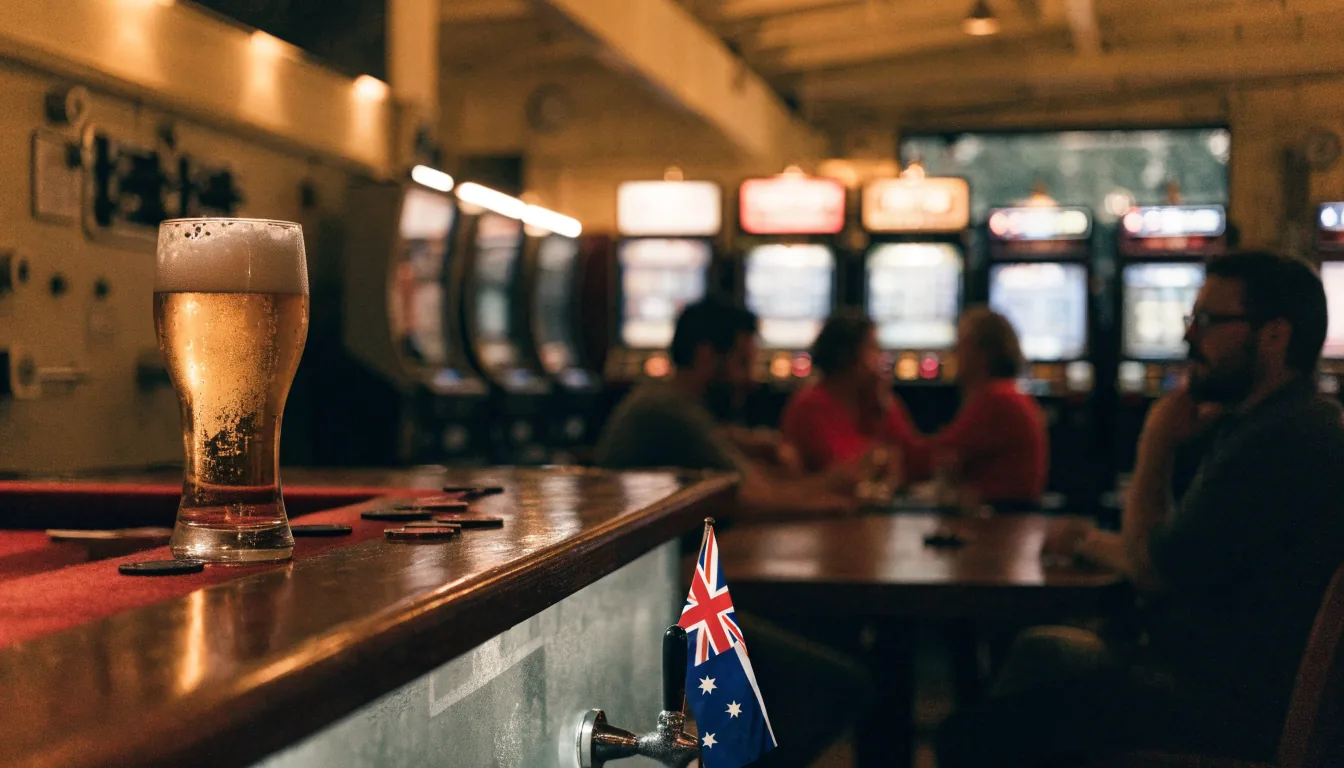
The same caution applies to claims about Crown’s machines. A game’s name does not tell the whole story about its settings or results, and a venue label cannot turn an uncertain claim into a reliable one. Nor does a list of popular titles establish what Crown Melbourne currently offers. Without current, venue-specific confirmation, claims about machine selection, room layout or special features are best left as claims rather than treated as settled information.
Hours require the same discipline. A general description of a venue is not proof that every area or service is accessible at a particular time. Search listings and visitor accounts can lag behind operational changes. For a visit planned around a specific facility, the useful distinction is between a broad statement about Crown Melbourne and direct confirmation of that facility’s current availability.
Age is one point that can be stated plainly: gambling in Australia is restricted to people aged 18 or older. That applies across gambling forms, including pokies. It is a basic condition of access, not an endorsement of a venue or a promise about what any particular visit will involve.
From behind the counter, I saw how easily “popular” gets mistaken for “right for me”. It is an advertising-shaped shortcut. Popularity does not establish better value, a better experience or a greater chance of winning. A confident claim about a venue still needs a concrete basis.
For Crown Melbourne, the responsible description is narrow: the venue name identifies the subject, while claims about its current machines, rooms, hours and features need direct, up-to-date confirmation. That may feel less decisive than a ranked recommendation. It is also less likely to send someone across town on the strength of an assumption.
Gambling in Australia is strictly restricted to individuals aged 18 years or older.
Online Pokies Searches and the Australian Legal Boundary
A search for online pokies connected with Melbourne can blur two very different things: a physical venue and a gambling service delivered over the internet. The law treats them differently. The Interactive Gambling Act 2001 prohibits companies from providing real-money online casino games, including pokies, to people in Australia. No Australian licence has been issued for an online casino, so there is no domestically licensed service offering real-money online pokies.
That distinction matters when a site describes itself as available to Australians or presents an offshore licence as reassurance. A foreign licence is not an Australian online-casino licence. It does not make the service lawful for a company to provide to people in Australia, and it does not give a customer the protections of a domestic online casino regulator. The label is not the safeguard it may appear to be.
The Act targets operators rather than individual players. Australians are not the target of the law simply for playing on an offshore site that accepts them. That does not make the arrangement equivalent to using an Australian-licensed service: none exists, and an offshore operator’s willingness to accept a customer does not create local oversight.
There is also a practical access issue. The Australian Communications and Media Authority enforces the Act and blocks access to illegal offshore gambling sites; internet service providers must comply with its blocklist. A site’s appearance in search results, or its availability at a particular moment, is not proof that it is lawful or reliable. Blocks can also make access inconsistent. No shortcut.
The most direct financial risk is what happens if a dispute arises. If an offshore casino refuses to pay winnings, an Australian player has no legal recourse in Australia to compel payment. A site’s terms, customer support promises or foreign approval cannot replace that local remedy. In practice, the risk sits with the customer: money can be deposited, but recovering it through Australian channels may not be possible.
Terms such as “best paying” or “high limit” do not change that legal boundary. Nor does describing a service as cashless or associating it with Melbourne. Those words say nothing about Australian authorisation or a player’s ability to enforce a claim. They are sales language, not legal status.
I have seen how quickly a familiar-looking page can make an offshore service feel local. The important distinction is not the city named in a promotion, but whether the service is permitted to provide real-money online casino games to people in Australia. Under the current framework, there is no Australian-licensed online casino. That leaves a clear difference between searching for information and assuming that an online offer carries domestic protection.
Venue Hours, Late-Night Access and Responsible Gambling
A venue’s general opening hours do not, by themselves, establish when its pokies are available. Late-night access is a venue-level detail, not a rule that can be applied across Melbourne. That distinction matters when “open all night” appears in a listing: the phrase may describe the premises, while gaming access can have its own conditions.
Legal Risk
The Interactive Gambling Act 2001 prohibits providing real-money online casino games in Australia; offshore sites offer no domestic legal protection or recourse for disputes.
I treat a claim of round-the-clock access as something that needs to be tied to a specific venue and its current operating information. A city-wide list of late-night pokies would imply that every entry shares the same hours and access arrangements. It does not. Hours can change, and a broad label is not a dependable substitute for checking the venue’s own current information before making a trip.
There is another practical point. Opening hours answer when a place is accessible; they do not say whether a session is sensible or manageable. Responsible-gambling controls address that separate question. Deposit limits and loss limits can put boundaries around spending, while session time limits can interrupt prolonged play. Self-exclusion is a more direct option for someone who needs to step away from gambling.
These tools are not interchangeable. A time limit does not cap losses, and a deposit limit does not automatically end a session. In my experience, the wording of a safeguard matters: it needs to describe what it controls, rather than suggest that one setting covers every risk. Useful controls are specific. No safeguard changes the outcome of a pokie spin.
The “24-hour” label can also make access sound like a recommendation. It is only a description of availability, not a measure of value or suitability. Late-night play still involves the same spending decisions and the same need for a clear stopping point. An open door is not a reason to extend a session.
For Melbourne pokies hours, the sensible distinction is between a venue’s published operating information and the safeguards available during play. The former is local and can change; the latter can help define personal boundaries. Neither creates a reliable basis for ranking venues by how long they stay open.
No city-wide clock. No implied endorsement.
Pokies Searches Across Melbourne’s East and West
East, south-east and western-suburb searches are useful starting points, not evidence that a particular venue has pokies. I have seen location labels do a lot of work in promotional copy: a broad regional description can sound precise while leaving the actual address unclear. The practical check is the venue’s own address and confirmation that pokies are available there.
“East Melbourne” can mean the inner-city suburb or a much wider eastern area, depending on how a directory uses the label. South-east Melbourne is broader still. Those descriptions should not be treated as interchangeable. A venue outside the immediate neighbourhood may appear in a regional result, so the address matters more than the category attached to it.
The same applies to the western suburbs. A result labelled western Melbourne does not establish how far it is from a particular suburb, or whether it suits a planned trip. Check the location against the starting point and confirm the venue itself offers pokies. Search labels are a filing system, not a guarantee.
St Kilda is a more specific place name, but it still does not identify a venue or establish what is available inside. I would verify the address and the pokies offering through the venue’s own information rather than infer either from a map pin, directory entry or nearby business listing. Small distinction. Important one.
A phrase combining Newcastle and Melbourne is especially easy to misread. Newcastle is a separate destination, not a Melbourne district; the wording may reflect a mixed or poorly formed search rather than a local area. It is worth separating the intended city before comparing locations. Otherwise, results can answer a different question altogether.
Geographic Search Tips
When searching for venues in East, South-East, or West Melbourne, verify the full street address rather than relying on regional labels, as these can be broad or imprecise. Specifically, ensure you distinguish between separate destinations, such as Newcastle and Melbourne, to avoid irrelevant results.
“Maximum bet” is a machine-level question, not a regional one. A location label cannot establish the maximum stake available on a particular pokie. That depends on the machine and its settings, so a general claim about Melbourne’s east, south-east or west would be misleading. Check the displayed information on the machine at the venue.
In short, regional names can narrow a journey, but they do not verify what is on the floor. Address first; availability second.
Melbourne CBD Clubs and Pokies Searches
A club label does not tell me whether a venue has pokies. In the CBD, the name or category used in a listing is not enough to establish what is available inside. I would treat claims about a particular club’s machines as something to confirm directly with the venue, rather than infer from its location or branding.
That distinction matters when comparing “best” options. The phrase suggests a clear ranking, but a central address cannot establish machine availability, game settings or suitability. Nor does a general description of a club provide a reliable basis for comparing pokies. Without specific, current details, a ranking would be guesswork dressed up as guidance.
CBD searches also blur different questions: whether pokies are present, what the venue’s own rules are, and what support is available if gambling stops feeling manageable. Those are separate matters. Responsible gambling tools include deposit, loss and session time limits, as well as self-exclusion. Their existence as tools does not establish that a particular club offers a particular process or setting.
I have seen how a broad label can do too much work. “Club” sounds like useful detail, but it may tell the reader little about the actual facilities. A direct enquiry to the venue is the sensible way to clarify its current arrangements. No guesswork.
Self-exclusion needs particular care. BetStop applies to Australian-licensed operators and does not bind offshore sites; it should not be mistaken for proof of a venue’s own arrangements. For physical pokies, the relevant question is what the venue can explain about its self-exclusion process and how it handles requests. The general availability of self-exclusion as a responsible gambling tool is not a promise about any one venue.
The legal age for gambling in Australia is 18. Where gambling is affecting someone, stepping away and seeking support is more important than finding another venue. A CBD address, a club description or a “best” label cannot make play safer.
North and South Melbourne: Location Searches Without Guesswork
North Melbourne and South Melbourne are neighbourhood-level location questions, not shorthand for the wider eastern, south-eastern or western suburbs. I would keep those areas separate when assessing a map result: a venue labelled “Melbourne” may be somewhere quite different from the neighbourhood named in the search.
A pin on a map is a starting point, not confirmation that a venue has pokies. Listings can use broad locality labels, and a result’s title may make the location seem more precise than its address. I check the full street address and the suburb attached to it before treating the result as relevant. If those details do not agree, the listing is not useful evidence.
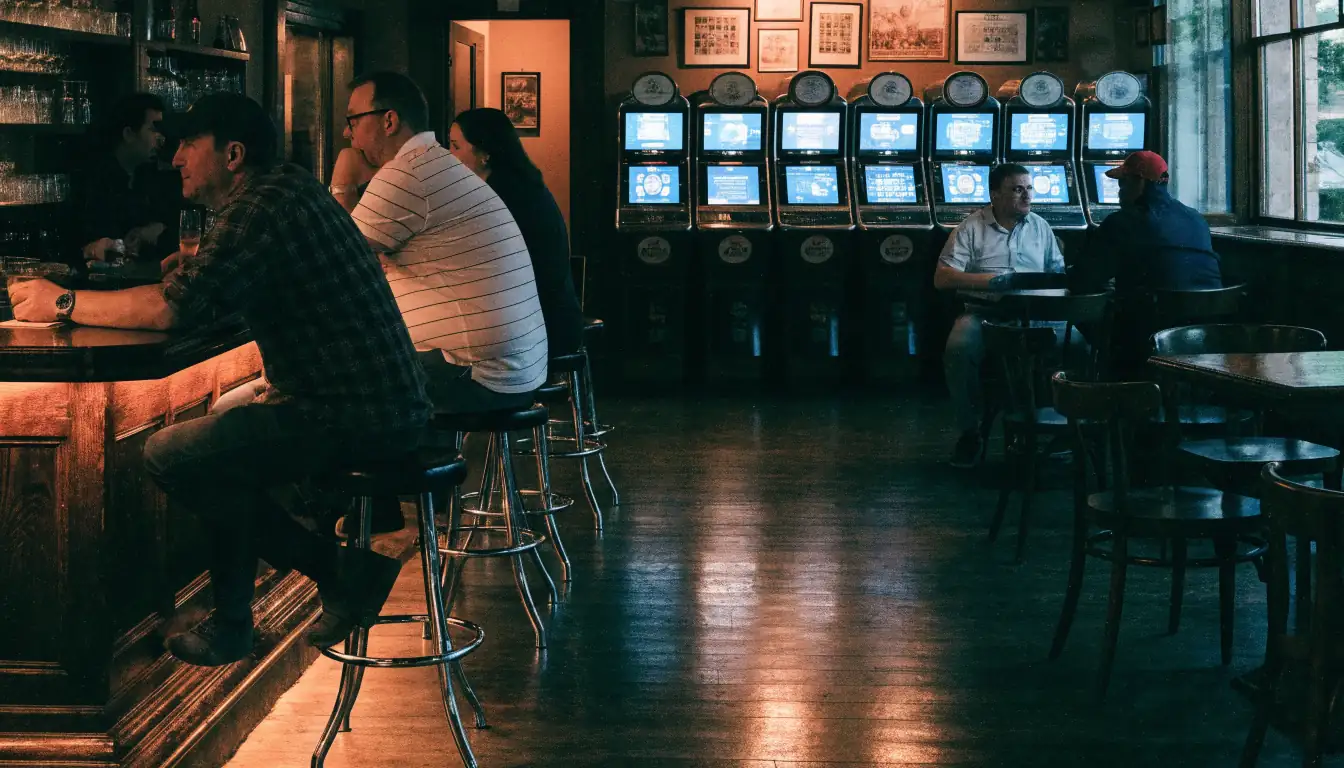
The same discipline applies to claims such as “nearby” or “best”. “Nearby” depends on the actual address and the route being considered; “best” says nothing about whether a venue is in North Melbourne or South Melbourne. I have seen promotional language blur those distinctions. The label does the selling.
For a North Melbourne location, the practical question is whether the address is genuinely within that neighbourhood, rather than merely described as being in Melbourne. The same applies to South Melbourne. Keeping the two checks separate avoids carrying assumptions from one side of the city to the other.
This is a narrower task than comparing broad areas across Melbourne. It is about matching a specific neighbourhood to a specific address, then confirming that the venue itself offers the facilities being sought. Without that match, a polished listing can still point to the wrong place—or promise more than its details establish.
No guesswork.
Are online pokies legal for Australian players?
Yes, Australians can play on offshore sites that accept them, but no online casino is licensed in Australia. Australian players have no legal recourse in Australia if an offshore casino refuses to pay their winnings.
What is the legal age for online gambling in Australia?
You must be at least 18 to gamble online in Australia.
Are online pokies rigged?
Each spin is an independent random event determined by a Random Number Generator. However, a game may have different return-to-player settings at different casinos.
What does “wagering requirement” actually mean?
It is the amount you must bet, usually expressed as a multiple of the bonus, before you can withdraw winnings. For example, a $500 bonus with a 40x requirement means you must place $20,000 in bets.
Prepared by the Cobber Casino editorial staff.