Cobber Casino Registration and KYC in Australia
 Available in US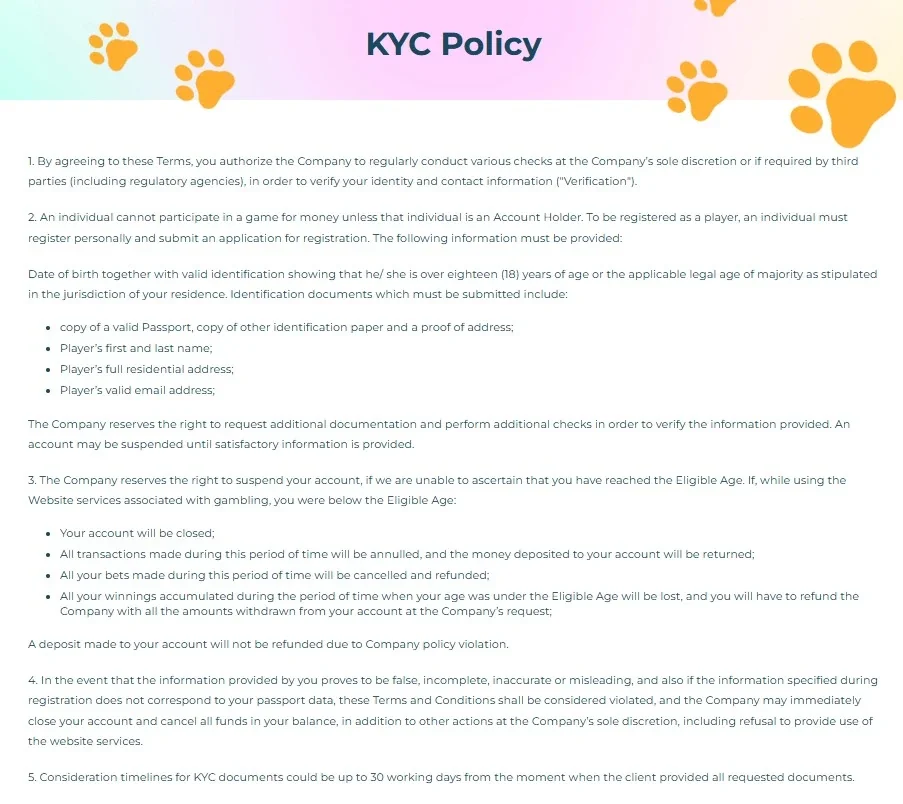
Cobber’s Australian-facing site provides an account registration flow, and identity verification can become part of using that account. The current AU FAQ says registration begins through the Sign-Up control, requires the requested account details and an email confirmation, while Cobber’s KYC policy allows identity, address and other supporting documents to be requested.
Verification should not be treated as one fixed checklist or a guaranteed ten-minute process. Cobber’s AML/KYC policy says additional documents can be requested and that consideration of KYC documents can take up to 30 working days from the point when all requested material has been provided. That published ceiling is more useful for planning than assuming every account will follow the same document path or timing.
Table of Contents
- How Cobber registration starts
- Age and identity are part of the account lifecycle
- What documents can Cobber request?
- Where account details can cause problems
- When KYC becomes relevant to withdrawals
- How long can Cobber verification take?
- Submitting documents safely
- Account security after registration
- What to do if a verification request is unclear
- A practical way to prepare for Cobber account checks
- Broader Cobber overview
How Cobber registration starts
The current Australian FAQ says a new account is created through the Sign-Up button on the site. The user fills in the requested fields, submits the form and then confirms the account through a link sent by email. After confirmation, the account can be accessed with the registered email address and password.
One detail deserves attention before the form is submitted: Cobber says the registration email cannot later be updated through the normal account process. That makes accuracy at sign-up more important than it might appear. An incorrect or inaccessible email can complicate password recovery, verification communication and account support later.
Cobber also states that registration data needs to be accurate and belong to the account holder. This is not merely a profile preference. The information entered at sign-up can later be compared with identification and address evidence during verification, so inconsistent details can interfere with account checks and withdrawals.
Age and identity are part of the account lifecycle
Cobber’s KYC policy requires an account holder to meet the applicable legal-age requirement and allows the company to verify identity and contact information. The policy identifies date of birth and valid identification as core parts of that process and allows the account to be suspended while satisfactory information is outstanding.
The policy also makes clear that verification is not limited to the first screen a user sees at registration. Checks can be carried out later, including when the operator needs to confirm account information or satisfy verification requirements. That is why it is better to view KYC as part of the account lifecycle rather than as a one-off formality.
For Australian readers, Cobber’s account process should be considered separately from the broader regulatory position. The distinction between an offshore operator and Australian licensing is explained in Cobber licence and trust.
What documents can Cobber request?
Cobber’s current KYC policy describes several document categories. It names government-issued identification and proof of address, and it reserves the right to ask for additional documentation. The AU FAQ also describes payment-method verification as a category that can be required, particularly where a card, e-wallet or bank-transfer method has been used.
These categories should not be read as a promise that every user will receive exactly the same request. The required material can depend on the account, payment method and the information that needs to be confirmed. Cobber’s policy explicitly leaves room for additional checks, so a rigid universal checklist would be misleading.
| Verification area | Examples described by Cobber | Why it may be requested |
|---|---|---|
| Identity | Valid passport or other government-issued photo identification | To confirm the account holder’s identity and age |
| Address | Proof of address such as a bill or bank statement | To confirm residential information |
| Payment method | Evidence connected to a card, e-wallet or bank transfer used on the account | To confirm control of the funding method |
| Additional checks | Further information or documents when requested | To resolve account-specific verification questions |
The practical lesson is to respond to the request shown in the account or communicated by official support rather than sending extra documents speculatively. More documents do not necessarily make verification faster if they are not the ones requested.
Where account details can cause problems
The most avoidable verification issues usually begin with mismatched account data. Cobber warns that false, incomplete or inaccurate personal information can cause the verification process to fail and can affect access to withdrawals. Names, dates of birth, addresses and payment ownership therefore need to be consistent with the evidence supplied when a check is requested.
Duplicate accounts are another area where Cobber publishes clear restrictions. Its FAQ says one person should not create multiple accounts and notes that shared address, device, IP or payment-method circumstances can trigger duplicate-account concerns. If two people in the same household intend to use separate accounts, Cobber recommends contacting support in advance so the situation can be reviewed.
This is especially relevant on mobile devices that are shared within a household. The device used to access the site does not change the account rules. A saved PWA or browser shortcut is simply another way to reach the same account environment, as explained in the Cobber mobile and PWA guide.
When KYC becomes relevant to withdrawals
Cobber’s AU FAQ says verification is required when making the first withdrawal. That creates a direct connection between account setup and the cashout process: a user can be able to browse or deposit before the full verification path becomes operationally important, but the first withdrawal can trigger the need to complete outstanding checks.
The withdrawal should therefore be viewed as more than a payment instruction. If identity, address or payment ownership still needs to be confirmed, the account review can become part of the payout timeline. The Cobber withdrawals page covers the published AUD limits and the distinction between request review, casino processing and payment delivery.
Users should avoid assuming that a fast payment rail guarantees a fast first cashout. A bank transfer, card, e-wallet or crypto withdrawal can still be delayed at the account stage if verification has not been completed or if additional information is requested.
How long can Cobber verification take?
Cobber publishes more than one timing statement, which needs to be read carefully. The AU FAQ says routine document processing often starts quickly and describes many checks as taking around minutes, with exceptional cases potentially taking longer. The formal KYC policy, however, provides the more conservative outer framework: consideration of KYC documents can take up to 30 working days after all requested documents have been provided.
The 30-working-day statement is not a promise that verification will take that long. It is a published ceiling for the consideration period under the policy. Equally, the shorter FAQ examples should not be treated as a guarantee that every account will be verified in a few minutes. The actual case can depend on whether the initial submission is complete and whether further evidence is requested.
A useful planning rule is to separate “usual” from “guaranteed”. Cobber may often review documents quickly, but the account holder should be prepared for a longer process when the case needs additional checks. That is particularly important when verification is connected to a pending withdrawal.
Submitting documents safely
Cobber’s FAQ directs users to the Documents area of the account for verification uploads. That is preferable to sending identity material through unrelated websites or third-party download pages. Identity documents, proof of address and payment evidence contain sensitive personal information, so the destination matters as much as the document itself.
Before uploading, check that the request is being made inside the official Cobber environment or through a support channel published by Cobber. The site lists live chat and email support and describes live chat as available 24/7. If the requested document is unclear, asking support to explain the requirement is safer than guessing.
It is also sensible to review an image before upload for readability. A document that is cropped so tightly that key details are missing can create another round of requests. At the same time, users should not alter identity evidence in ways that make it inconsistent with the requested verification purpose.
Account security after registration
Verification is only one part of account security. Cobber’s FAQ says account credentials should not be shared with other people and provides password-recovery guidance through the registered email address. Because the email is closely tied to the account, maintaining access to it is important for both security and support.
Users should also be careful with links that imitate a casino login page. A message claiming that verification is urgent should not override basic checks such as confirming the site address. Opening the official Cobber site directly is a better approach than following an unfamiliar link in a message.
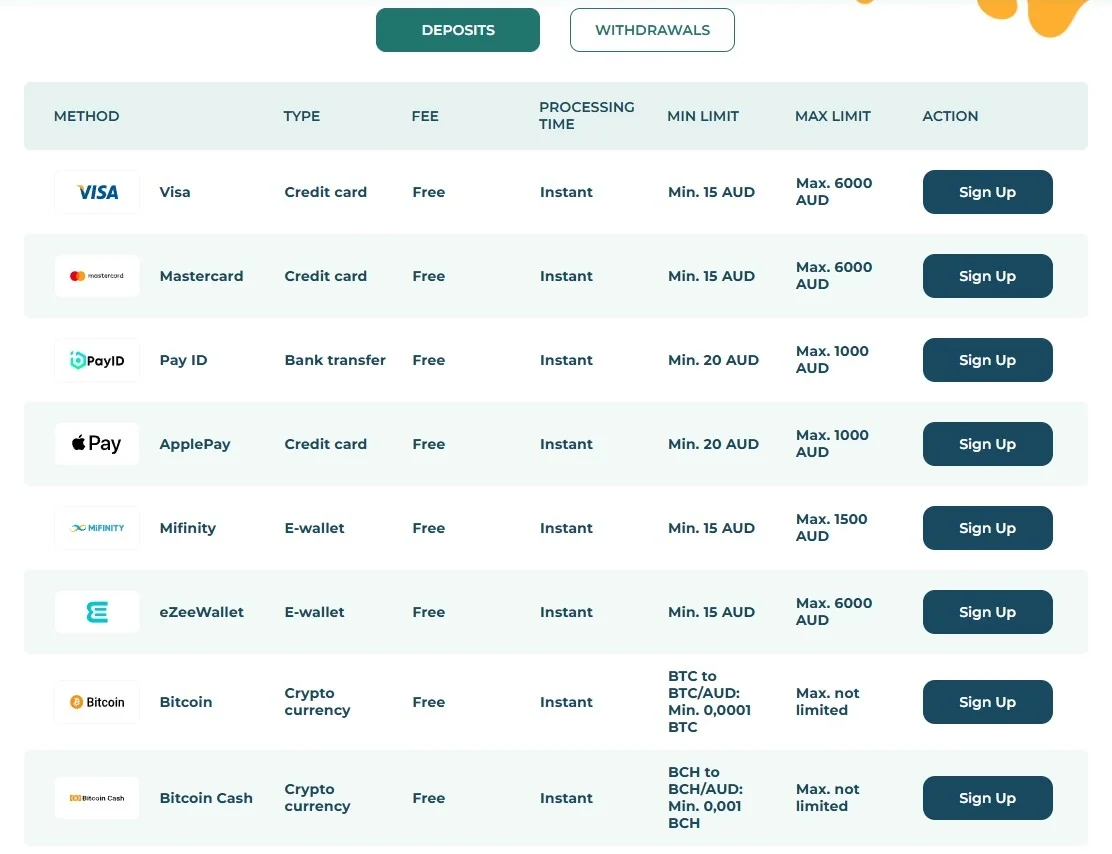
If an account is inaccessible or a verification status is unclear, Cobber’s published live chat and support email provide a direct route for clarification. Payment questions that are not specifically about identity checks are covered in the Cobber payment methods.
What to do if a verification request is unclear
A verification request is easiest to handle when the account holder knows exactly what is being requested and why. If a document category, upload status or rejection message is unclear, Cobber publishes live chat and email as support routes, with live chat described as available 24/7. Asking for clarification through those channels is more useful than repeatedly uploading different files in the hope that one will be accepted.
Keep the question specific. For example, ask which account detail needs confirmation, whether the issue concerns identity, address or the payment method, and whether a replacement document is required. That creates a clearer record of what remains outstanding and reduces the risk of mixing unrelated documents into the same verification issue.
If a withdrawal is already pending, it is also worth separating the verification question from the payment question. Verification determines whether the account review is complete; payment processing begins from a different stage. Understanding which stage is holding the request makes support correspondence more focused and helps avoid assuming that every payout delay is caused by the payment rail itself.
A practical way to prepare for Cobber account checks
The simplest approach is to keep registration data accurate from the beginning and treat verification as a normal possibility rather than something that only matters after a problem appears. Use an email address you control, make sure personal details match your identification, and keep payment methods in the account holder’s own name where the payment service requires that.
When Cobber requests verification, follow the categories and instructions actually shown for the account. Do not assume another user’s document list will be identical, and do not assume a short FAQ timing example guarantees the same result for every case. If additional evidence is requested, the formal KYC policy allows for a longer consideration period after the full requested set has been supplied.
That makes registration and KYC one continuous process: the quality of the information entered at sign-up affects how smoothly later checks can be completed. For readers comparing Cobber on trust and regulatory grounds, the next useful step is the Australian regulatory and licence overview, which deals with those questions separately from account administration.
Broader Cobber overview
For the wider product overview, return to the full Cobber review.
Published by the Cobber Casino team.