Real Money Casino Table Games in Australia
 Available in AU
Compare live-dealer and RNG formats, table rules, betting mechanics and the limits of odds claims across online games.

Table of Contents
- Online Table Games: Live Dealers, Software and Bonus Terms
- Bitcoin at the Table: A Payment Rail, Not a Game
- What “Best Odds” Can—and Cannot—Tell You
- How a Hand or Roll Becomes a Bet
- “Near Me” Searches and the Online-Australia Distinction
- What Counts as an Online Table Game
- Roulette Variants and the Zero That Changes the Layout
- Card Tables: Banker Bets and Building a Poker Hand
- Roulette Rules in Free-Play Software
- Poker at the Table: The Hand Is the Contest
Online Table Games: Live Dealers, Software and Bonus Terms
“Live” describes the source of the game, not a promise about its quality or fairness. In a live-dealer format, a real dealer operates real casino equipment and a video stream carries the action to viewers. The camera shows a physical game in progress; the software connects that stream to the online interface. The dealer and equipment are real, but the interaction still takes place through a digital service.
A software-based table game works differently. There is no streamed physical table determining the result. A Random Number Generator (RNG) selects the cards dealt or the roulette outcome. The screen may resemble a casino layout, but the result comes from the game software rather than a dealer’s action. That distinction matters when reading descriptions: “live” refers to streamed play, while a digital table can simulate the same broad format without a live feed.
The presentation can blur that line. A polished interface, animated dealer or sound effects do not establish that a real dealer is involved. Conversely, a live stream does not make the underlying service lawful in Australia. The Interactive Gambling Act 2001 prohibits operators from providing real-money online casino games, including table games, to people physically located in Australia. A bonus label or streaming format does not alter that legal position.

I have found that bonus language is easiest to misread when its headline value is separated from the conditions attached to it. A wagering requirement is a turnover condition: it specifies how much qualifying betting must take place before the bonus, or winnings associated with it, can be withdrawn. The arithmetic is straightforward—multiply the bonus amount by the stated wagering multiple—but the resulting total is not the same as a required deposit or a guaranteed loss. It is a condition measured through eligible bets.
The less visible part is eligibility. Terms may assign different contribution rates to different game categories. A bet on one game might count in full toward the wagering total, while a table-game bet could count only partly or not at all. That means the displayed balance can fall without the wagering counter moving by the same amount. The game contribution table, not the broad label “casino games,” determines what counts under the offer.
This is where table games can be treated differently from other categories. A specialist review has described slots as contributing fully in some offers, with blackjack or roulette contributing at a lower rate, such as a stated fraction of the bet; some titles may be excluded altogether. Those are offer-specific terms, not a dependable rule across services. A contribution rate is a calculation applied to qualifying wagers, not a measure of how much the game is worth or how likely a player is to complete the condition.

A maximum-bet clause creates a separate risk. Some bonus terms cap the stake permitted while bonus funds are being wagered. A specialist review has reported caps expressed as a small fixed amount per hand or spin, but the operative figure is the one in the particular terms. Exceeding it may lead to the bonus and associated winnings being cancelled. The practical problem is that a normal stake can breach a bonus condition even when the game itself allows that stake.
Time limits also matter, although they do not change how a table game works. A bonus may expire before its wagering condition is met. The relevant terms define when the clock starts, which bets qualify and what happens to any remaining bonus balance at expiry. A headline offer can therefore be less useful than it appears if the eligible games, contribution rates, stake cap and expiry rule do not align.
I would read those clauses as a connected set, not as fine print around a single attractive number. The wagering multiple sets the target; the contribution table controls how quickly eligible play advances it; the maximum bet restricts the stake; and the expiry clause sets the time available. Missing one condition can change the meaning of the whole offer. The arithmetic is only half the story.
There is an additional Australian constraint. Real-money online casino services are prohibited for people in Australia, and ACMA enforces the law against unlicensed domestic platforms. Describing how bonus mechanics are written is not an endorsement of an offer or a route around that restriction. Live streaming and RNG software explain how different formats generate or display outcomes; neither makes real-money online table play permissible in the Australian market.
Legal Restriction
The Interactive Gambling Act 2001 prohibits operators from providing real-money online casino games, including table games, to people physically located in Australia.
Bitcoin at the Table: A Payment Rail, Not a Game
Bitcoin changes how a payment may be sent; it does not change the rules of a table game. A bet made with a digital currency is still governed by the game’s own mechanics. The payment method does not alter a card, a roulette layout or the way a dealer handles a round.
That distinction matters because “Bitcoin table games” can sound like a separate category of play. It is not. The phrase combines two different things: a table game and a possible way of moving funds. A game’s rules determine what a bet means and how an outcome is settled. A payment rail concerns the transfer of funds between accounts and, where relevant, the processing of a withdrawal.
I have seen those ideas blurred in promotional language. Calling something a “Bitcoin casino” can make the payment method sound like a feature of the game itself. It is not. The label says nothing by itself about the table’s rules, the quality of the software or the odds. Nor does it establish that a service is lawful for people in Australia.
The legal boundary is important here. Under the Interactive Gambling Act 2001, operators are prohibited from providing real-money online casino games to people physically located in Australia. The prohibition covers table games as well as other casino-style games. A Bitcoin payment does not change that legal status. A different currency is not a different set of game rules, and it is not an exception to the law.

For a payment that does use Bitcoin, blockchain confirmation is a separate step from the game session. A withdrawal request may be recorded by a service first, then depend on the relevant transaction being confirmed on the blockchain. That is distinct from a traditional bank transfer, where processing involves banking networks. Neither process changes the outcome already determined at the table.
A specialist review reports withdrawal processing in the range of 10–30 minutes, with blockchain confirmation times as the limiting factor rather than banking bureaucracy. That is a report from one review, not a dependable timing promise or a general market standard. Confirmation and processing conditions can vary, so the figure should not be treated as a guarantee for any particular transaction.
The practical comparison between Bitcoin and a conventional payment method is therefore about settlement, not gameplay. A bank transfer can be delayed by banking procedures; a Bitcoin transfer can be affected by the time required for blockchain confirmation. Those are different sources of delay. Neither makes a table game more favourable, and neither establishes that funds will arrive by a particular time.
The phrase “best Bitcoin table games” also mixes unlike criteria. If “best” means the game’s theoretical return, that is a question about the game, not the currency used to pay. If it means payment speed, the relevant issue is transaction processing, not the rules at the table. If it means whether a service may lawfully offer real-money casino play to someone in Australia, Bitcoin does not answer that either.
From the counter side, this separation is the detail advertising tends to leave out: payment branding can be prominent while the actual conditions sit elsewhere. The currency label alone does not disclose withdrawal handling, nor does it make a service lawful. Payment rail, game rules and legal status are separate questions.
No special table. Just a payment method.
What “Best Odds” Can—and Cannot—Tell You
When choosing a real-money casino for table games in Australia, check the operator details that are available and make sure the games and terms suit your needs. This list provides a concise reference based only on the information provided for each operator.
License: Curacao, operated by Dama N.V. 7Bit Casino is listed with a Curaçao license and is operated by Dama N.V.
License: Curacao eGaming (Roby Games Ltd) Roby Casino is listed with a Curaçao eGaming license under Roby Games Ltd.
License: Curacao Gaming Control Board OGL/2023/176/0095 (Hollycorn N.V.) LuckyVibe is listed under Curaçao Gaming Control Board license OGL/2023/176/0095, held by Hollycorn N.V.
License: Curacao Gaming Control Board OGL/2023/176/0095 (Hollycorn N.V.) GoldenCrown is listed under Curaçao Gaming Control Board license OGL/2023/176/0095, held by Hollycorn N.V.
License: Curacao eGaming (Dama N.V.) JeetCity Casino is listed with a Curaçao eGaming license and is operated by Dama N.V.
License: Curacao Golden Pokies is listed with a Curaçao license.
Payout speed: crypto under 1 hour, PayID 1-3 business days · Min. deposit: A$20 (A$30 to qualify for the bonus) Ricky Casino lists a minimum deposit of A$20, or A$30 to qualify for the bonus. Its stated payout times are under an hour for crypto and 1–3 business days for PayID.
License: Tobique Gaming Commission · Payout speed: crypto ~10-15 minutes, fiat 1-5 days · Min. deposit: A$30 SkyCrown is listed with a Tobique Gaming Commission license and a minimum deposit of A$30. Its stated payout times are around 10–15 minutes for crypto and 1–5 days for fiat.
Payout speed: crypto ~90 minutes, fiat 1-5 days · Min. deposit: A$30 Kingmaker lists a minimum deposit of A$30. Its stated payout times are around 90 minutes for crypto and 1–5 days for fiat.
License: Curacao · Payout speed: crypto 30-60 minutes, fiat 1-5 days · Min. deposit: A$10 Wild Tokyo is listed with a Curaçao license and a minimum deposit of A$10. Its stated payout times are 30–60 minutes for crypto and 1–5 days for fiat.
“Best odds” sounds like a clean ranking: put the games in order, find the top entry and treat it as the sensible choice. I have seen that wording do more work than the underlying statistic can support. A return figure is a model of long-run outcomes, not a forecast for a particular session and not a measure of how likely a particular result is next.
Return to player, or RTP, describes a theoretical percentage returned across millions of spins. The scale matters: it is designed to describe aggregate results over an enormous number of outcomes. It does not say that a given player will receive that proportion back, or that results will even out over a short run. A single session can finish far above or below a theoretical return. That is not a contradiction; the measure is not a session promise.
There is another distinction worth keeping in view. That definition of RTP concerns pokies. It should not be transferred automatically to every casino table game or treated as a complete table-games comparison. A displayed figure is useful only when its scope is clear: which game it describes, what assumptions sit behind it and whether it is actually comparable with the figure beside it. Without that context, a table of percentages can look precise while answering the wrong question.
A house-edge chart has the same limitation. It can summarise a theoretical relationship between a game and its rules, but it cannot describe every decision, bet or outcome as if each session followed an identical script. Nor does a ranking explain the experience of variance: two games can differ in how results arrive even where a broad long-run measure appears similar. The number alone does not tell the whole story.

This is why claims about the “best” or “worst” odds need a careful reading. “Best” may mean a lower theoretical disadvantage under specified conditions, rather than a better chance of winning the next hand or roll. “Worst” can be equally imprecise if the comparison leaves out the rules or assumptions used. A ranking without those details is not a reliable basis for treating one title as categorically favourable.
The practical question is not simply which casino table games have the best odds. It is what the stated measure actually covers. Is it a theoretical return across a very large number of outcomes, or a different statistic? Does it apply to the exact game and rules being described? Is the comparison like for like? If those points are absent, the headline number cannot fill the gaps.
I would read a return figure as background information, not a personal forecast. It can help explain a long-run model when its meaning and scope are stated plainly. It cannot promise an outcome, settle a short-run comparison, or turn a chart into a guarantee. The number is a model. Not a prediction.
How a Hand or Roll Becomes a Bet
The basic contest at a table is not always player against player. In blackjack, the player’s hand is measured against the dealer’s: the aim is to finish with a value closer to 21. In dice play, the focus shifts from comparing hands to staking a bet on the outcome of a roll of a pair of dice. Those are different structures, even if both are presented as table games.
A comparative contest where the player’s hand is judged by whether it comes closer to 21 than the dealer’s hand.
A structure where the defining action is the roll of a pair of dice, and the bet is tied to that outcome.
Blackjack: a comparison with the dealer
Blackjack centres on a target and an opponent. The target is 21; the opponent is the dealer. The player’s result is judged by whether their hand comes closer to that target than the dealer’s hand does. The point is not simply to collect cards or reach a high total. The hand has meaning only in relation to the dealer’s.
That distinction is easy to miss in a quick explanation of how to play casino table games. A table may show cards, values and a dealer, but the central question remains comparative: whose hand is closer to 21? The contest is between each player’s hand and the dealer’s, rather than a direct contest in which players try to beat one another.
From the other side of the counter, that comparison is the rule that organises the whole round. The dealer is not just handling cards; the dealer’s hand is the reference point for the result. The player’s objective is therefore specific, not merely to make a hand that looks strong on its own. Context decides.
Dice: the bet centres on the roll
Dice play uses a different basic idea. Players roll a pair of dice and bet on the outcome. Here, the defining action is the roll, and the bet is tied to what that roll produces. The structure does not depend on building a hand against a dealer.
That makes the starting point for learning table games less complicated than a list of rules might suggest. First identify what the bet concerns. With blackjack, it concerns how the player’s hand compares with the dealer’s against 21. With dice, it concerns the result of the pair of dice. The precise options at a table depend on its rules, so the general description should not be mistaken for a complete guide to every possible wager.

The distinction matters when games are described as “simple.” That word can hide the actual task. One game asks for a comparison between two hands; another attaches a wager to a dice outcome. Different decision. Different reference point.
The contest before the details
When I explain how table games work, I start with the contest rather than the atmosphere around the table. Cards do not by themselves explain blackjack, and dice do not by themselves explain a wager. The useful first question is what determines the result: a hand measured against the dealer, or a roll whose outcome is the subject of the bet.
That framework can help make an unfamiliar game easier to follow without pretending that a short description supplies its full rules. It also keeps mechanics separate from claims about which games are “popular” or “best.” Those labels do not explain what a player is actually betting on.
For blackjack, the anchor is the dealer and the value of 21. For dice play, it is the outcome of rolling a pair. That is the basic shape of each contest—not a recommendation to take part, and not a substitute for the rules governing any particular setting.
“Near Me” Searches and the Online-Australia Distinction
A request for the closest casino with table games is about physical distance. A page about online table games answers a different question: what the online format is. The two can share the words “casino” and “table games” without pointing to the same service or setting.

Distance also depends on where someone is standing. A place described as nearby in one city may be irrelevant in another, and a general online page cannot establish which physical venues are close to a particular location. The same applies to searches that name places such as Miami or Ohio: those words identify locations outside Australia, not evidence about Australian venues. A location phrase is not a venue directory.
I have seen this distinction blur in commercial copy. “Near me” can be used as if it were a promise of local access, while the page itself describes an online service. That wording does not prove there is a physical casino nearby, nor does it turn an online casino into a local venue. Different question. Different answer.
In Australia, the legal position also changes what an online result can responsibly imply. Section 5 of the Interactive Gambling Act prohibits operators based in Australia from offering residents real-money interactive casino games. The broader Act makes it unlawful for operators to provide those services to people located in Australia, including table games. This is a restriction on the service being offered, not a statement that a physical casino is nearby.
The Australian Communications and Media Authority is responsible for enforcing the rules and blocks unlicensed domestic platforms. A page that presents online table games as locally available should not be read as proof that the service is lawful or locally authorised. Search wording cannot confer permission. Nor does a foreign location in a page title change the Australian legal context for someone physically in Australia.

That is why “casino near me” and “online casino” should not be treated as interchangeable labels. The first concerns a real-world venue and its location; the second concerns a remote gambling service. A result that mixes them may be using broad wording rather than giving a reliable answer about proximity. The distinction matters before any discussion of game mechanics or software.
I would also separate a venue’s existence from whether it offers a particular table game. A place name alone establishes neither. It can explain the legal boundary instead.
For Australian readers, that boundary is central. Real-money interactive casino services cannot lawfully be offered to people in Australia, and the regulator acts against unlicensed platforms. An online page therefore should not be mistaken for a local recommendation, a map of nearby venues, or an endorsement of offshore access. The wording may suggest proximity. It does not establish it.
What Counts as an Online Table Game
An online table game is a digital version of a casino game delivered through one of two formats: a live stream of a dealer working with real casino equipment, or software that determines the game outcome. The difference is in how the action is produced, not in whether the screen resembles a physical table.
In a live-dealer format, a real dealer handles the equipment and the video is streamed to players. The screen presents the dealer and table as a live event rather than rendering every action as a software animation. The game still reaches the player through an online interface, but the visible dealing or wheel action comes from real equipment.
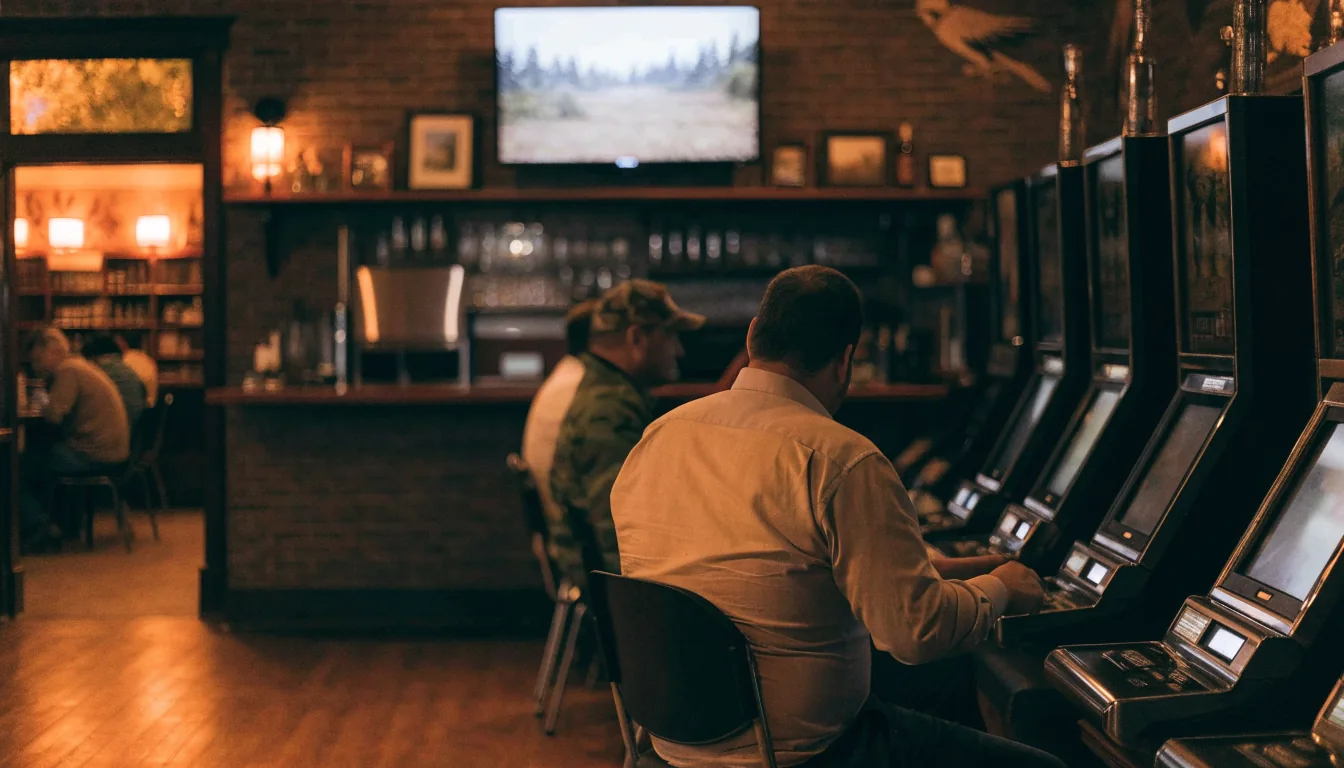
The other format is software-led. A Random Number Generator, or RNG, determines the relevant outcome: for example, which cards are dealt or where a roulette ball lands. The table and its equipment may be represented graphically, but the outcome is generated by software rather than captured from a live physical table. That distinction is central to what people mean by casino table-game software.
I have found the phrase “digital table” can blur the two models. It may describe the layout on screen, while saying little about how the result is produced. A live stream can show a real table through a digital interface; an RNG game can imitate the same setting without a live dealer. Appearance is not the test.
The term “casino table games management software” can also refer to a different layer of the business: tools used to administer table operations, rather than the player-facing game itself. The phrase alone does not establish which kind of software is meant. In a game context, the useful distinction is whether a live dealer and real equipment are being streamed, or whether software determines the outcome.
For players, the two formats can look similar at a glance. Both may show a table, cards or a wheel, and both are accessed through a screen. But one is a live presentation of real equipment; the other is a software-generated game. That is the practical boundary of the category—not the graphics, the table design or the wording used in a menu.
In Australia, this distinction is descriptive, not an invitation to play. The Interactive Gambling Act 2001 prohibits operators from providing real-money online casino games, including table games, to people physically located in Australia. ACMA enforces the law and blocks unlicensed domestic platforms. A digital table can therefore be defined by its delivery model without implying that real-money online play is lawful or available locally.

The short version is simple: live dealer means real equipment on a live stream; software-led means an RNG determines the outcome. Same screen category. Different mechanism.
Roulette Variants and the Zero That Changes the Layout
Roulette names can make the differences sound larger than they are. The clearest distinction among the main variants is visible on the number layout: European and French roulette show a single green zero, while American roulette shows both a green zero and a green double zero. The labels identify different formats; the zero spaces are the practical detail to notice.
European roulette has thirty-six numbered spaces and one green space marked zero. French roulette also has thirty-six numbered spaces and a green zero. On that basic count, their layouts match. The names remain distinct, but the number of green zero spaces does not separate these two versions.
American roulette adds a second green space, marked 00, alongside 0. Its layout therefore contains both zero labels, rather than the single green zero found on the European and French wheels. That is a concrete visual difference, not a difference in how the words “European” or “American” sound.
I learned to start with the layout because a title can be easy to skim past, while the extra green space is hard to miss once the wheel is in view. In an online presentation, the same distinction can be checked on the displayed wheel or table: one zero for the European and French formats; zero and double zero for the American format. No catalogue is needed to identify that feature. The layout does the work.
Layout Differences
European and French roulette layouts feature a single green zero, whereas American roulette includes both a green zero and a green double zero.
The word “variant” can imply a long list of special rules. Here, the reliable comparison is narrower: European and French roulette share the stated number arrangement, and American roulette includes the additional 00. A name alone does not establish every rule or condition attached to a particular game, so the format label should not be treated as a complete description of its terms.
There is a practical reason to keep the count in view. When two games are presented with similar titles or graphics, the zero spaces offer a straightforward way to distinguish the layouts without relying on promotional wording. One green zero, or two green zero spaces. That is the visible difference.
The distinction also keeps comparisons grounded. European and French roulette belong together when the question is how many green zero spaces appear; American roulette differs on that point. Those labels describe roulette formats, not a promise about what a particular service offers. A careful description stays with what the wheel shows. One detail matters.
Card Tables: Banker Bets and Building a Poker Hand
Card tables can use cards to create very different contests. In one format, the bet is about which of three outcomes will occur: the player’s hand, the Banker’s hand or a tie. Poker works differently. Its central contest is between players trying to build the best possible hand.
That distinction matters more than the table’s appearance. A bet on the Banker’s hand is not a bet on the player’s own cards, and a tie is a separate outcome rather than a halfway result. The choice is between named outcomes. In poker, by contrast, the hand itself is the basis of the contest: players compete to make the strongest one.
I have seen descriptions blur these formats under the broad label of card games. That hides the decision being made. One table asks which hand or result a bet backs; another asks whose hand is strongest. Same material. Different contest.
What the Banker bet means
A Banker bet backs the Banker’s hand as the outcome. The alternatives are a bet on the player’s hand or a bet that the two hands tie. Those are distinct selections, not different ways of placing the same wager.

The terms can sound more complicated than the basic choice. In practical terms, the bet identifies the outcome it is attached to; the cards then determine whether that outcome has occurred. The label “Banker” describes one side of the contest. It does not mean that the person placing the bet becomes the banker, nor does it describe a poker role.
That is the useful boundary when reading a card-table description. It separates the outcome being backed from the mechanics of poker, where the aim is to assemble the best hand.
Poker’s hand-building contest
Poker centres on comparison between players’ hands. Each player is trying to build the strongest possible hand, and the contest turns on which hand is best. This makes poker a hand-versus-hand format, rather than a choice among the player’s hand, a Banker’s hand or a tie.
I keep the distinction plain because broad labels do little work. “Card game” identifies the material on the table, not the decision that defines play. For the Banker-hand format, the bet names an outcome. For poker, the hand is the contest.
The difference is structural, not cosmetic. A table may involve cards in both cases, but the wager and the objective are not interchangeable. No shared vocabulary changes that.
Roulette Rules in Free-Play Software
A free-play roulette screen can look much like a casino table, but the result in an online software version is generated differently from a ball physically moving around a wheel. The software uses a Random Number Generator (RNG) to decide where the ball lands. The animation then shows that result. The wheel graphic is presentation; it does not determine the outcome.
That distinction matters when describing roulette rules. The familiar layout lets a player select a number or another marked area, but the simulated result comes from the RNG. A spin is not a physical event hidden inside the device. It is a software-generated outcome represented on screen.
The main online versions are European, French and American roulette. European and French layouts show the numbers from 1 to 36 alongside a green zero. American roulette has those numbered positions plus a green zero and a green double zero. The extra marked position is the visible layout difference; the labels and table design may vary, but the version can be identified by its wheel and betting layout.
In free-play software, this makes the table useful for learning how the interface presents a spin and where the different betting areas sit. It does not turn an animated wheel into a live physical wheel, and it does not change the RNG’s role. I separate those two things when checking a game: the layout explains what the screen offers, while the software determines the displayed landing result.

“Realistic” is a visual claim. The outcome mechanism is software.
Free-play access should not be confused with a real-money service or with a recommendation to use one. The relevant point here is narrower: online roulette software selects a landing position through an RNG, and the wheel variant is reflected in its number layout. That is the boundary between the simulated table’s appearance and the way its result is produced.
Poker at the Table: The Hand Is the Contest
Poker at a casino table is built around a contest between players: each is trying to build the best possible poker hand. That is the central idea, whether the table is presented as a live casino game or through an online interface. The hand is the point of comparison; the contest is not simply about being dealt cards, but about which player can form the strongest result.
I have found that promotional language can make poker sound like a test of nerve or instinct. Those descriptions are less useful than the basic structure. Players are competing to make the best hand. The rest depends on the particular game’s rules, so the label “poker” alone does not explain every table’s format. No universal set of extra rules should be assumed from the name.
That distinction matters when poker is grouped with other card tables. Poker’s defining contest is between players building hands; a table organised around a different objective is not the same game merely because it uses cards. The hand remains the measure. Plain and simple.
There are many ways a casino may label poker tables, but a name by itself does not establish how a specific version works. The useful point is the shared aim: competing players seek the best possible poker hand. A table’s rules determine how that aim is applied; the central contest stays recognisable.
In Australia, the legal setting is also part of the picture. The Interactive Gambling Act 2001 prohibits operators from providing real-money online poker to people physically located in Australia. That restriction concerns the provision of the service, not the meaning of poker as a game. Keeping those questions separate avoids confusing a game’s objective with the rules governing online availability.
Created by the ”Cobber Casino” editorial team.