
Best Pokies in Adelaide: Hours, Venues and Online Limits
 Available in AU
Gaming-room hours, travel routes, venue records and online licensing each require separate checks, and none guarantees a particular payout.
Table of Contents
- Opening Hours Are a Venue Question, Not a 24-Hour Promise
- What “Best-Paying” Means—and What It Cannot Promise
- Near the Airport, CBD or Somewhere Else: Check the Actual Journey
- Venue Records Tell Part of the Story, Not Which Machines Pay
- Online Search Results and the Limits of Australian Payment Options
- Online Access Does Not Make an Offshore Casino Australian-Licensed
- “Crown Adelaide” Searches Need a Name Check
- CBD Clubs: Responsible-Gambling Rules Behind the Venue
- Cashless Pokies and Newcastle Searches: What the Evidence Does Not Establish
Opening Hours Are a Venue Question, Not a 24-Hour Promise
A search result saying that a venue is open does not necessarily establish that its gaming room is operating at that moment. “Open” can refer to the venue as a whole, while the question may be whether pokies are available now, early in the morning or late at night. Those are separate details, and they should be checked separately.
I learned to be careful with that distinction from the way venue information is presented. A listing is a snapshot or a general statement, not a promise that every part of a premises is accessible whenever the doors are open. A restaurant, bar or other area may have different hours from the gaming room. Even where a venue publishes opening times, those times do not, by themselves, confirm when machines are operating.
For anyone checking whether Adelaide pokies are open, the practical starting point is the venue’s own current information. Look for a page or notice that specifically identifies gaming-room hours rather than relying on a broad description of the venue. If the information is unclear, contacting the venue directly is the way to resolve the uncertainty. The answer needs to be about the gaming area, not simply whether the premises are open.

That distinction matters for searches made at the start or end of the day. A result suggesting that a place opens early may refer to another service or part of the venue. A late closing time may also describe the premises generally, without clarifying when gaming machines stop operating. Search snippets and map listings can be useful pointers, but they can compress details or display information that is not specific to the gaming room.
“Open now” is a time-sensitive claim
The phrase “open now” is only useful if it is tied to the right place, the right part of that place and the current time. A listing can appear to answer the question while leaving out whether the gaming room itself is operating. It can also be out of date. If a venue’s published information and a third-party listing do not agree, the venue’s own current notice or a direct confirmation is the more sensible basis for a decision.
This is not a technicality. A general venue schedule answers when the premises say they are open; it does not necessarily answer whether pokies are available during every part of that period. I would not read a venue’s broad opening hours as a round-the-clock gaming schedule. That inference is too large for the information given.
Searches for very early hours deserve the same treatment. A result for early-morning opening does not establish that the gaming room is open at that time, and a reference to a venue being open overnight should not be treated as confirmation of continuous machine operation. The only reliable question is the specific one: what hours does this venue state for its gaming room, and is that information current?
There is no single Adelaide-wide answer that can be applied to every venue. Opening information belongs to the individual premises. Hours can differ between venues, and the status of one gaming room says nothing about another. A local search can help identify a venue to check, but it cannot replace checking the venue’s own details.
Venue opening information and operating requirements are different
There is a second point that can be confused with opening hours: the requirement for a responsible gambling officer (RGO) while machines are operating at larger venues. This is an operational requirement, not a public timetable. It does not tell a reader when a particular Adelaide gaming room opens or closes, and it should not be treated as evidence that machines operate continuously.
A report published by regionriverina.com.au describes a requirement taking effect from 1 July for venues with more than 20 gaming machines to have a dedicated RGO on duty while those machines are operating. The same report describes a one-month grace period for venues to introduce the officers and remove signage. These are details about venue obligations and a transition period, not a schedule for opening to patrons.
Staffing Requirements
From 1 July, venues with more than 20 gaming machines must have a dedicated responsible gambling officer (RGO) on duty while those machines are operating.
That difference is easy to miss because both topics use the language of operation. One concerns the hours a venue makes its gaming room available; the other concerns what staffing must be in place while machines are running. A venue’s compliance with a staffing requirement cannot be used to infer its opening hours. Nor does the existence of the requirement mean that every venue has the same hours.
The report also describes a gambling incident register for recording occurrences, including behaviour indicating that a patron may be at risk of, or affected by, gambling harm. That record-keeping function is part of oversight around gambling activity. It does not provide an opening time, nor does it make a general venue listing more precise.
The distinction is useful when an opening-hours page mentions responsible gambling arrangements. Such information can indicate that a venue has obligations during machine operation, but it is not a substitute for a published gaming-room schedule. Operational safeguards and public opening details answer different questions. Keep them separate.
A practical check, without assuming 24-hour access
For a straightforward check, confirm that the information refers to the gaming room, not only the venue. Look at the venue’s own current opening details and note whether they state gaming hours explicitly. If there is no clear distinction, contact the venue and ask whether the gaming room is operating at the time in question. This is more dependable than treating a general listing as a guarantee.


If the question is about Adelaide pokies open now, “now” needs to be checked against information that is current and specific. A result that was accurate on another day may not settle the present question. Likewise, a venue’s normal schedule does not necessarily confirm that the gaming area is operating at the precise moment someone checks. The source and the wording both matter.
I would also avoid translating a venue’s general opening statement into a claim about all-night or 24-hour access. That claim needs explicit confirmation from the venue. Without it, the careful reading is simply that the venue has published some opening information, not that its gaming room is available at every hour.
There is no need to infer anything from the RGO rule to fill in missing hours. The requirement applies while machines are operating at venues above the stated machine threshold; it does not set their operating schedule. A staffing rule is not a clock. The venue’s own gaming-room information remains the relevant source for whether it is open.
For Adelaide, then, the useful answer is venue-specific rather than citywide. Check the gaming room’s stated hours, make sure the information is current, and confirm directly if it does not clearly answer the question. A premises being open is not the same as its pokies being available. And an operational requirement is not an opening-hours notice.
What “Best-Paying” Means—and What It Cannot Promise
For Adelaide players exploring online pokies in 2026, operator details can help when deciding which options are worth a closer look. Use this list as a starting point and check the terms that matter to you.
License: Curacao, operated by Dama N.V. 7Bit Casino is listed as licensed in Curacao and operated by Dama N.V. Those are the available details for a quick first check.
License: Curacao eGaming (Roby Games Ltd) Roby Casino is licensed by Curacao eGaming, with Roby Games Ltd named as the licensee. This gives readers a specific licensing detail to consider.
License: Curacao Gaming Control Board OGL/2023/176/0095 (Hollycorn N.V.) LuckyVibe is listed under Curacao Gaming Control Board licence OGL/2023/176/0095, held by Hollycorn N.V. Its licence details are the key available point of reference.
License: Curacao Gaming Control Board OGL/2023/176/0095 (Hollycorn N.V.) GoldenCrown is listed under Curacao Gaming Control Board licence OGL/2023/176/0095, held by Hollycorn N.V. Readers can use this information as part of their initial review.
License: Curacao eGaming (Dama N.V.) JeetCity Casino is licensed by Curacao eGaming, with Dama N.V. identified as the operator. That licensing information is the main factual detail available here.
License: Curacao Golden Pokies is listed as licensed in Curacao. No further operator details are available for this overview.
Payout speed: crypto under 1 hour, PayID 1-3 business days · Min. deposit: A$20 (A$30 to qualify for the bonus) Ricky Casino lists crypto payouts in under an hour and PayID payouts in 1–3 business days. The minimum deposit is A$20, or A$30 to qualify for the bonus.
License: Tobique Gaming Commission · Payout speed: crypto ~10-15 minutes, fiat 1-5 days · Min. deposit: A$30 SkyCrown is licensed by the Tobique Gaming Commission. Its stated payout times are around 10–15 minutes for crypto and 1–5 days for fiat, with a A$30 minimum deposit.
Payout speed: crypto ~90 minutes, fiat 1-5 days · Min. deposit: A$30 Kingmaker lists crypto payouts at around 90 minutes and fiat payouts at 1–5 days. Its minimum deposit is A$30.
License: Curacao · Payout speed: crypto 30-60 minutes, fiat 1-5 days · Min. deposit: A$10 Wild Tokyo is listed as licensed in Curacao. It states crypto payouts of 30–60 minutes, fiat payouts of 1–5 days, and a A$10 minimum deposit.
“Best-paying” sounds like a ranking of machines by the money they will return. In practice, the phrase can refer to a game’s return-to-player setting: a theoretical measure of how much of the amount wagered is returned across play over time. That is not a forecast for a particular session, and it does not identify a machine that is due to pay.
There is another complication. A specialist review reports that some game providers allow casinos to choose between different return settings for the same pokie. If that applies, the game’s return percentage may differ from one casino to another. A familiar title, then, does not establish that the setting is identical at every venue. Nor does a general description of a game establish the setting used on a particular machine.
From the counter side, I learned to separate a game’s name from the conditions under which it is offered. The name is easy to see; the setting is not something that can be inferred from a run of wins, a run of losses or a player’s memory of a previous visit. A claim that a particular pokie is “best-paying” needs to be tied to the specific setting, not just to the title or to a story about someone’s result.
No Payout Guarantee
A higher theoretical return-to-player setting is not a promise of a win for any specific session and does not identify a machine that is due to pay.
Even a return setting does not work like a schedule. It is a theoretical measure across a large volume of play, not a promise that a given amount will come back to any one person. It says nothing certain about the result of the next spin, or about how outcomes will be distributed over a short session. A higher stated return, where settings can be compared on a like-for-like basis, is not the same thing as a higher chance of winning on the next turn.
Each spin is a separate random event determined by a Random Number Generator. Previous results do not make the next result more likely to be a win. A machine that has paid repeatedly is not thereby committed to continuing; one that has not paid is not building up an obligation to do so. The sequence can feel meaningful because people notice patterns, but that feeling does not change the independence of the spins.
This is why I treat claims about “hot” machines cautiously. The term describes a player’s interpretation of recent results, not a reliable reading of what will happen next. A screen, sound or sequence of near misses can make a machine feel as though it is approaching a payout. It is still the next independent event. The impression can be persuasive. The mechanism is unchanged.
For anyone comparing Adelaide venues, the useful distinction is between a general statement about a game and confirmed information about the setting in use there. Without that distinction, a list of supposed best pokies in Adelaide can create more certainty than the underlying information supports. A result reported by one player cannot establish a machine’s return setting, and a game’s advertised or published return figure cannot guarantee what another player will receive.
The same caution applies when the phrase “best paying” appears beside a location or venue name. The location does not make a game more predictable. Nor does a comparison based on reported wins show that one machine has a better setting: winning stories describe outcomes, not necessarily the conditions behind them. I have seen those two things treated as interchangeable. They are not.
A sensible reading of the phrase is narrow: it may point to a stated theoretical return, provided the figure relates to the exact game and setting being discussed. It cannot identify a guaranteed winner, predict a session, or show that a machine is due. Those are different claims, and the return figure does not support them.
No sure thing.
- Return-to-player settings are theoretical measures, not session forecasts.
- Each spin is an independent random event determined by a Random Number Generator.
- Previous results do not influence the likelihood of a win on the next turn.
- Claims about “hot” machines are player interpretations, not reliable predictors.
Near the Airport, CBD or Somewhere Else: Check the Actual Journey
“Near Adelaide Airport” and “in Adelaide” are not interchangeable location descriptions. The first points to a particular starting area; the second can mean the central city, a suburb, or the wider metropolitan area. A result labelled simply “Adelaide” may therefore be a poor guide to how far a venue is from the airport, the CBD or a home address.
I treat proximity as a journey question, not a label. The useful details are the exact venue address and the route from the actual starting point. A straight-line distance can look short while the practical trip is less direct. Road access, public transport connections, walking distance and the time of travel can all change what “near” means. The map pin matters more than the wording in a listing.
Airport searches need particular care. A search for pokies at Adelaide Airport can return results associated with the airport area without establishing that a venue is inside the terminal or on airport premises. Those are different claims. Before relying on a result, check whether its address is actually at the airport, nearby, or elsewhere in the metropolitan area. I would not treat a broad location tag as proof of an on-site facility.
The CBD is another distinct starting point. A venue that is described as being in Adelaide may be outside the central business district, and a result near the CBD may still involve a meaningful trip depending on the precise origin and route. “North Adelaide” also narrows the area but does not identify a particular venue or settle how convenient the journey will be. The street address does that work.
There is a further ambiguity in searches that pair Adelaide with Victoria. That wording may reflect a mistaken state reference, an imprecise location, or a request for somewhere beyond South Australia. It should not be silently treated as an Adelaide suburb. Confirming the intended place before comparing distances avoids a result that is geographically plausible but answers the wrong question.
I have found that map results are best used as a starting point, not a verdict. Compare the address shown on the map with the venue’s own location information, then check the route from the relevant landmark or suburb. If the listing uses a broad label, look for a full street address rather than inferring a location from the name. Pins can be imprecise; addresses are harder to misread.
“Nearby” is advertising shorthand. In practice, it means only what the route and starting point make it mean. A result close to the airport may not suit someone travelling from the CBD, and a central result may not be close to a particular northern suburb. The journey decides.
Venue Records Tell Part of the Story, Not Which Machines Pay
Venue oversight is useful for understanding how a gaming room is expected to operate. It is not a way to identify a “best” pokies venue in Adelaide, or to work out which machine will return more. Those are different questions. A venue record concerns what happened on the premises and how staff responded; it does not predict the result of a spin.
Attention Venue records and operational paperwork are for oversight and process; they cannot be used to rank venues by machine outcomes or predict payouts.
I have seen operational paperwork treated as if it were a performance report. It is not. A register can document an incident, but it does not rank venues by machine outcomes or establish that one set of pokies is more favourable than another. Records tell a narrower story.
One reported requirement concerns a gambling incident register. Reporting by regionriverina.com.au says venues will need to record occurrences that may indicate a patron is at risk of, or affected by, gambling harm. The point is to capture relevant events rather than leave them as informal conversations between staff. An entry can help make a response accountable: what was observed, and what was done about it. It is not a scorecard for the venue.
The same report describes a separate staffing obligation. From 1 July, a venue operating more than 20 gaming machines is to have a dedicated responsible gambling officer (RGO) on duty while those machines are running. The report also describes a one-month grace period for venues to remove signage and introduce the officer role. These are operational requirements, not opening-hour rules, and they do not say anything about the return setting of a machine.
That distinction matters when comparing pokies venues in Adelaide CBD or elsewhere in the city. A venue may have documented procedures and staff responsibilities, but that information cannot establish that its machines pay better. Nor does a record of an incident, on its own, explain the full circumstances or show how common such events are. It records an occurrence for oversight.

I would read venue-level reporting as evidence of process, not as a recommendation. If a venue’s records show that an event was noticed and formally recorded, that is relevant to how the venue manages its obligations. It does not turn the venue into a safer choice in every circumstance, and it cannot make gambling outcomes predictable.
This is the practical limit of the paperwork. It can show whether specified responsibilities are built into the operation: maintaining an incident register and, where the reported threshold applies, having an RGO present while machines operate. It cannot tell a patron which machine to choose, whether a particular session will end well, or whether one Adelaide venue is “best”. Process, not payout.
Online Search Results and the Limits of Australian Payment Options
A search for Adelaide pokies can mix local venue information with pages offering real-money online play, including “no deposit bonus” claims. The wording may make those offers sound like a local service. It does not change the legal position: under the Interactive Gambling Act 2001, companies cannot provide real-money online pokies to people in Australia without a domestic licence, and no such licences have been issued.
I have learned to separate the payment label from the service behind it. PayID is not a gambling account or a licence. It is an alias system within the New Payments Platform (NPP): a transfer can be addressed using an email address, mobile number or ABN instead of bank-account details. The NPP is supported by all major banks and uses end-to-end encryption. That describes the payment infrastructure, not the legal status of a business receiving money.
- Recognise PayID as a payment infrastructure tool.
- Note that major banks may block transfers to gambling merchants.
- Understand that the Interactive Gambling Act 2001 governs legal offers.
- Treat a PayID logo as a badge of licensing or trust.
- Assume “no deposit” claims prove a service is lawfully available.
- Confuse a payment method with a domestic gambling licence.
The distinction matters when a page presents PayID as a badge of trust. A transfer method cannot establish that an operator is licensed, that a game is fair, or that its return settings are clearly disclosed. Those are separate questions. Payment branding answers how money might move; it does not answer what the service is permitted to offer or what conditions apply to a game.
PayID also does not mean every transfer will go through. A specialist review has reported that some Australian banks, including major banks, may block PayID payments identified as going to gambling merchants. That is a reported restriction, not a guarantee about how a particular bank will handle a transfer. Bank controls and payment decisions can change, and a payment method’s presence on a page does not establish that it is available for every customer or transaction.
The same caution applies to “no deposit” language. It is promotional wording, not evidence that an online real-money pokie service is lawfully available in Australia. The offer may describe a condition attached to an account or bonus, but the phrase itself says nothing about the operator’s legal position. I have seen payment logos do a lot of persuasive work on a page. They remain payment logos.
For searches mixing Adelaide with online real-money play, the useful distinction is plain: PayID is a transfer facility, while the Interactive Gambling Act governs what companies may offer. One does not confer permission for the other. A familiar bank-transfer option cannot turn a prohibited online casino service into a domestic licensed one.
Online Access Does Not Make an Offshore Casino Australian-Licensed
A page that loads on a phone or computer is not proof that its operator holds Australian approval. That distinction matters for people looking for online pokies from Adelaide: being able to reach a service and having a domestic legal framework behind it are separate things.

Under the Interactive Gambling Act 2001, companies cannot provide real-money online casino games to people in Australia. No Australian licence has been issued for an online casino. The restriction is directed at operators, not individual players; a person is not made criminally liable simply for playing on an offshore site that accepts Australians. That does not turn the service into an Australian-licensed business.
Access can also be disrupted. The Australian Communications and Media Authority (ACMA) acts against illegal offshore gambling services, and internet providers must follow its blocking directions. A site appearing in a result, or opening at a particular moment, should not be read as evidence that it is authorised or dependable. Availability is not a licence.
I have seen the gap between the wording on a screen and the protection behind it get overlooked. An offshore operator may describe its service as “available in Australia”; that phrase says where it is willing to take customers, not which Australian rules it follows. If it withholds winnings, Australian players have no legal recourse in Australia against that operator. The practical problem is not just whether a game can be opened, but what remedy exists when a dispute turns into a refusal to pay.
That is why an Adelaide location does not change the legal position. Whether the interest is in a casino-style game at home or a service described as being near Adelaide, a local place name does not establish Australian licensing. The same applies to claims about high-limit play or a maximum bet: those descriptions do not establish that a service is locally regulated, or that a player has an Australian route to recover withheld money.
Legal Recourse
Because no Australian licence has been issued for online casinos, players using offshore sites have no legal recourse in Australia if an operator withholds winnings.
BetStop has a defined boundary. It applies to Australian-licensed operators and does not bind offshore sites. It therefore cannot be treated as a block or self-exclusion mechanism across every overseas service a person might encounter. That limitation matters when comparing the protections attached to a domestic system with the reach of an offshore company.
Identity checks are another separate matter. Before a first withdrawal, identity and address documents must be verified; supplying documents does not create Australian licensing or a local right of appeal. A payment method, account screen or successful login cannot fill that gap.
The useful distinction is plain: access describes a technical connection; licensing describes legal status and accountability. They are not interchangeable. A site can be reachable without being Australian-licensed, and a claim of local availability does not supply the protections that are absent. No local remedy.
“Crown Adelaide” Searches Need a Name Check
“Crown Adelaide” brings together a recognisable brand name and a city, but the wording itself does not identify a particular Adelaide venue. That distinction matters. A familiar name in a phrase is not proof that a matching casino operates there, nor does it establish that a venue has a particular collection of pokies. I have seen how quickly a label can acquire the appearance of a fact once it is repeated across listings and promotional copy.
The same caution applies to references to Crown pokies in Adelaide. A game title, a venue name and a location are separate details; combining them does not verify any of them. Without a clearly identified venue and reliable information about its machines, a recommendation framed around Crown would be guesswork dressed as local knowledge. No list. No ranking.
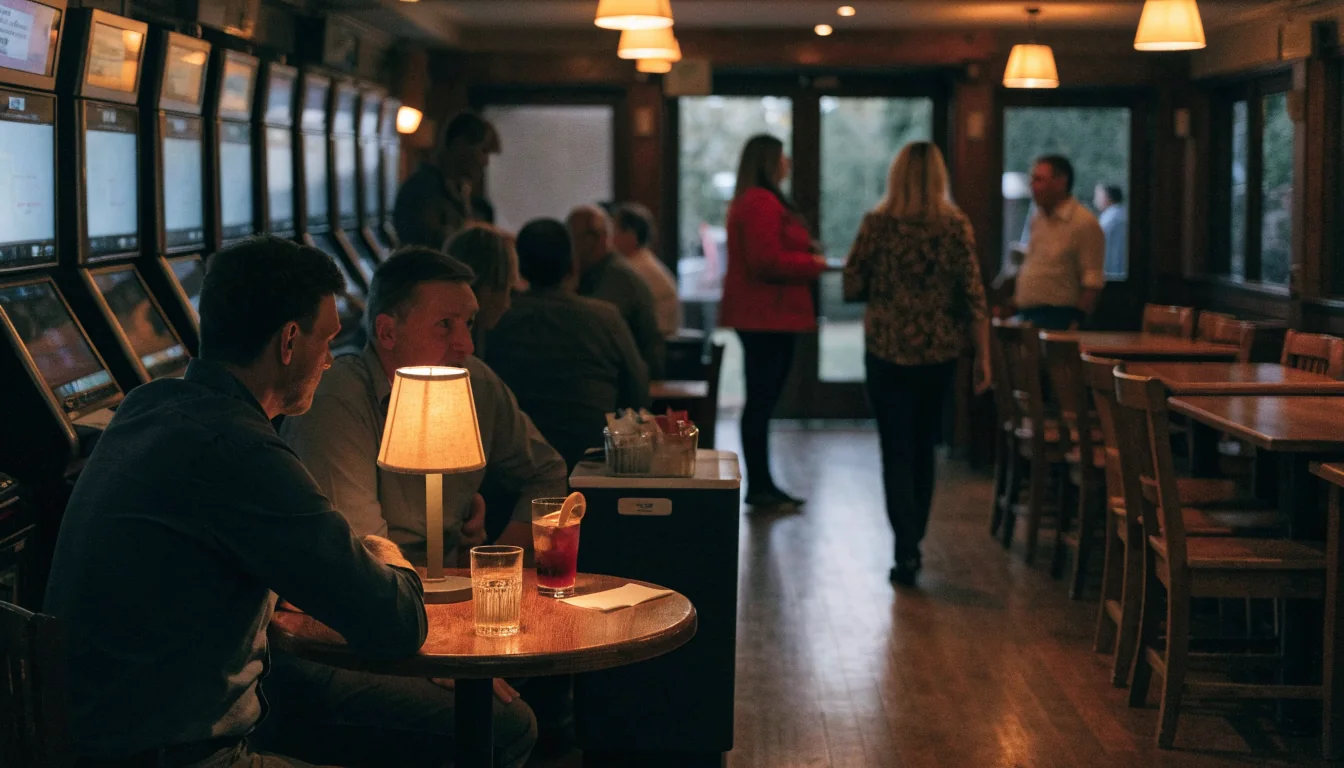
“Best pokies room” sounds like a useful verdict, but it leaves the standard unstated. Best for what: the room’s layout, the range of machines, or something else? Those are different claims, and a vague label cannot settle them. In my experience, the word “best” often does more work in a headline than in the evidence behind it. It is a sales word, not a measurable description.
The phrase “maximum cash payout” needs the same separation between a broad claim and a specific condition. It does not, by itself, say which machine or venue is meant, or explain what payout rule is being described. A prominent figure can sound like a promise when it is actually tied to conditions that have not been stated. The wording alone cannot settle that.
For a practical name check, the venue identity has to be clear before claims about its room or machines can be evaluated. A brand reference should not be allowed to stand in for an address, an operating venue or a confirmed machine range. Nor does a superlative supply those details. The distinction is plain. Names are not proof.
I would treat “Crown Adelaide” as an ambiguous label until the specific venue is identified, rather than reading it as confirmation of a Crown casino in Adelaide. Likewise, a claim about the best room or the highest cash payout needs a defined subject and a basis that can be checked. Without those, the wording tells more about the claim’s packaging than about what is actually available.
Brand Verification
Brand names and superlatives are not proof of a venue’s existence or the quality of its machines; only a specific address and confirmed details provide certainty.
CBD Clubs: Responsible-Gambling Rules Behind the Venue
When I assess how an Adelaide CBD club handles pokies, I separate the atmosphere on the floor from the responsibilities behind it. A polished room or a prominent “responsible play” message does not, by itself, explain what staff are required to do. The practical question is which rules apply to the venue and what support is available when gambling stops being recreational.
The minimum legal age for gambling in Australia is 18, including for pokies. That is a basic entry condition, not a measure of whether someone is gambling safely. Responsible-gambling measures are relevant to every adult patron, not only to people who have already asked for help.
One reported change concerns staffing while machines are in use. According to reporting by regionriverina.com.au, from 1 July a venue operating more than 20 gaming machines is required to have a dedicated responsible gambling officer (RGO) on duty during machine operation. The threshold matters: it is tied to the number of machines, and the officer’s required presence is tied to their operation. It should not be turned into a blanket claim that every club has the same staffing obligation.
That distinction is easy to lose in promotional language. “Support on site” can sound like a general promise, whereas an RGO requirement has a defined trigger and duty period. From the counter, I learned that clear conditions matter more than reassuring labels. The rule is specific.
Self-exclusion is another responsible-gambling tool, alongside deposit, loss and session-time limits. Its practical value depends on the person being able to use it and the venue applying its process; the existence of a policy is not evidence that a particular patron has enrolled or that the policy has been activated. For someone considering self-exclusion from pokies in Adelaide, the distinction between a general option and a completed arrangement is important.

Venue signage also has boundaries. Notices directing patrons to gaming lounges should not be placed within sight of ATMs or EFTPOS terminals, and ATM directions should not be visible from gaming machines. These placement rules shape how a club can point people around the premises; they are not a substitute for staff responsibilities or individual safeguards.
The useful measure of a CBD club is therefore not a claim that it has the “best” pokies. It is whether the applicable safeguards are clear, and whether the venue’s obligations match the way its gaming floor actually operates.
Cashless Pokies and Newcastle Searches: What the Evidence Does Not Establish
“Cashless” can describe a way of moving money, but that does not make a pokie itself cashless. The distinction matters. PayID is an alias service connected to the New Payments Platform (NPP): it lets a transfer be addressed using an email address, mobile number or ABN. That describes a bank transfer, not how a venue’s machines accept funds or operate.
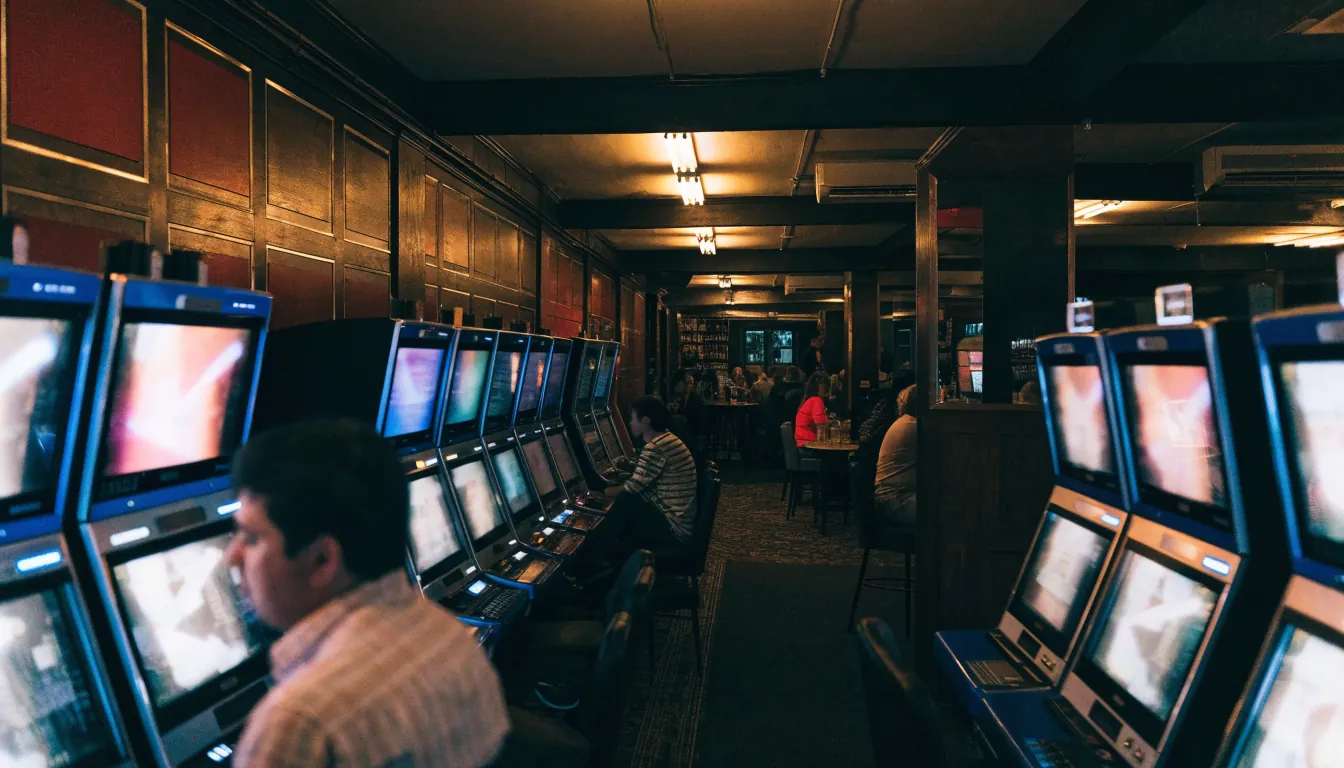
I have seen payment terminology do more work in advertising than it can support. A reference to PayID says nothing by itself about whether Adelaide pokies take cashless payments, whether a particular venue has introduced cashless machines, or what controls apply at the machine. Those are separate operational details. The label alone cannot settle them.
Newcastle is a separate location from Adelaide, so a search joining the two place names may reflect a comparison or a change of destination. It does not establish that a particular pokie, venue or machine is available in either place. Nor does a payment method tell anything about the location of a venue.
The practical distinction is straightforward: PayID describes the transfer route; cashless describes a payment arrangement at a venue or machine; a place name indicates geography. Treating those as interchangeable turns a narrow payment fact into a claim about local equipment or availability.
That is a category error.
Are online pokies legal for Australian players?
Yes, Australians can play on offshore sites that accept them, but it is illegal for companies to offer real-money online pokies to Australian residents without a domestic licence, and no such licences have been issued. There is no Australian-licensed online casino, and players have no legal recourse in Australia if an offshore casino withholds winnings.
What is the legal age for online gambling in Australia?
You must be at least 18 years old to gamble online in Australia.
What is the cost-benefit calculation of casino promotions?
Check the wagering requirement and any withdrawal cap before accepting an offer. For example, a $500 bonus with a 40x requirement calls for $20,000 in bets before winnings can be withdrawn; a 35x requirement on a $500 deposit plus a $500 bonus means $35,000 in bets.
What’s the best strategy for playing pokies?
No betting strategy can change the outcome of a spin: each one is an independent random event. You can compare games’ RTP settings and use deposit, loss and session limits to manage your play.
Prepared by the Cobber Casino editorial staff.