
Casino Stays in Tasmania: Hotels and Details to Check
 Available in AU
Casino-related searches can refer to different accommodation arrangements, venue facilities and offers, so confirm what each listing actually includes.

Table of Contents
- Hotel Stays: What the Search Terms Cover—and What Needs Checking
- Poker Rooms and Other Casino Rooms
- The Online-Casino Searches—and the Australian Legal Distinction
- Accommodation Near a Tasmanian Casino
- Contact Details, Tables, Bars and Live Shows
- Breakfast, Buffet Searches, Jobs and Rewards
- Opening Hours, Events and Development: Details to Verify
- Restaurant Searches and What Can Be Confirmed
- Spa, Address and Dress-Code Searches
- Food-Court and Pool Searches
Hotel Stays: What the Search Terms Cover—and What Needs Checking
A request for a Tasmanian casino hotel can mean more than one thing. It may refer to rooms operated by a casino, a hotel associated with a casino, or simply a stay planned around a casino visit. Those are different arrangements, even when booking pages use similar language. I would separate them before comparing prices: the name attached to a room tells less than the booking terms about who provides the accommodation and what the stay includes.
A room advertised alongside a casino is not necessarily a room inside the casino building or one managed by its operator. The distinction matters if a booking is expected to include venue access, particular services, or a single point of contact for changes. The property description and the actual booking conditions should make the arrangement clear. If they do not, the relationship should not be inferred from a shared brand, a photograph, or a broad phrase such as “casino stay”.
“Deals” need the same scrutiny. A headline rate is only one part of the offer. The conditions may specify dates, room types, booking rules, or inclusions, and those can determine whether the advertised price applies to the intended stay. I pay attention to the final terms rather than treating “special” as a description of value. It is a label, not a guarantee.
Choosing an online casino while in Tasmania calls for a careful look at the details available for each option. This list provides a concise starting point for reviewing the operators featured for 2026.
License: Curacao, operated by Dama N.V. 7Bit Casino is operated by Dama N.V. and lists a Curaçao licence.
License: Curacao eGaming (Roby Games Ltd) Roby Casino lists a Curaçao eGaming licence held by Roby Games Ltd.
License: Curacao Gaming Control Board OGL/2023/176/0095 (Hollycorn N.V.) LuckyVibe lists Curaçao Gaming Control Board licence OGL/2023/176/0095, held by Hollycorn N.V.
License: Curacao Gaming Control Board OGL/2023/176/0095 (Hollycorn N.V.) GoldenCrown lists Curaçao Gaming Control Board licence OGL/2023/176/0095, held by Hollycorn N.V.
License: Curacao eGaming (Dama N.V.) JeetCity Casino lists a Curaçao eGaming licence and is operated by Dama N.V.
License: Curacao Golden Pokies lists a Curaçao licence.
Payout speed: crypto under 1 hour, PayID 1-3 business days · Min. deposit: A$20 (A$30 to qualify for the bonus) Ricky Casino lists crypto payouts in under an hour and PayID payouts in 1–3 business days. The minimum deposit is A$20, or A$30 to qualify for the bonus.
License: Tobique Gaming Commission · Payout speed: crypto ~10-15 minutes, fiat 1-5 days · Min. deposit: A$30 SkyCrown lists a Tobique Gaming Commission licence, with crypto payouts in about 10–15 minutes and fiat payouts in 1–5 days. Its minimum deposit is A$30.
Payout speed: crypto ~90 minutes, fiat 1-5 days · Min. deposit: A$30 Kingmaker lists crypto payouts in about 90 minutes and fiat payouts in 1–5 days. Its minimum deposit is A$30.
License: Curacao · Payout speed: crypto 30-60 minutes, fiat 1-5 days · Min. deposit: A$10 Wild Tokyo lists a Curaçao licence, with crypto payouts in 30–60 minutes and fiat payouts in 1–5 days. Its minimum deposit is A$10.
For a room offer, the useful details are concrete: the property name, the room category, what is included, and the rules for changing or cancelling the booking. The exact dates and occupancy also matter because rates and availability can depend on them. A vague package description is not enough to establish that a particular room is available or that a casino-related benefit comes with it. The written confirmation is the point at which the arrangement becomes specific.
The word “hotel” can also create an expectation that casino gaming, accommodation, and other services belong to one operation. That should not be assumed. A booking may be made with a hotel while the casino is a separate venue, or the accommodation may be described in connection with a casino without being operated by it. Responsibility for payment, amendments, and service questions follows the booking arrangement, not the general impression created by a listing.
I also keep accommodation details separate from operating information. A room booking does not establish that a casino is open at a particular time, and a casino’s stated hours would not confirm room availability. Those details can change independently. For a planned stay, the relevant information should be checked with the party responsible for each booking rather than carried across from an old listing or an unrelated package page.

The phrase “casino hotel” can sound like a complete product. In practice, it is a starting description. Before relying on it, the property identity, operator, room terms, inclusions, and booking conditions need to line up. If the listing leaves those points unclear, the cautious reading is that the relationship or offer has not yet been established. Promotional wording does not fill the gap.
This approach avoids treating a broad description as confirmation of a particular Tasmanian casino hotel, room inventory, or current deal. It also makes comparisons fairer: the same room basis and booking conditions need to be compared, not just the headline wording. When details differ or are incomplete, the difference should remain visible rather than being smoothed over into a confident recommendation.
For practical planning, keep the confirmation and the property’s own terms together. Check the name on the reservation, the dates and room description, and which business handles changes. If a package refers to casino access or another inclusion, look for that condition in writing. A hotel association can be useful context; it is not proof that every expected feature is part of the stay.
That is the distinction I use: a search phrase describes an intention, while a booking document describes an arrangement. Treating the two as interchangeable is where small assumptions become travel problems. Clear terms first. Then book.
- Verify the actual booking terms and written confirmation
- Check the property name, room category, and cancellation rules
- Confirm the identity of the operator and the specific address
- Infer a casino relationship from a shared brand or photograph
- Treat the label “special” or “deal” as a guarantee of value
- Assume a “casino hotel” is a single, complete product
Poker Rooms and Other Casino Rooms
A search for poker at a Tasmanian casino can mean several different things: a dedicated poker room, a table game operating in a broader gaming area, or a scheduled tournament. Those are not interchangeable. A venue may have one, more than one, or none of them; the wording of a listing alone is not enough to establish what is available.
I separate the room from the event. A poker room describes a physical space or a service organised around poker. A tournament is a particular competition, with its own schedule and conditions. A general casino-room description may refer to a gaming floor rather than a poker facility. Treating these labels as proof of one another is how a plausible-looking answer becomes misleading.
For a poker tournament, the practical question is not simply whether tournaments have ever been held. The relevant details are whether a specific event is currently scheduled, how registration works, what format it uses and whether places remain. Those details can change independently of a venue’s general facilities. An old event listing establishes history, not a current programme. A short remark in a directory establishes even less.
“Poker available” is advertising shorthand. Behind it may be a regular table, occasional events, or a reference to poker that does not describe a dedicated room at all. I would look for a current venue-controlled listing that identifies the poker offering and its status, then confirm any event details through the venue before making plans. If the information is vague or undated, it should be treated as unresolved. Not assumed.
The phrase casino rooms is similarly broad. It may refer to gaming areas, private rooms, hotel accommodation or simply rooms within a casino complex. A page using the phrase does not establish which meaning applies. In this context, a room should not be described as a poker room unless the venue itself identifies it that way. Nor should a search result be taken as evidence of a bookable room or a particular facility.
Sports-bar wording can add to the confusion. A sports bar is a separate venue feature, not evidence of poker tables or tournaments. A reference to casino rooms does not confirm a bar either. These categories often sit beside one another in directories and promotional copy, but proximity on a page is not proof that every listed feature is available at the same place. I keep the labels separate.
The same discipline applies to claims that a casino is open now or open today. A room listing cannot confirm present operating status, and a tournament notice cannot establish that every part of a venue is accessible. Current status needs a current, direct notice from the venue. A search snippet may be out of date, incomplete or detached from the page it once summarised.
For someone comparing Tasmanian venues, the useful record is modest: the venue’s own description of its poker facilities, a dated tournament schedule if one is published, and confirmation that the event or room is operating as described. If those particulars cannot be established, the fair answer is that they remain unconfirmed—not that a poker room or tournament exists because the phrase appears online.
- Distinguish between a physical poker room, a general gaming area, and a specific tournament
- Verify current tournament schedules and registration details directly with the venue
- Treat undated or vague directory listings as unconfirmed information
- Confirm present operating status through direct venue notices
That distinction is plain, but important. A facility, an event and a room label are three different claims.
The Online-Casino Searches—and the Australian Legal Distinction
A search for a casino in Tasmania can point in two different directions: a physical venue or gambling over the internet. The distinction matters because the rules for an online service are not simply an extension of the rules for visiting a casino. A Tasmanian location in a search phrase does not make an online casino a local venue, nor does it establish that online casino games may lawfully be offered to people in Australia.
The Interactive Gambling Act 2001 makes it illegal for operators to provide real-money online casino games to people physically located in Australia. That includes pokies and table games such as blackjack, roulette and poker. The restriction is about the service being offered to someone in Australia; a platform’s overseas location or branding does not turn it into an Australian-regulated casino.

This is where a common description needs careful handling. Offshore gambling platforms may be described as operating in a “grey area” because using one is technically not illegal for an Australian player. That does not mean the platform is licensed or regulated under Australian law, or that it is lawful for an operator to provide prohibited casino services here. Those are separate questions, often blurred together in promotional copy. Important distinction.
A foreign gambling licence does not amount to Australian authorisation. It may permit an operator to conduct business under another jurisdiction’s rules, but it does not displace Australia’s restrictions on providing online casino games to people in Australia. Access is also subject to blocking and enforcement, so a site that appears online is not proof that its service is authorised for local customers.
I have seen the wording around this issue do a lot of quiet work. “Available to Australians” can describe technical access, not legal approval or local consumer protection. “Licensed” can refer to an overseas regulator, not an Australian one. Those words are not interchangeable. The distinction is practical, not cosmetic.

This also separates online gambling from searches about a Tasmanian casino’s physical facilities. Requests that combine online play with local dining, parking or bingo may mix unrelated intentions. An internet gambling service does not establish anything about what a physical venue provides, and a physical casino’s existence does not make online casino play lawful for Australian operators.
Sports betting is treated differently from online casino games under Australian law, but that difference should not be read as permission for online pokies or table games. The legal category depends on the service, not on a site’s general gambling label. A platform offering several products may therefore present distinct legal questions for each.
For anyone comparing claims about online access, the useful test is what the claim actually establishes: where the operator is licensed, whether that licence is Australian, and whether the service itself may be offered to people in Australia. An offshore licence answers only the first question. It does not convert an online casino into a Tasmanian casino, or make it an Australian-regulated service.
Legal Warning
Under the Interactive Gambling Act 2001, it is illegal for operators to provide real-money online casino games to people physically located in Australia.
Accommodation Near a Tasmanian Casino
“Accommodation near a casino” can describe two different arrangements: a room operated by the venue, or an independent place to stay in the surrounding area. The distinction matters. A nearby property may have no commercial connection to the casino, even if a booking page groups it with casino-related results. I treat the name in a listing as a lead, not proof of ownership or location.
For a Tasmanian casino stay, the useful first check is the property’s own address and booking information. A map pin can show where a listing is plotted, but the property’s stated address is the better reference for planning a journey. Then compare the route to the casino’s confirmed location rather than relying on phrases such as “close by” or “steps away”. Those are sales descriptions, not measurements.
The same caution applies to accommodation deals. A rate shown beside a casino name does not necessarily mean the venue is offering a package. The offer may come from a booking platform or a separate property, with its own cancellation rules, payment terms and conditions. I have seen attractive labels do little more than bundle a room with a location tag. Read who supplies the room and who handles changes before treating a promotion as a casino benefit.
The practical details can change the value of an apparently convenient stay. Check whether the quoted price includes the charges stated by the property, when payment is due, and what happens if plans change. For a late arrival or an early departure, the property’s own check-in and check-out terms matter more than a general booking-page summary. Keep the confirmation: it records the arrangement actually purchased.

Transport deserves a separate check. “Near” does not settle whether a walk is suitable, whether public transport serves the route at the relevant time, or whether a vehicle is needed. Parking should also be confirmed with the accommodation provider: a map marker or a casino-related label does not establish that parking is available, included, or usable by overnight guests. There is no shortcut around the small print.
I would also separate an overnight plan from the casino’s operating information. A room reservation does not establish that gaming facilities will be open at a particular time, and a casino promotion does not automatically cover accommodation. Those are separate arrangements, with separate terms. Treating them as one package without written confirmation is how expectations get ahead of the booking.
When comparing options, I use a simple record: property name, confirmed address, route to the venue, total price shown before booking, cancellation terms, and parking or transport arrangements. If any of those details are unclear, the property is the right place to confirm them. A third-party page may help locate possibilities, but it cannot replace the provider’s current terms.
That approach keeps “Tasmania casino accommodation” from becoming a promise the listing never made. Stay nearby if that suits the itinerary; just make sure the room, location and any claimed offer are real parts of the same booking. Small distinction. Big difference.
Booking Accommodation
- Check the property’s own address and booking information
- Compare the route to the casino’s confirmed location
- Identify who supplies the room and handles changes
- Verify total price, payment dates, and cancellation terms
- Confirm parking availability and transport arrangements with the provider
Contact Details, Tables, Bars and Live Shows
A contact number, map pin or car-park marker can look like a small detail until it sends someone to the wrong entrance or an outdated listing. I treat these as practical access information, not decoration. A venue’s own current contact page is the best starting point; third-party directories and map services can be useful for orientation, but their details may lag behind changes on the ground.
For a Tasmanian casino, the name of the venue matters when checking a phone number or map. “Casino in Tasmania” is not precise enough to confirm a destination. Match the listing against the venue’s official site and look for consistent naming across its contact details and map information. If a directory gives a different number or pin, the discrepancy needs resolving before relying on it. A familiar-looking result is not proof.
Parking needs the same care. A map may mark a nearby public car park, a venue entrance or a general address; those are not interchangeable. Check the map legend and the route on the venue’s own directions page, where available. A pin at the main building does not establish where parking is, whether it is available to visitors or how access works. Those conditions can matter more than the apparent distance. Details first.
Baccarat and craps are table games, but a search for either does not establish that a particular Tasmanian venue offers it. Casino game lists can change, and a general description of a casino is not a current table schedule. I would look for a venue-published games page or ask through its official contact channel, then confirm that the information applies to the intended location. A game name in a general directory is not enough.
The same distinction applies to bars. A reference to a casino bar may describe a venue feature, a nearby business or an old listing. It does not confirm the bar’s current name, location, service or access arrangements. For a visit that depends on the bar being open, check the venue’s own current information rather than inferring its status from a map label.
Concert listings require a date-specific check. A past show can remain visible in event calendars after the programme has moved on; a venue’s general entertainment page may also cover more than one space or activity. Confirm the event directly through the venue or its authorised ticketing information before making plans. Do not treat an old listing as a live programme.
I have seen how “official” can be used loosely in directory language. The useful test is whether the information is published or confirmed by the venue itself, and whether it names the correct location and applies to the intended visit. Phone numbers, directions, game availability, bar details and concert listings all have different update cycles. One source rarely settles every point. Check the specific detail.
Breakfast, Buffet Searches, Jobs and Rewards
Breakfast and buffet wording can make a venue sound more fully specified than it is. A listing for a casino does not, by itself, establish that breakfast is served there, that a buffet operates, or that either service is available every day. I separate those claims before treating them as useful details. “Buffet” describes a style of service, not a promise about hours, menu or availability.
A “buffet” label describes a style of service and does not guarantee specific hours, menu items, or daily availability.
The same care applies to searches combining a Tasmanian casino with “resort”. That label can refer to a broad leisure concept, but it does not confirm what facilities are attached to a particular venue. The meaningful checks are concrete: whether a service is currently listed by the operator, where it is provided, and whether its terms have changed. A search result or old directory entry can preserve wording long after an offer or service has changed. Paper trails matter.
Breakfast and buffet searches also need to be kept distinct from general restaurant information. A restaurant listing would not necessarily confirm a breakfast service or buffet; equally, a buffet mention would not establish which meals are served. Where the detail is not stated clearly, it is better to treat it as unconfirmed than to infer it from the venue’s broader description.
The employment searches are different in kind. Casino jobs may refer to work directly with a venue or to roles connected with its wider operations, but the phrase alone says nothing about current vacancies, hiring arrangements or eligibility. A useful vacancy notice identifies the employer, role, location, duties and application process. Those details are what turn a broad employment label into a real opportunity. I have seen job titles do a lot of selling; the duties tell the story.
Rewards language needs similar scrutiny. A programme name or reference to casino rewards does not explain how membership works, which activity qualifies, or what conditions attach to any benefit. The practical distinction is between a description and usable terms: eligibility, exclusions, expiry, and how a benefit is earned or redeemed. Without those mechanics, “rewards” is a heading, not a measure of value.

This is where promotional wording can blur categories. “Complimentary” may sound unconditional, while the terms may attach it to eligibility or a particular activity. “Member benefit” may describe access rather than a cash saving. I read the conditions as part of the offer, not as fine print that can be considered later. No mystery there.
For anyone comparing breakfast, buffet, employment or rewards information, the strongest evidence is a current, operator-issued page or notice that spells out the relevant terms. Third-party summaries can help identify what to check, but they may carry outdated labels or omit restrictions. A date and clear conditions are more useful than confident language.
These searches point to four separate questions: whether breakfast is available, whether buffet service is offered, whether a vacancy is open, and what a rewards programme actually provides. None answers the others. Keeping them separate avoids turning a broad “casino resort” description into assumptions about services, jobs or benefits that have not been stated.
Opening Hours, Events and Development: Details to Verify
“Open” can mean several different things in a casino listing: the venue is operating, a particular area is accessible, or an event is scheduled. Those are not interchangeable. I learned to separate the headline from the operating detail; a general statement about a venue does not establish that every service or event is available at the same time.
Attention: A general statement that a venue is “open” does not establish that every specific service, area, or event is accessible at the same time.
For current status, the useful detail is a dated update from the venue or its operator, not an undated directory entry or an old review. Opening information can change, and a page that remains online may describe an earlier arrangement. I look for the date of the update and the exact scope of the statement: whether it concerns the whole venue, a particular facility, or a one-off event. If the wording is broad, it leaves room for misunderstanding.
“Reopening” also needs a precise meaning. It might refer to a temporary closure ending, a section returning to service, or a planned reopening that has not yet happened. An announcement is not proof that doors are open. The practical distinction is simple. Proposed, announced and operating are different statuses.
Events have the same problem. A listing may be a past programme, a recurring format, or a future booking; without a clear date and current confirmation, it cannot establish what is happening now. I would treat a review mentioning entertainment as an account of that reviewer’s experience, not as a current schedule. Reviews can help explain impressions, but they are not an operating notice. Old information travels. It does not become current by being repeated.
Development claims deserve even more care because a project can pass through several stages before anything changes on site. A proposal, planning process, approval, construction and completed work are separate milestones. Calling all of them “development” may make a possibility sound settled. When assessing a claim, I distinguish what has been formally announced from what has been approved or completed, and check whether the information has a date and a named issuing organisation. Without those details, the status remains unclear.

A review of a Tasmanian casino is best read within its limits: it records a particular person’s view at a particular time. It cannot, by itself, settle present opening status, establish a future event programme or confirm a development. I have seen how polished wording can compress those distinctions. The careful reading is less dramatic.
Employment announcements also belong to their own category. A vacancy, a recruitment campaign and a general statement about jobs do not establish that a position is currently available. Any listing needs a current date and an identifiable employer before it can be treated as active. That is a status check, not a promise.
The same discipline applies to entertainment and other venue activity: a dated, specific notice carries more weight than a broad description. Confirm the status before making plans. No assumptions.
Restaurant Searches and What Can Be Confirmed
A restaurant listing attached to a casino name can mean several different things: a dining room operated by the venue, a separate business inside the same complex, or a restaurant nearby that has been grouped into a broad map result. Those are not interchangeable. I have seen the distinction get lost in directory pages, where a location label can look like confirmation of ownership or service when it proves neither.
What a restaurant listing should establish
A credible listing should clearly identify the business responsible for the dining offer and distinguish a full restaurant from a bar menu or a temporary service. It should also specify whether bookings are required and the exact days of operation.
For a Tasmanian casino, the useful check is specific: does the venue itself currently identify a restaurant, describe what it serves, and explain how the service works? A name in a third-party listing is a lead, not a confirmed venue detail. The same goes for photographs, old reviews and menu files that may remain online after arrangements have changed.
What a restaurant listing should establish
A credible listing should make clear which business is responsible for the dining offer. It should also distinguish a full restaurant from a bar menu, a temporary event service or a dining business located nearby. Search snippets often compress those differences. The word “restaurant” can therefore promise more than the underlying page supports.
Menus need the same care. A menu image without a date may describe a previous offer; a review may refer to a past visit rather than present service. Even a current-looking page does not, by itself, establish whether bookings are required, what days the restaurant operates, or whether a particular menu is available at the time of a planned visit. Those points belong to the venue’s own current information.
I would not treat “dining” as a single facility. The term may cover table service, casual meals, or food offered as part of another operation. That difference matters when the purpose is a restaurant meal rather than simply finding something to eat. Marketing language is broad. The operating detail is what counts.

A practical way to read the information
Start with the casino’s official website or its verified public channels, then check whether the restaurant has its own current page. Compare the business name, location description and menu details across those sources. If they do not match, the discrepancy should be resolved directly with the venue before making plans. A map pin or an old review cannot settle it.
Restaurant searches connected with Tasmania may also return places that share a location or wording without being casino-operated. Proximity is not proof of affiliation. Nor does a result for a casino in Tasmania establish that a restaurant is open, that its menu is current, or that a particular service is offered.
My rule is plain: separate the venue from the listing, and the listing from the promise. Until current information ties a named restaurant and its service to the casino, treat the detail as unconfirmed—not as a reason to assume a meal will be available.
Spa, Address and Dress-Code Searches
A spa attached to a casino, a spa elsewhere on the property and an independent day spa nearby are different arrangements. The label “casino spa” can blur those distinctions. I would establish who operates the spa and where it is located before treating it as a venue amenity. A name appearing beside a casino in a directory is not proof that the businesses share ownership or facilities.
The same care applies to a day-spa listing. Check the business’s own current information for its address, services and booking arrangements; then compare the location with the casino’s official property information. A nearby business may be useful, but proximity is not the same as an on-site facility. Details matter.
Finding the Address
Confirm the exact name of the Tasmanian casino to avoid confusing it with similarly named listings.
Use the venue’s own directions page to find the intended guest entrance rather than a general postal address.
Match the official information against map pins to ensure the destination and entrance are correct.
Finding the right address
An address can refer to a casino property, an administration office or a particular entrance. For a visit, the useful detail is the location intended for guests, not simply a postal address copied into a map listing. I look for the venue’s own directions and check that the named place matches the destination. Third-party listings can be useful for orientation, but they may combine details from different businesses or retain old information.
That is a small distinction with practical consequences. “Tasmania casino address” may sound like one straightforward request, yet the answer depends on which venue and which part of it is meant. Confirm the venue name first; then use its own location information rather than inferring an address from a similarly named listing.
Dress codes and other venue details
Dress policies are set by individual venues, and wording can distinguish between general entry and particular areas or occasions. I would rely on the venue’s own published policy for the relevant place and date, rather than treating a third-party summary as a guarantee. If the wording is broad, the venue’s contact channel is the sensible place to resolve the point before travelling. No assumptions needed.
Searches for games also need the exact venue and context. A venue’s published information can establish what it says it offers; a general games directory may not establish what is available at a particular Tasmanian property. Those are separate questions, and mixing them produces confident-sounding answers with little practical value.
Career information belongs to another kind of source altogether. A casino’s official employment page is the appropriate place to look for vacancies and application details; a venue listing or visitor page is not a substitute. I keep that distinction clear. Different purpose, different evidence.
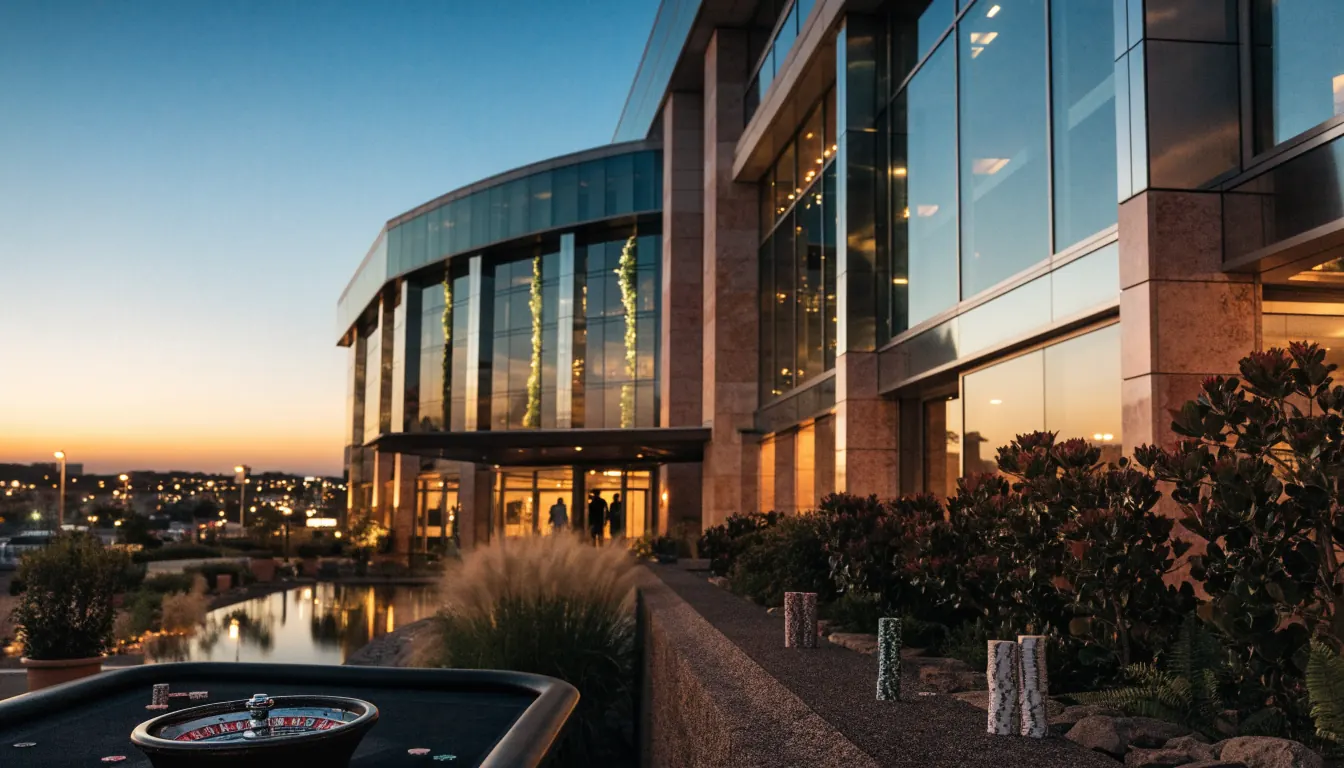
For spa facilities, addresses, dress requirements and employment information, the reliable starting point is the relevant business or venue itself. Check the specific property, not just a broad label.
Food-Court and Pool Searches
Food-court and pool questions point to specific facilities, not to a general impression of what a casino complex might offer. I have learned not to read an amenity into a venue name: a food court is not established by the presence of food nearby, and a pool is not established by the fact that a casino is associated with a place to stay.
The distinction matters because the two facilities answer different practical needs. A food court suggests a shared eating area with several options in one place. That is not interchangeable with a restaurant, café or bar, and a general reference to food does not confirm that such an area exists. For a visit planned around a particular format, the venue’s own current information is the useful check; assumptions based on older listings or photographs can mislead.

A pool needs the same careful treatment. It might be part of a separate accommodation property rather than a casino facility, or it might not be available at all. Even where a pool is mentioned in connection with a destination, its location, access rules and operating status are separate details. “On site” can conceal an important boundary.
I would keep both questions narrow: is there a food court at the casino venue, and is there a pool that casino visitors can actually use? A directory entry or nearby amenity does not answer either point on its own. The details worth confirming are the facility’s location, whether access is public or restricted, and whether the information is current.
That is less glamorous than a promise of a complete resort experience. It is also more reliable. Food and water are not interchangeable amenities, and neither should be inferred from the word “casino.”
How do NSW pokies regulators monitor player protection?
NSW uses mandatory pre-commitment systems that require players to set a loss limit before playing.
What is the legal age to play pokies in NSW?
You must be 18 or older to gamble on poker machines in NSW.
How do online pokies operate?
An online pokie uses a Random Number Generator (RNG), and each spin is independent; previous results do not affect the next spin.
What are the different types of pokies?
Examples include progressive jackpot pokies, which add a portion of bets to a growing jackpot, and pokies with buy-bonus features that let players pay to enter a bonus round.
What are the bonuses and wagering requirements?
Free-spin winnings must be wagered 30 times before withdrawal. Pokies typically contribute 100% toward wagering requirements.
Published by the Cobber Casino team.