
RTP Pokies in Australia: Understanding Return Claims
 Available in AU
Some providers offer casinos multiple RTP settings for the same pokie, so a listed percentage may not identify the version being offered.

Table of Contents
- Why a High RTP Figure Needs Context
- Reading RTP Claims in the Australian Market
- Online RTP Pokies and Australia’s Legal Position
- Why the Highest RTP Can Vary by Casino
- RTP and Payouts: What the Figure Does Not Promise
- Australian Pokies RTP and Offshore Risk
- What a Pokie’s RTP Says About Random Spins
- Online RTP Settings: The Same Game, Different Returns
- A High-RTP Setting Is Not a Guaranteed Result
- Checking What an RTP Figure Actually Applies To
Why a High RTP Figure Needs Context
A return percentage can look like a fixed property of a pokie: one game, one figure, and a straightforward basis for comparison. That reading can be too simple. A specialist review reports that some game providers let casinos choose from multiple RTP settings for the same pokie. Where that applies, a percentage published for a game does not, by itself, establish which setting is in use at a particular casino.
That distinction matters when a listing presents a return figure as though it belongs to the game in every location. The title may be the same, and the underlying game may be supplied by the same provider, while the configured return differs. The figure may describe one available setting rather than every version available to casinos. A headline number is therefore a starting point, not a complete description of the version being offered.
I have seen how easily a tidy product description can flatten that distinction. Marketing copy is built to make a game recognisable and quick to assess; a single percentage is easier to display than an explanation of possible configurations. But neat presentation does not prove that the shown setting applies across every casino. The detail that matters is not only the game’s name or its advertised return, but what that figure is attached to.
RTP can vary by game, so check the stated return for the specific pokies you plan to play. This list provides a starting point for considering operators, while the details available here do not establish any particular game’s RTP.
License: Curacao, operated by Dama N.V. 7Bit Casino is listed with a Curacao licence and is operated by Dama N.V.
License: Curacao eGaming (Roby Games Ltd) Roby Casino is listed with a Curacao eGaming licence held by Roby Games Ltd.
License: Curacao Gaming Control Board OGL/2023/176/0095 (Hollycorn N.V.) LuckyVibe is listed with Curacao Gaming Control Board licence OGL/2023/176/0095, held by Hollycorn N.V.
License: Curacao Gaming Control Board OGL/2023/176/0095 (Hollycorn N.V.) GoldenCrown is listed with Curacao Gaming Control Board licence OGL/2023/176/0095, held by Hollycorn N.V.
License: Curacao eGaming (Dama N.V.) JeetCity Casino is listed with a Curacao eGaming licence and is operated by Dama N.V.
License: Curacao Golden Pokies is listed with a Curacao licence.
Payout speed: crypto under 1 hour, PayID 1-3 business days · Min. deposit: A$20 (A$30 to qualify for the bonus) Ricky Casino lists crypto payouts under 1 hour and PayID payouts in 1–3 business days. The minimum deposit is A$20, or A$30 to qualify for the bonus.
License: Tobique Gaming Commission · Payout speed: crypto ~10-15 minutes, fiat 1-5 days · Min. deposit: A$30 SkyCrown is listed with a Tobique Gaming Commission licence. Its stated payout times are around 10–15 minutes for crypto and 1–5 days for fiat; the minimum deposit is A$30.
Payout speed: crypto ~90 minutes, fiat 1-5 days · Min. deposit: A$30 Kingmaker lists crypto payouts at around 90 minutes and fiat payouts in 1–5 days. Its minimum deposit is A$30.
License: Curacao · Payout speed: crypto 30-60 minutes, fiat 1-5 days · Min. deposit: A$10 Wild Tokyo is listed with a Curacao licence. Its stated payout times are 30–60 minutes for crypto and 1–5 days for fiat, and the minimum deposit is A$10.
This is especially relevant when comparing high-RTP pokies in Australia. A list can place games beside one another using published percentages, yet those figures are only directly useful if they refer to the settings actually offered in the versions being compared. If one entry shows a provider’s higher available setting while another reflects a casino’s configured version, the apparent comparison may not be like for like. The numbers can be accurate in isolation and still leave an incomplete impression.
The careful wording is “available setting,” not “the setting everywhere.” Some providers allow a casino to select among multiple RTP configurations; that does not mean every provider does so, nor that every casino makes the same choice. It also does not establish that a particular figure is wrong. It means the figure needs a clear connection to the specific game version being described. Without that connection, a reader cannot treat the published percentage as a universal feature of the title.
There is a practical difference between saying that a pokie has a particular RTP and saying that a casino offers that pokie at that RTP. The first can sound like a permanent attribute attached to the game. The second identifies a configuration in a specific offering. When the setting can be selected by the casino, the latter statement carries more useful detail. The game’s identity alone does not settle the question.

That is why wording such as “highest available” deserves attention. It may refer to the top setting a provider makes available, not necessarily the configuration attached to every version. A prominent figure can therefore describe a possibility rather than the exact setup at a particular casino. This is not a technicality for its own sake: it changes what can reasonably be inferred from the claim.
The same point applies to broad descriptions of the best high-return pokies. A ranking based only on the largest published percentage can conceal whether each entry refers to the same kind of setting. The comparison may appear precise because it uses percentages, yet the underlying basis can differ. In my experience, a figure earns its place in a comparison only when its scope is clear. Otherwise, precision on the page is not the same as clarity about the product.
A useful way to read any return claim is to separate three things: the pokie itself, the RTP setting associated with it, and the casino version being described. Those details may be presented together, or the listing may leave the configuration unstated. The absence of an explanation should not be filled with an assumption that the most favourable setting applies. Nor should it be taken as proof that the lower setting applies. The honest reading is narrower: the published figure alone does not identify the setting in use.
Attention: A published return figure alone does not identify the specific RTP setting in use at a particular casino.
This also explains why two descriptions of the same title may not be interchangeable. One could refer to a setting made available by a provider; another could describe a casino’s version. Unless the wording ties the percentage to the offered configuration, the shared game name does not settle whether the claims refer to the same thing. A comparison can be made only after that distinction is understood.
For anyone assessing high-return pokies, the first question is not simply which figure looks largest. It is what the figure describes. That small pause prevents an advertised percentage from being mistaken for a universal setting. The distinction is easy to miss. It matters.
Reading RTP Claims in the Australian Market
An RTP figure is a description of a game’s theoretical return over extensive play, not a receipt for money already returned. In Australian discussions of pokies, the percentage can help compare stated game settings, but it cannot establish what will happen in a particular session. Nor does the label, by itself, tell the whole story about the conditions under which the figure applies.
I learned to treat the number as a specification, not a verdict. A claim may be accurate for a particular configuration and still leave an important question unanswered: is that configuration the one attached to the game being offered? A specialist review reports that some providers give casinos a choice of RTP settings for the same pokie. That means a published figure should be read with its scope in mind. A game title and a return percentage are not necessarily enough to identify the exact setting in use.

That distinction matters when someone describes a pokie as “high RTP”. The phrase sounds like a simple ranking, but it compresses several separate points: which version is being discussed, where the figure came from, and whether it refers to the setting actually available. Without those details, the label communicates an attractive comparison while leaving its practical basis unclear. The percentage is not meaningless; it is incomplete when detached from the configuration it describes.
What the claim can tell you
A clearly stated RTP figure can indicate the theoretical return associated with a specified game setting. It gives a basis for comparing claims when they refer to equivalent settings and have been presented on the same terms. If one listing gives a figure and another gives a different one, that difference is a reason to examine what each figure describes, rather than to assume the higher claim settles the comparison.
The wording around the number matters. “The game has an RTP of…” may sound definitive, while the more precise reading is that a particular version or setting is associated with that figure. The distinction is small in copy and large in interpretation. I have seen how a tidy headline can make a conditional specification look like a universal property of a game.
A clearly stated RTP figure provides a basis for comparing claims only when they refer to equivalent settings and are presented on the same terms.
A claim also needs to be separated from the reputation of the pokie. Familiar artwork, a recognisable title, or a provider’s name does not verify that a displayed return applies to every version. Those details may help identify a product, but they do not independently confirm its active RTP setting. The claim has to be about the actual configuration, not simply the game family or a figure repeated in a general description.
What it cannot tell you
An RTP percentage cannot predict the outcome of the next spin or indicate when a winning combination will appear. Each spin is generated separately by a Random Number Generator, so the sequence of results does not follow a timetable set by the advertised return. A claim may describe a long-run theoretical measure; it does not turn random outcomes into a short-term forecast.
It also cannot, on its own, establish that a casino is fair, transparent, or suitable. A percentage is one technical detail, not a complete assessment of how a service operates. Treating it as a seal of approval gives the number a job it was not designed to do. “Best” is especially slippery here: it can refer to the largest stated figure, but that does not make it a reliable promise of the best experience or result.
The wording should therefore be read narrowly. If a listing gives an RTP without saying which setting it covers, the figure may still describe a real configuration, but the listing has not resolved whether that is the relevant one. If the number appears in promotional language, its placement does not supply the missing context. Clear presentation and applicability are different things.

I would also avoid treating scattered figures as directly comparable without checking that they refer to the same basis. A percentage repeated across pages can acquire the appearance of confirmation, even where each page may be drawing on the same broad description. Repetition is not the same as verification. The useful question is not merely whether a figure appears, but what exactly it is attached to.
For Australian players, this is the sensible boundary of an RTP claim: it can describe a theoretical return for a defined setting, and it can help make like-for-like comparisons when that setting is identified. It cannot guarantee a session result, identify the setting from a game name alone, or answer every question about the casino offering it. Read the number as a technical claim with a defined scope. Not a promise.
Online RTP Pokies and Australia’s Legal Position
A return figure and the legal status of the service are separate matters. A page describing online RTP pokies may present a percentage as a game detail, but that label does not make the service lawful in Australia. The relevant question is whether the company is permitted to offer real-money online pokies to people in the country.
The Interactive Gambling Act 2001 prohibits companies from providing real-money online pokies to Australian residents without a domestic licence. No such licences have been issued, and there is no Australian-licensed online casino. That leaves no locally licensed online casino service through which Australians can legally play real-money pokies.
Legal Status
The Interactive Gambling Act 2001 prohibits companies from providing real-money online pokies to Australian residents without a domestic licence, and no such licences have been issued.
This is a restriction on operators, not a rule that turns an advertised return into a legal approval. In my experience, promotional language can make those two ideas look closer than they are. A game may be described as having a particular return, but that description says nothing about whether the company offering it holds permission to serve Australian customers. The legal question comes first. The percentage is not a licence.
The distinction matters because a search for the best RTP online pokies Australia can surface material that treats game features as the whole decision. It is not. A high return claim, however clearly displayed, cannot change the status of the service behind it. Nor does a familiar game title or a polished website establish that an Australian authorisation exists.
The law is aimed at the company providing the prohibited service. It does not create a domestic licensing route simply because an operator is based elsewhere or describes its games as available to Australians. In this market, the absence of an Australian-licensed online casino is not a minor disclosure to weigh against a game’s advertised features. It defines the domestic position.
That is the part often softened by presentation. Terms such as “Australian-friendly” can sound like a regulatory assurance; in practice, they may describe only that a site accepts visitors from Australia. Acceptance is not local authorisation. The legal framework does not turn on how a site labels its audience or how prominently it publishes game information.

RTP remains a term used to describe a game’s stated return, but it does not answer whether real-money play is being lawfully offered in Australia. Those are different questions, and combining them can make a marketing claim appear more meaningful than it is. A percentage may be relevant to understanding a game; it does not establish that the service has domestic approval.
I have seen how easily a feature-led comparison can bury the threshold issue. Tables put figures side by side; banners emphasise availability; legal status sits elsewhere, if it is addressed at all. That order is backwards for Australia. The country has no online casino licence for real-money pokies, so a comparison of advertised returns should not be mistaken for a comparison of locally licensed services.
The practical distinction is plain: a published RTP figure concerns a game claim, while the Interactive Gambling Act 2001 governs whether a company may provide real-money online pokies to Australian residents. No Australian licence has been issued for that activity. A return percentage cannot bridge that gap.
Why the Highest RTP Can Vary by Casino
A game’s advertised maximum return is not necessarily the return setting attached to every version of that game. A specialist review reports that some game providers give casinos a choice of multiple RTP configurations for a particular pokie. Where that choice exists, the same title can therefore carry different return percentages at different casinos.
That distinction is easy to lose in a headline. “Highest RTP” can describe the strongest configuration a provider makes available, rather than the configuration a casino has selected. The title and its presentation may look unchanged; the underlying return setting may not be. The label alone does not settle the matter.
Some game providers allow casinos to choose from multiple RTP configurations for the same pokie, meaning the same title can carry different return percentages at different casinos.
From the other side of the counter, this is a configuration issue, not necessarily a different game. A casino may offer the familiar title while operating it at a setting below the maximum associated with it elsewhere. The provider’s available options and the casino’s chosen configuration are separate pieces of information. Treating them as one leads to an inflated impression of what a headline establishes.
There is a commercial reason the distinction can remain out of view. A maximum figure is attractive copy: it gives a game a simple point of comparison. A configuration choice is less tidy. It requires the listing to say which setting applies at that casino, and a headline that only gives the largest available figure may not communicate that detail. The result can be technically compatible with the provider’s offering while still leaving an important question unanswered.
This does not mean that every pokie has several settings, or that every casino makes a choice between them. The reported arrangement applies to some providers and some games. It should not be turned into a rule for the whole market. But where multiple configurations are offered, a game’s highest published RTP is only one possible setting, not proof that the setting is active at a particular casino.
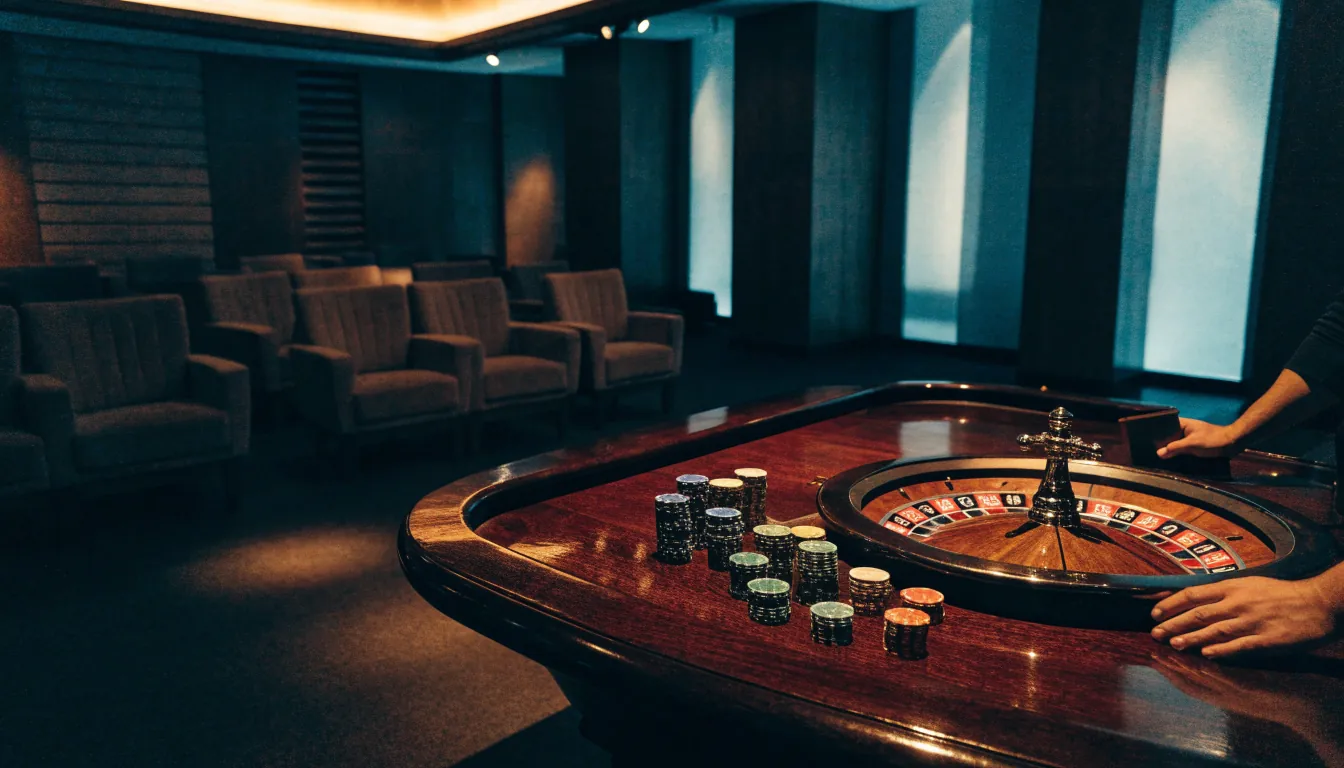
I have seen how quickly a comparison can go wrong when the displayed maximum is treated as the live configuration. Two listings can use the same game name and show different return information; alternatively, one may highlight a maximum without stating which configuration is in use. Neither the title nor its artwork resolves that discrepancy. The setting is the point.
A useful distinction is between a provider’s game information and a casino’s game listing. The first may describe the options available for a title; the second should identify the version being offered. If the listing does not make the applicable setting clear, the maximum figure should be read as a claim about availability of a configuration, not confirmation of the casino’s selection. That is a narrower conclusion, but a more defensible one.
The phrasing matters. “Up to” can make a maximum sound like an ordinary feature of every instance, when it may refer only to one selectable configuration. Likewise, a game page that repeats a high figure without tying it to the version in use leaves the comparison incomplete. The issue is not whether the headline number exists; it is what that number describes.
So the highest RTP pokies Australia searches turn up cannot be compared responsibly by game name alone. A listed maximum and an active casino setting are not interchangeable facts. Where a provider permits more than one configuration, the casino-specific setting is what gives the percentage practical meaning. A headline can point to the ceiling. It does not, by itself, show where the game is set.
Casino Settings
A listed maximum RTP is a possibility, not proof of the active configuration at a specific casino.
RTP and Payouts: What the Figure Does Not Promise
An RTP figure is easy to read as a forecast: put money into a pokie and expect a matching share back. That is not what the percentage says. It describes a theoretical return across play over time, not the amount due to one person during a session. A high figure may help compare stated returns, but it cannot tell anyone what a particular visit will pay.
I have seen the distinction get lost in the word “return”. In ordinary business, a return sounds like something owed. In pokie terms, it is a calculated measure, not a balance waiting to be collected. It does not set a payout for each spin, nor does it promise that a session will finish near the stated percentage. The result can be higher or lower.
Each spin is generated independently by a Random Number Generator. The outcome of one spin does not create a claim on the next, and a run of results does not turn the RTP into a short-term target. A pokie does not have to compensate for a losing stretch by paying more soon afterwards. Nor does a win mean that the following spin is less likely to pay. The percentage does not work as a running account.
This is why “best payout” needs careful interpretation. A high RTP may look attractive when comparing theoretical figures, but it is not a ranking of what a player will take home. It cannot identify which pokie will deliver the largest result in a session, or whether a session will return anything at all. Those are individual outcomes, not promises contained in the percentage.

The practical mistake is treating a long-run measure as if it were a personal forecast. The figure can describe the game’s stated return framework; it cannot make a specific outcome predictable. Each spin stands on its own, and the session may bear little resemblance to the theoretical return.
No scheduled payback.
Australian Pokies RTP and Offshore Risk
When Australian pokies RTP is compared across offshore sites, the figure can draw attention away from a more basic question: what happens if a site does not honour a withdrawal? A displayed return percentage describes a game setting; it does not establish what legal protection is available if a dispute arises with the operator.
The distinction in Australian law is between the operator and the player. The law targets companies offering prohibited online gambling services to people in Australia, not individual players. Australians can legally play on offshore sites that accept them. That does not mean the site is authorised under an Australian online casino licence, or that Australian protections apply to the transaction.
This is where the practical exposure sits. If an offshore casino refuses to pay winnings, an Australian player has no legal recourse in Australia. A site may publish terms, provide customer support and display game information, but those features do not create a local route to recover funds when the operator will not resolve a dispute.
If an offshore casino refuses to pay winnings, an Australian player has no legal recourse in Australia.
I have seen how easily a polished page can make separate things look like one assurance. A prominent RTP claim is about the game’s stated return; it is not evidence that a casino will pay, and it does not change the legal position if payment is withheld. The figure and the operator’s accountability are different matters. That distinction is easy to miss.
Offshore access also should not be mistaken for domestic approval. Australian authorities target unlawful operators, and access to offshore services can be restricted. A site being reachable, or accepting an Australian customer, is not proof that it has Australian authorisation. Nor does the player’s lack of individual liability make the operator locally accountable.
That leaves a specific limit to RTP comparisons. They can help describe a game, but they cannot settle the question of recourse against a foreign operator. If a withdrawal dispute occurs, the absence of an Australian legal remedy is a separate risk from the game’s advertised return. The distinction is less visible than a percentage on a game page. It matters more when something goes wrong.
What a Pokie’s RTP Says About Random Spins
A pokie’s return percentage describes a theoretical relationship between wagers and returns over a large body of play. It does not describe the mechanism that selects the symbols on the next screen. That distinction matters: RTP is a long-run measure, while a spin is a single event.

Each spin is determined by a Random Number Generator (RNG) and is independent of the spins before it. In practical terms, a previous result does not make a particular symbol combination due, nor does a run of wins make a loss more likely on the next turn. The machine is not keeping a ledger and adjusting the next result to bring play back towards its stated percentage.
I have seen “hot” and “cold” used as if they were operating states. They are descriptions of a short run of outcomes, not evidence that the RNG has changed its behaviour. A stretch that looks unusually generous can happen; so can a barren stretch. Neither, by itself, tells anything reliable about the next spin.
The percentage still has a purpose. It gives a mathematical description of the game’s designed return across extensive play, rather than a forecast for an individual. The word “return” can sound immediate, but the calculation is not a schedule: it does not assign a set amount back after a certain number of turns. Random selection remains in place on every spin.
That is why RTP should not be read as a signal to increase a stake, continue after losses, or expect a result because the game has not produced one recently. Those decisions treat a long-run statistic as if it were a clue about the next random event. It is not.
From the operator side, the figure is useful for describing a game’s theoretical design. It is less useful as a narrative about what a particular run will look like. The RNG does not know whether a player has just arrived, has played for a while, or has seen a sequence that feels meaningful. Each spin is generated independently.
How RNG and RTP differ
RTP is a long-run statistical description of theoretical return over extensive play, while the Random Number Generator (RNG) is the mechanism that independently selects the outcome of every single spin.
The cleanest reading is also the least dramatic: RTP summarises a theoretical return; the RNG selects each outcome. One is a broad statistical description, the other is the mechanism acting on a single spin. No signal.
Online RTP Settings: The Same Game, Different Returns
An online listing can identify a pokie and display a return figure without making clear which version of the game is being offered. That distinction matters because some providers allow casinos to select from multiple RTP settings for the same pokie. The title and artwork may be identical while the configured return differs.
A specialist review has reported that this choice can produce different return percentages for the same game at different casinos. That is a useful warning, not a guarantee that every provider or every title has several settings. The practical point is narrower: a figure attached to a game name does not, by itself, establish the setting in use at a particular site.
I have seen how a single headline number can do a lot of work in a listing. “High RTP” sounds like a property of the title, fixed wherever it appears. In practice, where selectable configurations exist, the figure needs to be connected to the actual version offered. Otherwise a comparison may place one casino’s configured setting beside another casino’s advertised or provider-published figure as if they were directly equivalent.

That is a documentation problem, not something the game’s appearance can resolve. Matching names, symbols and features do not show which RTP configuration is active. Nor does the presence of a game in an online catalogue confirm that the listing specifies its setting. The figure must be tied to the version in use, rather than assumed from a general description of the title.
For anyone comparing high-RTP online pokies, the useful distinction is between a figure associated with a game in general and a figure that explicitly applies to the configuration being offered. If the listing does not make that connection, its number has limited value for comparison. It may describe an available setting, not necessarily the one presented in that particular instance.
I would treat unclear wording as unresolved, rather than fill in the gap with the most favourable interpretation. A casino’s listing may tell what game is available; it may not tell which return setting applies. Same title. Different configuration.
A High-RTP Setting Is Not a Guaranteed Result
A pokie with the highest stated RTP can look like the obvious choice for a visit. The figure describes a theoretical return over extensive play, though, not a forecast for one person’s session. It cannot tell whether the next spin will pay, how a run of spins will unfold, or what balance will remain when play stops.
I have seen the distinction get blurred in promotional language. “Higher return” sounds like a near-term advantage, but it describes a setting’s calculated behaviour across many plays, not a promise attached to an individual visit. A higher RTP may matter when comparing theoretical returns on a like-for-like basis. It does not turn short-term results into something predictable.
- Treat RTP as a theoretical long-run measure
- Use figures to compare stated return frameworks
- Use RTP as a short-term payout forecast
- Assume a high RTP guarantees a winning session
The mechanism is straightforward: a Random Number Generator determines each spin, and one spin does not depend on the result immediately before it. A losing run does not make a win due; a win does not mean another is more likely to follow. The same independence applies when the selected setting has the highest RTP available. No momentum. No correction.
That is why a brief session can depart sharply from the long-run picture. A player might finish ahead, lose the stake quickly, or see little movement. The RTP figure does not identify which outcome will occur on a particular visit. Nor does choosing a higher setting remove the possibility of an unfavourable run.
The practical mistake is treating “best” as shorthand for “best result today”. The word is doing more work than the figure can support. RTP can help describe a game’s theoretical return, but it is not a measure of how generous the next session will be. A higher stated percentage does not guarantee a payout, a winning session, or a better result than another game over a short spell.
So the highest-RTP option can be a meaningful comparison on paper and still offer no certainty in the moment. The figure concerns a broad mathematical expectation; the visit consists of individual random outcomes. Those are different scales, and confusing them is where an apparently precise percentage becomes a false promise.
Checking What an RTP Figure Actually Applies To
A return figure belongs to a particular game configuration, not automatically to every version of that game. One specialist review reports that some providers let casinos choose among several RTP settings for the same pokie. Where that arrangement applies, the title and artwork can stay the same while the configured return differs between casinos.

That distinction is easy to miss in a comparison. A figure attached to a game name may describe an available setting, rather than identify the one in use wherever the game appears. The number can be accurate and still answer the wrong question: it may show what the provider offers, not what a particular casino has selected.
I have seen how a clean headline number can do more work than its wording supports. “High RTP” sounds like a property of the game as a whole. In practice, the relevant detail is the setting attached to the version being offered. Without that link, comparing figures by title alone is incomplete. Same game. Different configuration.
The practical check is whether the stated percentage is tied to the specific version available at that casino. A game catalogue or general provider description may identify a possible setting without confirming which one applies there. Clear information should connect the return figure to the actual configuration; if that connection is absent, the comparison cannot settle the point.

This does not turn a configuration into a forecast. Each spin is generated separately by a Random Number Generator, so the RTP setting does not tell anyone what the next result will be. It describes the return associated with a defined game setup, not a sequence of outcomes that must unfold in a particular way.
That is the boundary of a useful RTP comparison: establish what configuration the figure refers to, then treat it as a characteristic of that setup rather than a promise about play. A percentage without its setting can be technically meaningful yet unhelpful for comparing the versions actually available. And even a clearly identified setting remains a statistical measure, not a personal result.
I would not rank pokies by a number detached from its configuration. The useful question is narrower: which setting does this figure describe? Once that is clear, the number has context. Without it, the label does not tell the whole story.
Are online pokies legal for Australian players?
Yes, Australians can play on offshore sites that accept them, but companies cannot legally offer real-money online pokies to Australian residents without a domestic licence, and no such licences have been issued. Players have no legal recourse in Australia if an offshore casino refuses to pay.
Can casinos change the RTP of their games?
Yes. Some game providers let casinos choose between multiple RTP settings for the same pokie, so the game’s stated return can vary between casinos.
What’s the best strategy for playing pokies?
No strategy can predict or control the result of a spin: each spin is an independent random event determined by a Random Number Generator. Deposit, loss and time limits can help you manage your play.
What does “wagering requirement” actually mean?
It is the amount you must bet before bonus winnings can be withdrawn, usually expressed as a multiplier. For example, a $500 bonus with a 40x requirement means you must place $20,000 in bets before withdrawing winnings.
Prepared by the Cobber Casino editorial staff.