Canberra Casino Search: Venue or Online Play?
 Available in AU
This guide distinguishes physical-location questions from online gambling searches and flags venue details that remain unverified.
Table of Contents
- What “Canberra Casino” Means in a Search for a Venue
- Poker Rooms, Tournaments and the NSW Machine-Gambling Context
- Hotel Rooms and Deals: What the Available Information Can Establish
- Parking, Bingo, Dining and Online Searches: Separate the Venue from the Website
- Accommodation Near a Casino: Local Options Remain Unverified
- Breakfast, Buffet and Resort Claims Need Local Verification
- Opening Hours, Events and Entertainment: No Verified Canberra Schedule
- Address, Bars, Spa and Dress Code: Details Not Established Here
- Restaurant Searches Without Inventing a Canberra Dining Line-up
- Food Courts and Pools: No Verified On-Site Facilities
What “Canberra Casino” Means in a Search for a Venue
“Canberra casino” can describe two different things: a physical place someone expects to visit in the city, or an online gambling service associated with casino games. The distinction matters. A request involving a map, contact details or a car park is about finding and reaching a venue. A request involving baccarat or craps may be about games, whether at a physical table or on a website. Similar wording, different questions.
I have seen this distinction matter in the way venue information is assessed. A name in a search phrase is not proof that a particular business operates under that name, nor that it offers every feature attached to the phrase. A map result, a bar listing and a game description each need to relate to the same real, identifiable place before they can be treated as one coherent venue profile. Search wording alone cannot do that work.
The practical details carry their own meaning. A request for a contact number is about reaching an operator; a request for a map is about locating a place; and a request for a car park concerns access. Those are not interchangeable with information about online games. Likewise, a mention of baccarat or craps describes a game interest, not evidence that either game is available at a Canberra venue. A label is not an offer.
Choosing an online casino from Canberra calls for checking the details that are actually available, rather than relying on broad promises. This list offers a concise reference to help you assess the options for 2026.
License: Curacao, operated by Dama N.V. 7Bit Casino is listed as licensed in Curacao and operated by Dama N.V.
License: Curacao eGaming (Roby Games Ltd) Roby Casino is listed under a Curacao eGaming licence held by Roby Games Ltd.
License: Curacao Gaming Control Board OGL/2023/176/0095 (Hollycorn N.V.) LuckyVibe is listed with Curacao Gaming Control Board licence OGL/2023/176/0095, held by Hollycorn N.V.
License: Curacao Gaming Control Board OGL/2023/176/0095 (Hollycorn N.V.) GoldenCrown is listed with Curacao Gaming Control Board licence OGL/2023/176/0095, held by Hollycorn N.V.
License: Curacao eGaming (Dama N.V.) JeetCity Casino is listed under a Curacao eGaming licence and operated by Dama N.V.
License: Curacao Golden Pokies is listed as licensed in Curacao.
Payout speed: crypto under 1 hour, PayID 1-3 business days · Min. deposit: A$20 (A$30 to qualify for the bonus) Ricky Casino lists crypto payouts under 1 hour and PayID payouts in 1–3 business days. The minimum deposit is A$20, or A$30 to qualify for the bonus.
License: Tobique Gaming Commission · Payout speed: crypto ~10-15 minutes, fiat 1-5 days · Min. deposit: A$30 SkyCrown is listed under the Tobique Gaming Commission. Its stated payout times are around 10–15 minutes for crypto and 1–5 days for fiat, with a A$30 minimum deposit.
Payout speed: crypto ~90 minutes, fiat 1-5 days · Min. deposit: A$30 Kingmaker lists crypto payouts at around 90 minutes and fiat payouts in 1–5 days. Its minimum deposit is A$30.
License: Curacao · Payout speed: crypto 30-60 minutes, fiat 1-5 days · Min. deposit: A$10 Wild Tokyo is listed as licensed in Curacao, with crypto payouts stated at 30–60 minutes and fiat payouts at 1–5 days. The minimum deposit is A$10.
That is where the online distinction becomes especially important in Australia. The Interactive Gambling Act restricts online casino games such as pokies, blackjack and roulette when offered by operators based in Australia. It is illegal for an Australian-run online casino to provide those services to people in Australia. The law concerns the operator’s provision of the service; it should not be blurred into a claim that an Australian physical venue and a website are the same kind of business.
The legal position is also not a simple endorsement of offshore sites. Offshore casino services are not regulated under Australian law, and access may be blocked. The fact that a site can be encountered online does not make it a lawful Australian casino operator or provide the protections associated with local regulation. That distinction is easy to lose when a website uses familiar venue language—“casino”, “bar” or “games”—to describe an online product. Different service. Different rules.
A useful way to read the wording is to separate the object being sought from the feature being named. “Casino” might point to a physical destination; “baccarat” might point to a game; “contact” or “car park” signals a practical venue need. None of those terms, by itself, confirms that a Canberra location offers the game or facility in question. That is not a technicality. It is the difference between a place someone can visit and an online gambling service governed by a different legal framework.


The scope is clear. Physical venue information and online casino access should be treated as separate subjects, even when the same words appear in both. No assumption follows from the wording alone.
Poker Rooms, Tournaments and the NSW Machine-Gambling Context
Poker and pokies are different forms of gambling, even when people use “poker” loosely to describe both. A poker room suggests table poker: players compete against one another under a game’s rules, and a tournament has an organised format, entry conditions and a scheduled start. Electronic Gaming Machines (EGMs), by contrast, are individual machines; their outcomes do not depend on a table of competing players.
That distinction matters when interpreting a request for poker at a Canberra casino. A room with poker tables, a scheduled tournament and a venue with EGMs are not interchangeable offerings. Nor does the word “rooms” settle the matter: it can refer to poker facilities or accommodation, depending on the context. I would treat each as a separate claim, not assume that one implies the others.
Tournament information is especially time-sensitive. A tournament listing needs to identify the game and format, and to give a date and registration details that still apply. A general mention of poker does not establish that a tournament is running. “Open today” is a separate question again: a venue’s operating status does not confirm that a poker table is active or that a tournament is scheduled. The same applies to a sports bar. It is a distinct facility, not evidence of poker-room access or hours.
- Treat poker rooms, tournaments and EGMs as separate offerings
- Verify tournament dates and registration details
- Check current operating status for specific facilities
- Assume a poker room implies the presence of EGMs
- Infer tournament activity from a general mention of poker
- Assume a sports bar confirms poker-room access
The NSW machine-gambling context can help explain the difference, but it should not be mistaken for a description of Canberra poker. Club Liverpool has the highest number of operational poker machines among clubs in NSW. That is a statement about machines at a NSW club, not a ranking of poker rooms, a record of tournament activity or a claim about a Canberra venue.
NSW rules also provide a useful boundary for machine gambling. The legal age for gambling on poker machines in the state is 18. Mandatory pre-commitment systems require players to set a loss limit before playing. These measures concern poker-machine gambling; they do not, by themselves, tell anything about a poker tournament’s entry rules or whether a particular tournament is available.
From an operational perspective, the labels matter because they set different expectations. A poker tournament is built around a competition and its schedule. An EGM session is individual machine play, with the pre-commitment process relevant in NSW. A bar is a hospitality space. Calling all three “casino facilities” may sound tidy in a short listing, but it conceals practical differences.
For any Canberra listing, useful details would be specific: whether poker is played at tables, whether the event is a tournament or a cash game, and when the stated session takes place. Those details should not be inferred from a mention of EGMs, a sports bar or a venue’s general opening status. Search wording can bundle several ideas together; the actual offer has to be read as separate parts.


There is no substitute for a current, direct schedule when a tournament date is the deciding detail. Old event pages can remain visible after an event has passed, while a general venue page may say nothing about poker at all. The distinction is simple. Poker is not a poker machine. A tournament is not a timetable. A bar is not a poker room.
Hotel Rooms and Deals: What the Available Information Can Establish
A search for a casino hotel in Canberra can mean a room inside a casino complex, a hotel formally connected to a casino, or simply accommodation someone hopes to use alongside a casino visit. Those are different arrangements. The wording on a booking page matters: “near” describes location, while “casino hotel” can suggest a direct property connection that should be confirmed rather than assumed.
I separate the room from the “deal”. A room listing describes accommodation; a deal may add conditions or inclusions, but its label alone establishes neither. Without a confirmed Canberra property or offer, there is no sound basis for naming a casino hotel, describing its rooms, or presenting a current package as available. Search results can make the association look settled when the underlying listing is merely for a hotel in the same city.
For a hotel-specific offer, the practical reading is line by line. The room type, booking dates, cancellation terms and stated inclusions define what is being sold. If a promotion mentions a casino benefit, that should be treated as a separate condition, not as proof that the hotel is operated by a casino or that a casino is on site. “Exclusive” is a sales word. The actual terms do the work.
Attention: A hotel’s general location in Canberra does not confirm a direct property connection to a casino or the availability of specific casino-related deals.
This distinction is useful even when a listing looks polished. A booking page may use a broad location label, a promotional heading or a photograph that implies a relationship stronger than the text confirms. I would not turn that implication into a claim about a Canberra casino hotel. The listing needs to identify the property and explain the connection in plain terms.
Room descriptions also need to be read as property-specific, not as a promise about a city-wide category. A phrase such as “casino hotel rooms” might refer to standard accommodation at a property associated with casino facilities, but it does not establish room features, availability or price in Canberra. Those details vary by property and booking conditions; without an identified local hotel, assigning them would be guesswork.
The same applies to searches for hotel deals. A displayed offer can be tied to particular dates, room categories or booking rules, and the headline may not capture those limits. The useful question is not whether an offer sounds generous, but what it includes and what conditions attach to it. If the terms do not identify a casino-related inclusion, the word “casino” in a search or page title should not be taken as evidence of one.
Hotel listings also should not be used to infer casino opening hours. Accommodation availability and venue operating times are separate details. A hotel may publish room information without establishing anything about a casino’s current schedule; a package title cannot fill that gap. That is a small distinction, but it prevents a common category error.
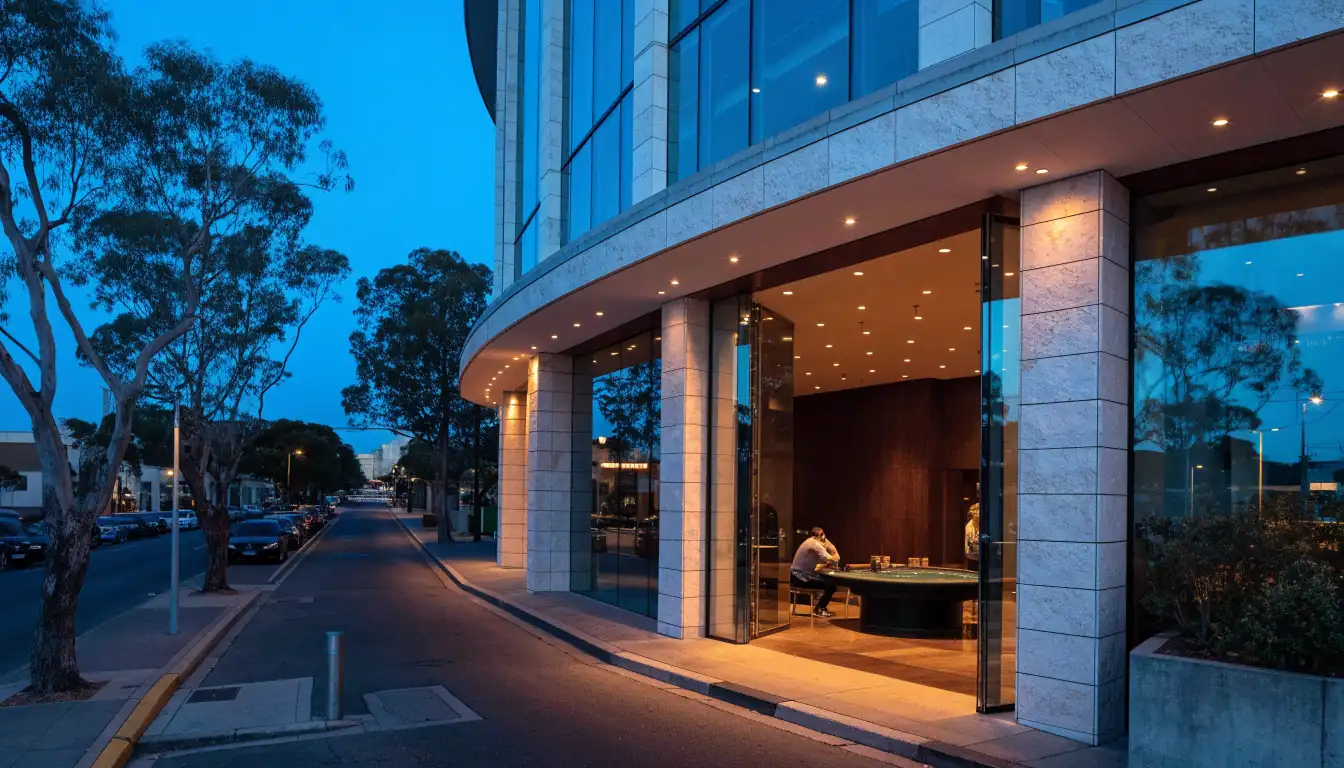
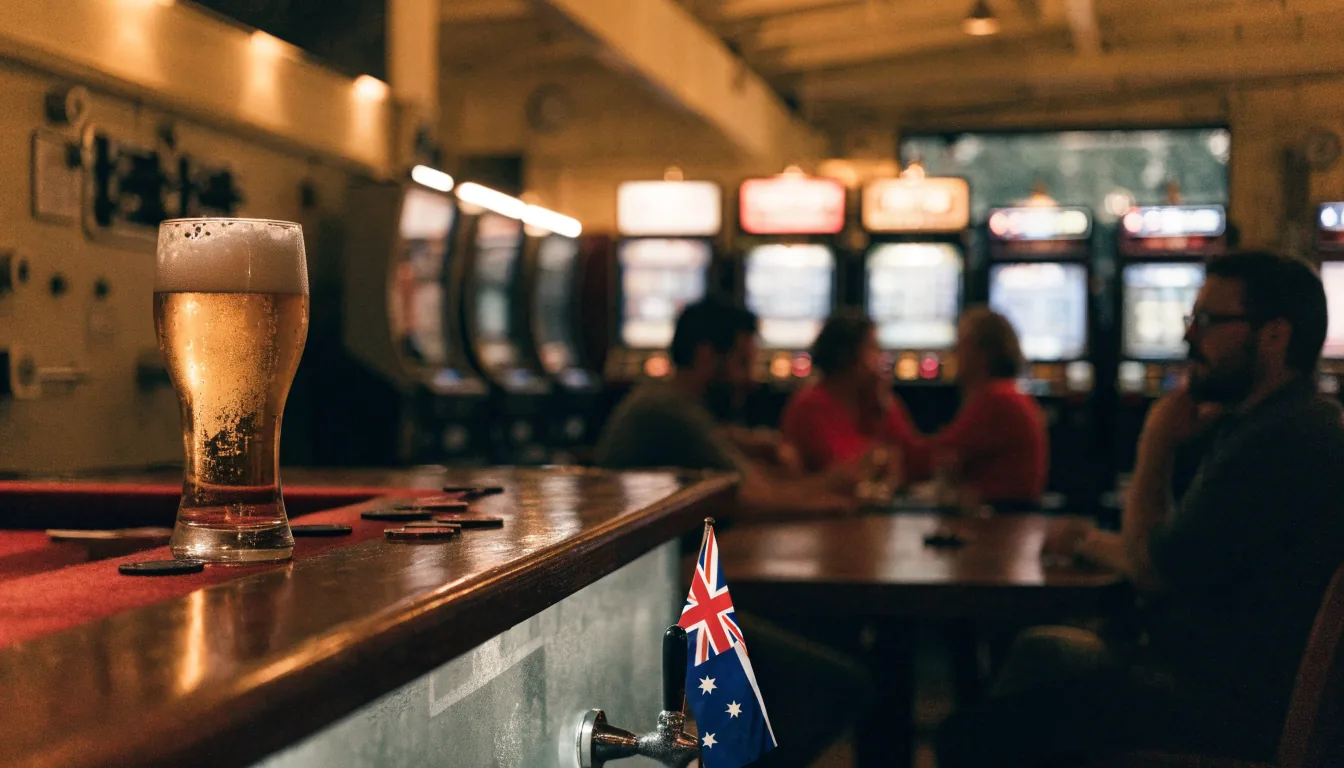
For “hotel near a casino” wording, proximity is not the same as affiliation. A hotel can be described by its location without being part of a casino business, and the phrase does not establish a walking distance, transport arrangement or shared service. Those claims require specific property information. Without it, the careful description remains simply that the hotel relationship has not been confirmed.
A reliable Canberra-specific account would need an identifiable hotel and terms tied to that property. Until then, “casino hotel” is a search label, not a verified local product. Room claims need a property; deal claims need conditions. Nothing more should be read into the wording.
Parking, Bingo, Dining and Online Searches: Separate the Venue from the Website
Parking, bingo and dining point to practical venue information. An online casino search points somewhere else: a website offering games. The wording can sit side by side in a set of results, but the underlying services are not interchangeable. I treat each as a separate question rather than letting a broad phrase such as “casino in Canberra” imply that a particular local venue, facility or website has been confirmed.
For parking, the useful distinction is between a car park, valet service and free parking. Those are specific claims about access and cost, not details that can be inferred from a casino-related name. The same applies to bingo: a venue’s association with gambling does not establish that it runs bingo. Dining is another separate matter. A reference to casino dining does not, on its own, identify a restaurant or confirm that one operates at a Canberra venue. No assumption should be made from the search wording alone.
Legal Risk
Under the Interactive Gambling Act 2001, it is illegal for Australian-based operators to provide real-money online casino games, including pokies and table games, to people in Australia.
The online wording needs more care. A website can restrict access to games according to the player’s location. It may use the IP address—the network identifier visible to the service—to estimate the country from which a connection is being made. If games are blocked for Australian connections, they will not appear in the game lobby when it is accessed from an Australian IP address. A missing title can therefore reflect a location restriction, rather than a fault with the game or proof that the same title is available elsewhere.
That technical explanation is not an endorsement of online play. Under the Interactive Gambling Act 2001, operators are prohibited from providing real-money online casino games, including pokies and table games, to people physically in Australia. The law concerns the service provider; it does not make an offshore site an approved Australian casino. Search results that place “online casino” and “Canberra” together should not be read as evidence of a locally lawful online casino option.
A VPN can make a connection appear to come from another country. Using one to access region-blocked pokies sites is against the site’s terms of service and may lead to an account being suspended. It does not change the player’s physical location or make the online service lawful for an operator to provide in Australia. A workaround, not a solution.


From an operational point of view, location controls are applied at the digital service layer. They say nothing about whether a physical venue has parking, bingo or food. Conversely, details about a venue would not establish that an online game is available to Australian users. That separation matters when a result page uses the word “casino” loosely across a venue listing, a dining reference and a gaming website.
I would therefore read claims at the level they actually describe: parking claims as access information, bingo claims as an activity listing, dining claims as food-service information, and online game claims as digital availability subject to Australian law and location controls. Similar wording. Different services.
Accommodation Near a Casino: Local Options Remain Unverified
A stay described as “near the casino” is only useful when the venue and the property can both be placed on a map. That distinction matters: a hotel’s general Canberra location does not, by itself, establish that it suits a casino visit.
I have seen accommodation copy use “near” as if it were a measured feature. In practice, it can mean a short walk, a drive across town or simply the same broad area. Without a verified venue location and a property address to compare, the label says little about travel time. It is marketing shorthand. Not a route plan.
The same applies to offers presented as casino accommodation deals. A room promotion may be tied to a property, a booking period or particular conditions, but the phrase alone does not establish that the offer is current or connected to a Canberra casino. A package should be read as a specific lodging offer, not as proof of an operating casino, included gaming access or a convenient location.
Verify Accommodation
- Confirm the property’s physical address
- Identify the destination’s confirmed address
- Map the route between the hotel and the venue
- Review the specific terms attached to the room rate
For a useful comparison, the relevant details are concrete: the property’s address, the destination’s confirmed address, the route between them and the terms attached to the room rate. Parking is a separate practical question. A listing that mentions parking does not establish that spaces are available for a particular stay, or that they serve a casino destination. Those details need to come from the accommodation provider and be checked against the actual itinerary.
This is also why broad labels such as “casino Canberra accommodation” can lead to mismatched expectations. A listing might refer to general accommodation in the capital, a venue in another city, or a casino-themed page rather than a nearby place to stay. Names and promotional language do not settle the geography. The location does.
The same care applies when a booking page combines accommodation with claims about casino promotions, gaming machines or poker machines. Those phrases should not be treated as evidence that a casino facility is part of the lodging, or that the property is associated with one. Accommodation and gambling operations are distinct claims. Each needs its own confirmation.
For a Canberra stay, the sensible standard is straightforward: establish the destination first, then compare accommodation using a real address and the conditions of the booking. If either point is unclear, proximity and value cannot be judged reliably. A low advertised rate can still be a poor fit if the location does not match the intended trip; a property’s promotional wording cannot repair that mismatch.

The useful conclusion is narrower: proximity is a factual claim, not a synonym for being somewhere in Canberra. For booking decisions, the map and the booking terms do the work. The label does not.
Breakfast, Buffet and Resort Claims Need Local Verification
A breakfast offer can sound like a small detail, but its wording matters. “Included” might mean part of a room rate, a package, or a particular booking condition; it does not, by itself, establish that breakfast is available to every guest. The same caution applies to buffet language. A buffet breakfast, a general buffet and a restaurant serving breakfast are different claims, and one cannot be inferred from another.
I would look for the actual venue name and the terms attached to the offer before treating a Canberra casino breakfast or buffet as confirmed. The details that would settle the question are practical: where the meal is served, which bookings qualify, whether the offer is limited to certain dates, and whether the venue itself currently describes it that way. Without those particulars, a polished phrase is still just a claim.
“Resort” also carries more weight than a label in a headline. It can imply a coordinated stay with several facilities or services, while a casino, a nearby hotel and a package promoted by a third party may be separate businesses. Calling an arrangement a casino resort does not establish that accommodation, dining, recreation or other services are operated together. I would keep those distinctions intact rather than let the word do the work of evidence. Labels travel faster than details.
Terms such as “resort” or “exclusive rewards” should be traced back to current terms from the providing business rather than being accepted as general evidence of available facilities.
Rewards claims need the same close reading. A programme name alone does not show what earns rewards, how they can be used, whether benefits depend on membership conditions, or whether a breakfast or stay is actually included. Any offer should be traceable to current terms from the business responsible for providing it. A generic promise of “exclusive” benefits tells little until the conditions and the provider are clear.
The same standard applies to employment. Searches for casino jobs in Canberra do not establish that a particular casino is operating or recruiting. A genuine vacancy should identify the employer, the role, the location and the application route; a page that merely repeats a venue label is not equivalent to an employer’s current listing. Job titles can also belong to hotels, clubs, contractors or suppliers, so the employer matters as much as the wording of the role.
For anyone weighing up a breakfast package, a buffet or a resort-style stay, the useful evidence is specific and attributable: a current offer, clear eligibility terms and a named provider. For a prospective employee, it is a verifiable vacancy from the organisation doing the hiring. Until those details line up, I would not present breakfast, buffet service, rewards, resort facilities or jobs as confirmed Canberra casino offerings. A search phrase cannot fill that gap.
Opening Hours, Events and Entertainment: No Verified Canberra Schedule
A venue’s opening status is a specific operational fact, not something that can be inferred from the word “casino” or from activity elsewhere in the gambling market. I would treat claims that a Canberra casino is open, has reopened or is about to reopen as unconfirmed unless they are backed by a current statement from the operator or a relevant public authority. A listing that remains online can be stale; a proposed development is not the same as an operating venue.
That distinction matters when interpreting announcements. “Coming soon” may refer to a proposal, planning process or future intention rather than a confirmed opening. A development claim needs to be separated from approval, construction and actual operation. Employment references need the same care: a speculative project, an old recruitment notice and current vacancies are not interchangeable. The wording may sound definite while the underlying stage remains uncertain.
I have seen how easily a date or event headline can take on a life of its own once repeated. For a reliable status check, look for a recent operator notice or an official government or planning update, then compare the date and the precise wording. If no current statement confirms an opening, event or recruitment activity, the sensible description is that the status has not been established—not that a reopening is imminent.
Events and entertainment also need direct confirmation. A venue may host a one-off activity, advertise a future programme or have no public event listing at all; none of those possibilities establishes a regular schedule. A third-party calendar can help locate a claim, but it is not proof that the event is still on. Check the organiser’s current notice for changes, cancellations and eligibility conditions before treating a listing as live.
Australia’s legal and commercial picture can be misleading here. Sports betting remains widely accessible and legal in Australia, but that does not confirm that a casino venue in Canberra is operating, nor does it verify its entertainment programme. Betting availability and a physical venue’s opening hours are separate matters. One does not prove the other.
- Treat opening status as unconfirmed without an official operator or authority statement
- Separate “coming soon” proposals from actual operational status
- Verify event schedules directly with the organiser
- Distinguish between legal sports betting and the operation of a physical casino venue
The same standard applies to reviews. A review may describe an earlier visit, a different business or an online service; its publication date and the place it actually covers matter. I would not use a review alone to establish current opening status, a reopening date or a continuing events calendar. Promotional language is not a schedule. Check the underlying notice.
For anyone assessing a claimed Canberra casino development, the useful question is not simply whether a name appears in an announcement. It is whether the announcement identifies a real, current stage and whether that stage has been confirmed by an accountable source. Until then, claims about hours, events, entertainment and employment remain unverified. No invented timetable.
Address, Bars, Spa and Dress Code: Details Not Established Here
A venue address is the first practical detail to confirm, but “Canberra casino” is not enough to establish a location. An address attached to a similarly worded business listing could belong to a different kind of venue, an accommodation provider or a business elsewhere in the region. The name alone is not proof that a casino operates there.
The same distinction applies to bars. A listing for a bar in Canberra does not establish that it is inside a casino, and a venue’s hospitality offering should not be inferred from its name or from general expectations about casino properties. I have seen how easily a broad label becomes a firm assumption once it is repeated in listings. That is not confirmation.
A spa or day spa requires the same care. Nearby wellness businesses, hotel amenities and casino facilities are separate things. Without a confirmed venue and a direct description of its facilities, there is no sound basis for presenting a Canberra casino spa as an on-site service. The wording matters: “nearby” does not mean “part of the casino.”
Dress codes are often treated as a minor detail, but they are an entry condition, not a universal convention. Requirements can differ between a gaming floor, a bar and a special event. A general assumption about smart-casual clothing is not a published policy.
The same caution applies to games and employment. A casino games list cannot be inferred from the fact that casino games exist elsewhere, and a careers page or current vacancy cannot be assumed for a local venue. For any business, the useful checks are its official address, the operator named on its own material, and facility or employment information that clearly refers to that same business. A third-party directory can help identify a lead; it does not settle what is on site.
These are not interchangeable details. A location, bar, spa, dress rule, games offering and job listing each need to refer to an identifiable operator and venue. No invented address. No assumed amenity.
Restaurant Searches Without Inventing a Canberra Dining Line-up
A restaurant listing can make a venue feel more established than it is. In the trade, I learned to separate a polished dining page from evidence that a restaurant is operating at a particular address. Names, menus and attractive photography are not enough on their own; details need to connect to a real venue and be current.
Identifies the business, its location, and clarifies if it is part of the casino or nearby.
Provides specific food offerings and is tied to a present-tense promise rather than an old image.
Confirms whether a rooftop or dining area is an actual on-site facility with active food service.
That distinction matters for searches about restaurants at a Canberra casino. The wording can suggest that a casino has one or several restaurants, but a search phrase does not confirm either the venue or its dining facilities. I cannot name a Canberra casino restaurant, describe its menu or say that a restaurant is on site without reliable, current confirmation. Better to leave the line-up blank than fill it with plausible-sounding claims.
What counts as useful confirmation
A dependable restaurant listing should identify the business and its location, and make clear whether it is part of the casino or simply nearby. The operator’s current venue information is a sensible starting point; a separate restaurant’s own current page can help confirm its identity and offering. If the two accounts do not match, the discrepancy matters.
Menus and opening information also need context. A menu image may be old, and a restaurant’s hours may differ from the wider venue’s hours. “Open” is not a permanent attribute. It can describe a specific service, a particular day or a listing that has not been updated. I would not turn an old menu or an undated directory entry into a present-tense promise.
“Rooftop” is another word that can do more work than the evidence supports. It might refer to a dining area, a bar, a view, or simply promotional language. Before describing a rooftop restaurant in Canberra, the venue, access arrangements and current food service would all need confirmation. A bar claim alone does not establish a restaurant.
For someone comparing dining options, the practical distinction is between a restaurant inside a casino, a separate restaurant nearby, and a venue merely associated with the same precinct. Those are not interchangeable. A nearby business may be useful, but its presence does not prove that a casino has an on-site dining offer.

The same caution applies to claims about choice. “Restaurants” in the plural implies a line-up; it should not be used unless multiple operating venues are identified. Until then, the accurate description is simple: Canberra casino dining cannot be presented as a confirmed restaurant list. No invented names. No borrowed menus.
Food Courts and Pools: No Verified On-Site Facilities
Food and pool searches point to different practical questions. A food court suggests a shared area with multiple food outlets; it is not simply another name for a casino restaurant. A pool is a separate leisure facility, often tied to a hotel or resort operation. Neither label should be treated as proof that the feature belongs to a Canberra casino.
I have seen venue descriptions do a lot of work with a few attractive words. “Resort” can imply a package of facilities, while a nearby food option may be presented in a way that sounds on-site. The distinction matters: a place to eat elsewhere in the precinct is not necessarily a casino food court, and access to a pool elsewhere does not make it a casino facility. Small wording difference. Practical consequence.
For food, a reliable listing should identify the facility as part of the venue and clarify whether it is a shared food area or an individual dining outlet. Menus and current service details belong to the operators themselves; general references to food do not establish what is available on-site.
For a pool, the useful detail is equally direct: whether it is within the venue, who may use it, and whether access is included or subject to separate conditions. Those are operating terms, not decorative extras. A pool shown in accommodation imagery may belong to a different property or service.
That is the sensible standard for claims about Canberra casino food courts and pools: distinguish the facility from nearby amenities, and rely on venue-specific descriptions rather than broad promotional language. Without a clear connection to the venue, the feature should not be presented as on-site.
What does the legal status of offshore online casinos and NSW gambling law say?
Australian-run online casinos cannot offer online casino games to people in Australia under the Interactive Gambling Act. It is technically not illegal for Australian players to use offshore services, but they are not regulated under Australian law and may be blocked; in NSW, players must be at least 18 to use poker machines, and mandatory pre-commitment requires setting a loss limit.
Are online casino-style games restricted in Australia?
Yes. The Interactive Gambling Act restricts Australian-based operators from offering online casino games such as pokies, blackjack and roulette to people in Australia. Offshore sites may also block access to games from Australian users.
Which club has the most pokies in NSW?
Club Liverpool has the highest number of operational poker machines among clubs in NSW.
What features should I look for when choosing an online pokie?
Check the pokie’s RTP, which estimates the proportion of wagers returned over a very large number of spins, and remember that every spin is independent because the game uses an RNG. Also check whether the game is available from Australia, as some providers block access by location.
Created by the ”Cobber Casino” editorial team.