Cobber Casino Withdrawals: Limits, Timing and Rules
 Available in US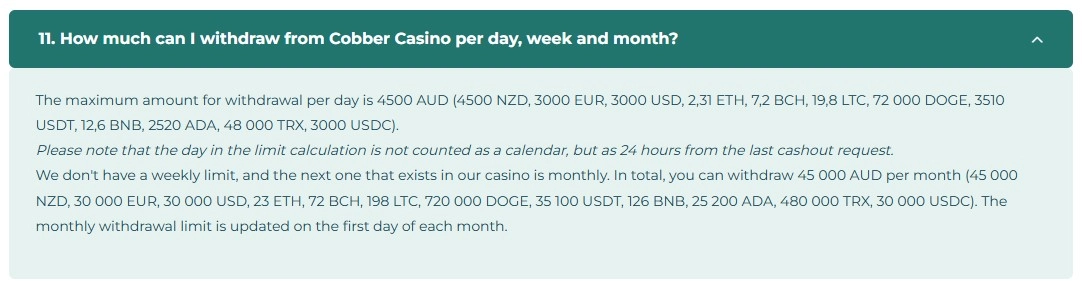
Cobber publishes an Australian-dollar withdrawal ceiling of A$4,500 per 24 hours and A$45,000 per month, with no weekly limit. The 24-hour limit is not a calendar-day allowance: the AU FAQ says the period is measured from the last cashout request. The monthly allowance resets on the first day of each month. Cobber also lists a minimum AUD cashout of A$30.
Payout speed needs a little more care. Cobber’s FAQ says a withdrawal request can be approved or declined within minutes, but its Terms say the casino aims to process withdrawals within 72 hours of approval. Those statements describe different stages. After casino processing, the time until funds arrive still depends on the payment method and verification status. That is why “instant withdrawal” is not a reliable description of every Cobber payout.
Table of Contents
- Cobber withdrawal limits in AUD
- Three stages matter more than one payout time
- What Cobber says about payment-method timing
- Verification can become part of the cashout path
- The non-bonus deposit wagering rule
- Why deposit choice can affect a later withdrawal
- Large withdrawals need a schedule, not just a method
- Common reasons a payout can take longer
- How to approach a Cobber cashout
- What to check before submitting another request
- Planning a Cobber withdrawal without relying on “instant” claims
Cobber withdrawal limits in AUD
| Rule | Current AUD figure | How to read it |
|---|---|---|
| Minimum cashout | A$30 | The general minimum listed in the Australian FAQ. |
| Limit per 24 hours | A$4,500 | Measured across 24 hours from the last cashout request, not midnight to midnight. |
| Weekly limit | None published | The FAQ says there is no weekly withdrawal cap. |
| Monthly limit | A$45,000 | The monthly allowance resets on the first day of the month. |
The difference between a rolling 24-hour limit and a calendar day matters in practice. If a player makes a cashout request late in the evening, the A$4,500 allowance does not automatically refresh at midnight. The relevant window runs for 24 hours from the request. That can affect the timing of a second withdrawal even when it falls on the next calendar date.
The monthly figure works differently. Cobber states that the monthly limit refreshes on the first day of each month. A player planning a larger cashout therefore has to keep both clocks in mind: the rolling 24-hour ceiling and the calendar-month ceiling. The published limits are general account rules, while a selected payment method can still have its own transaction maximum.
Three stages matter more than one payout time
The most useful way to understand Cobber withdrawals is to split them into three stages: the request, the casino’s review and processing, and the external payment delivery. Treating all three as one timing number creates the impression that different Cobber statements conflict when they do not necessarily do so.
- Request: the player submits a withdrawal from the account cashier, subject to the available method, minimum cashout and account limits.
- Review and approval: Cobber’s AU FAQ says requests are handled around the clock and that an approval or decline can happen within minutes.
- Processing and delivery: the Terms say Cobber aims to process withdrawal requests within 72 hours of approval. The final arrival time then varies by payment rail and verification status.
This distinction is more informative than a headline claim about “fast payouts”. A request can receive a quick internal decision and still take longer before the money reaches a card or bank account. Likewise, a crypto or e-wallet transfer can arrive quickly after processing, but that does not turn every withdrawal into an immediate payment.
What Cobber says about payment-method timing
The AU FAQ gives examples rather than a universal delivery promise. It says crypto and e-wallet withdrawals can reach the destination within minutes after the casino side has been dealt with, while card or bank-transfer cashouts start from one business day. Cobber’s Terms separately note that actual timing depends on the chosen method and verification status.
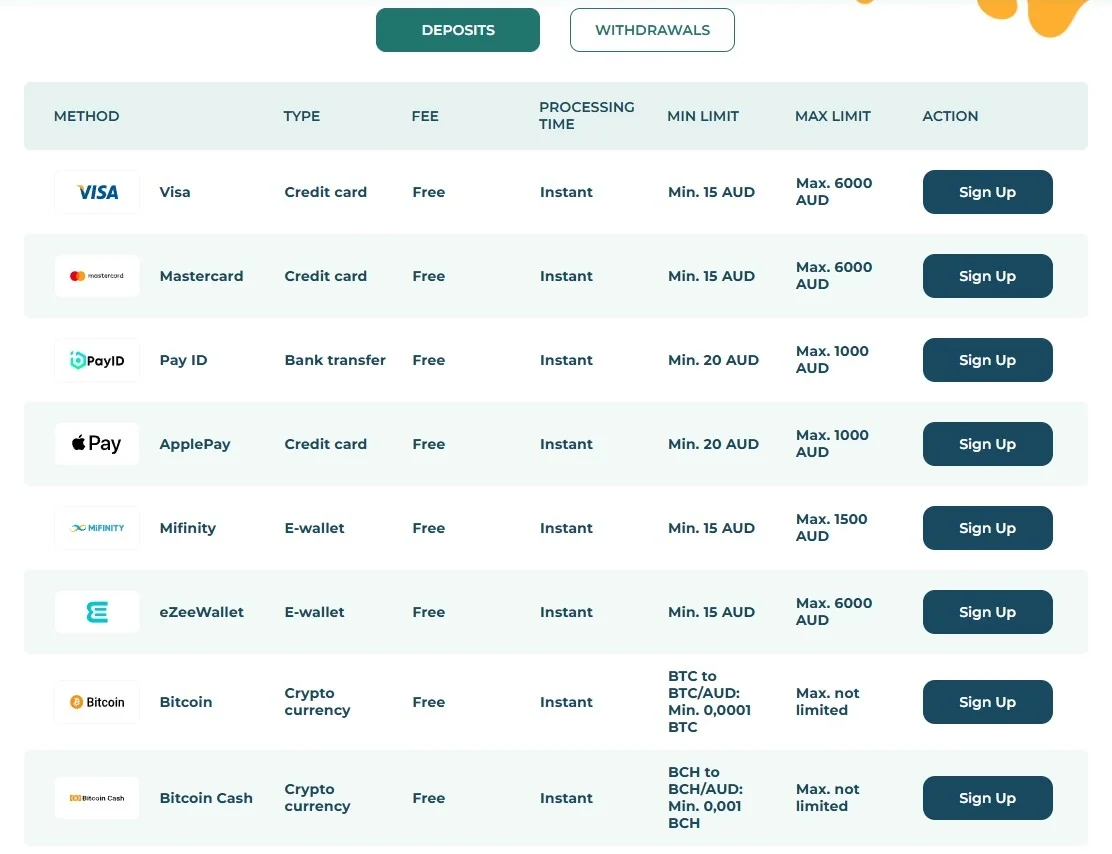
That makes the selected withdrawal rail important. The general Cobber payment methods explains AUD funding, PayID and the split between fiat and crypto. A fast deposit method does not automatically mean the same route is available for payout, and the cashier can present method-specific limits or eligibility conditions.
Banking intermediaries can also add time or costs outside the casino’s control. Cobber’s Terms mention that intermediary banks may impose fees on bank transfers. For that reason, the amount requested, amount received and time taken can be influenced by both the casino process and the payment network.
Verification can become part of the cashout path
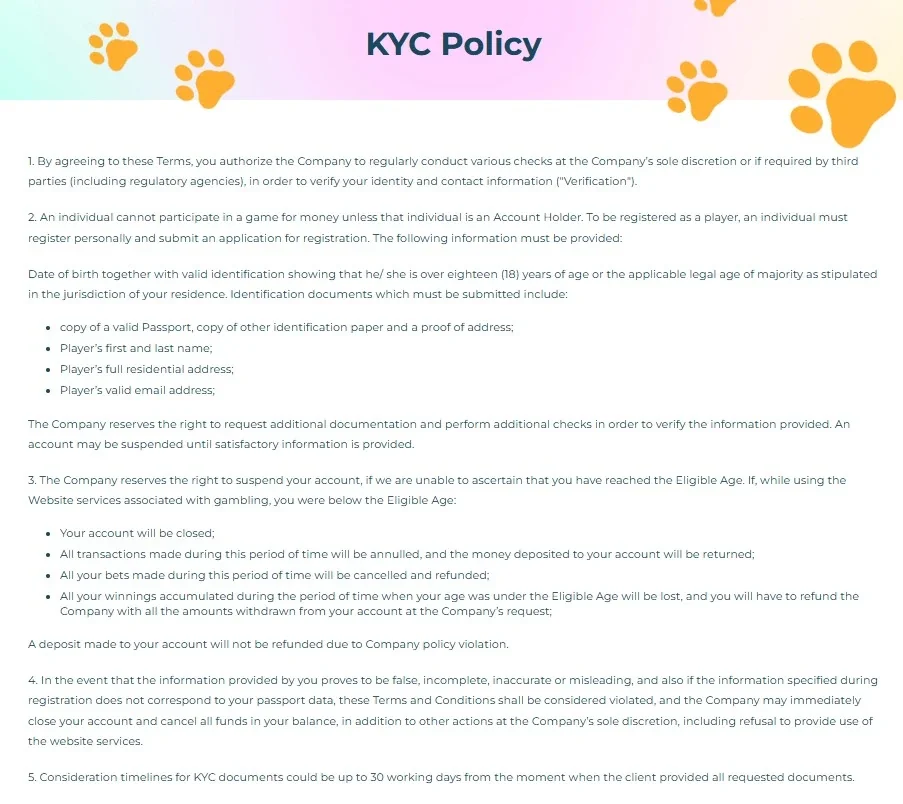
Cobber’s AU FAQ says account verification is required when making the first withdrawal. Its current FAQ describes identity, payment-method and address evidence among the document categories that can be requested. The exact account-side process is covered in the Cobber registration and KYC, because verification deserves more detail than a short withdrawal note can provide.
For withdrawal planning, the main point is simple: a payout should not be treated as a pure payment transaction if the account still needs verification. Missing, incomplete or mismatched information can create a review step before the withdrawal is processed. That is especially relevant for users who deposit quickly and only look at account documentation when they first try to cash out.
The FAQ currently says document checks usually start after submission and may be completed quickly, but verification should not be treated as guaranteed to finish on a fixed timetable. The safer planning assumption is that a first withdrawal can involve additional account review, particularly if payment ownership or address information needs clarification.
The non-bonus deposit wagering rule
One unusual detail in Cobber’s AU FAQ is that wagering requirements can apply even when a player did not use a bonus. The FAQ states that a non-bonus deposit normally needs to be wagered three times in slots or ten times in table or live games before withdrawal.
For example, a A$100 non-bonus deposit would correspond to A$300 in slot wagers under the 3x rule, or A$1,000 in table/live-game wagers under the 10x rule. This is not the same as a welcome-bonus wagering requirement. It is a cash-deposit turnover condition described in the withdrawal FAQ, so it can matter even to players who deliberately decline promotions.
Cobber also states that an earlier cashout can be considered with a 10% fee, subject to administration approval. That wording is discretionary rather than automatic. It should not be read as a guaranteed option to pay a fee and bypass the turnover requirement whenever desired.
Why deposit choice can affect a later withdrawal
Cobber separates fiat and crypto funding routes. Its FAQ says funds deposited through fiat methods cannot be withdrawn to crypto, while crypto-funded balances cannot be cashed out to cards or bank transfer. That means the deposit method can shape the category of payout method available later.
This is particularly relevant to Australian users choosing between a local AUD option and crypto. PayID may be convenient for funding an AUD balance, but the eventual withdrawal path still follows Cobber’s account and payment rules. A crypto deposit, meanwhile, is not simply another way to load the same balance and switch freely back to a bank route at cashout.
Before depositing, it is worth checking both sides of the transaction: what is convenient now and what withdrawal route you would actually want later. The cashier should be treated as the account-specific source for the methods currently offered.
Large withdrawals need a schedule, not just a method
The published A$4,500 per-24-hours cap means larger balances may need to be withdrawn in more than one request. The A$45,000 monthly ceiling adds a second constraint for very large cashouts. A method can also impose its own maximum, and Cobber’s Terms say payouts may be split when a requested amount exceeds a method limit.
Suppose a player wants to withdraw A$9,000. The general 24-hour limit means that amount cannot simply be treated as one unrestricted cashout under the published account rule. Even if the payment method itself allows a large transaction, the account-level frequency cap still matters. The second request also needs to respect the rolling nature of the 24-hour window.
Progressive jackpot wins receive separate treatment in Cobber’s Terms and are stated to be paid in full without counting toward the general frequency limits. That is a narrow exception, not a reason to assume ordinary winnings can bypass the published caps.
Common reasons a payout can take longer
- The account needs first-withdrawal verification or additional payment-method evidence.
- The withdrawal method has a slower external delivery window than an e-wallet or crypto route.
- The request exceeds a method-level maximum and needs to be split.
- The rolling A$4,500 24-hour limit has not refreshed yet.
- The A$45,000 monthly allowance has been reached.
- A non-bonus deposit has not met the applicable turnover requirement.
- Bank or payment-provider checks add time after the casino has processed the request.
These are different causes, so a delayed payout is not automatically evidence of one specific problem. Checking the account status, withdrawal history and payment rail usually gives a clearer picture than relying on a generic processing-time claim.
How to approach a Cobber cashout
A practical sequence is to confirm the available withdrawal method, check the A$30 minimum and any method-specific limits, make sure the account information is current, and review whether verification or deposit turnover is still outstanding. For larger amounts, the rolling 24-hour and monthly limits should be considered before submitting multiple requests.
It is also useful to keep the casino stage separate from the banking stage when tracking timing. A request that has been approved is not necessarily the same as funds already arriving in the destination account. If the status changes but the payment has not landed, the next relevant timing question may concern the payment provider rather than Cobber’s initial review.
What to check before submitting another request
If a withdrawal is already pending, submitting another request immediately can make the account harder to read and may run into the rolling 24-hour allowance. First check whether the existing request is still awaiting review, has been approved, is being processed, or has already left the casino. Those statuses represent different points in the payout chain and call for different next steps.
If the request is still under review, the most useful check is whether Cobber has asked for account or payment verification. If it has been approved but not delivered, the selected payment rail becomes more relevant. Card and bank transfers can take longer after approval than some e-wallet or crypto routes. If a request was declined, the account message or support response should be used to identify the reason before resubmitting the same cashout.
For larger balances, keeping a simple record of request times and amounts also helps with the A$4,500 rolling limit. Because the window is measured from the last cashout request rather than by calendar date, the exact request time can matter when deciding when the next withdrawal fits within the published allowance.
Planning a Cobber withdrawal without relying on “instant” claims
For Australian users, the clearest current framework is A$30 minimum, A$4,500 per rolling 24 hours, no weekly cap and A$45,000 per month. Those figures tell you how much can be requested, while the payout timeline is better understood as separate approval, casino processing and payment-delivery stages.
The most important preparation is to look beyond the deposit experience. Verification, the non-bonus turnover rule and the fiat-versus-crypto payment split can all matter at cashout. If you want the broader regulatory and operator context around Cobber, see the Cobber licence and trust; for the wider feature overview, return to the Cobber Casino Australia review.
Written by the editors at Cobber Casino.